
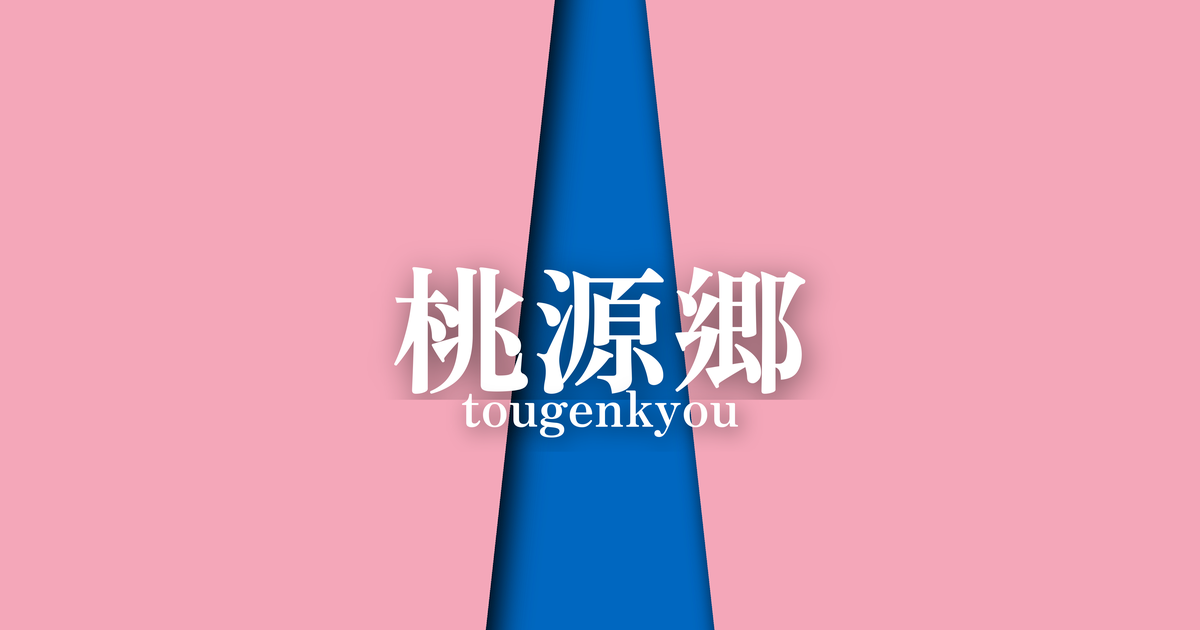
| Japanese color name | Shangri-La |
|---|---|
| reading | tougenkyou |
| season | 春 |
| Color of the table | Peach (momo) |
| Back color | blue (ao) |
What is Shangri-La? Origin and Etymology
The name "Shangri-La" is said to originate from the ideal utopia depicted in "The Peach Blossom Spring," a work by the Chinese poet Tao Yuanming. It is believed that the name was given because of the beautiful scenery of peach blossoms in full bloom. This design expresses the fantastical image of this ideal utopia through a combination of colors.
In this color scheme, the pink on the front (#F4A7B9) is interpreted as symbolizing blooming peach blossoms, while the blue on the back (#0067C0) symbolizes a pure river flowing through an ideal paradise and a clear, bright sky. This color combination possesses a poetic beauty, skillfully expressing a springtime paradise scene through the vivid contrast of colors.
The historical background of Shangri-La
During the Heian period, a culture of "kasane no irome" (layered colors) developed in the imperial court, expressing the changing seasons through the colors of clothing. The nobles keenly perceived the colors of nature and reflected them in their attire, demonstrating their refined education and sophisticated aesthetic sense. In particular, in spring, color combinations mimicking the colors of flowers such as plum blossoms, cherry blossoms, and peach blossoms were favored.
The color combination known as "Peach Blossom Paradise" does not directly appear in Heian period literature. However, the combination of pink and blue hues is thought to have resonated with the aesthetic sensibilities of people at the time, as it represented the fresh and vibrant scenery of spring. It is believed that in later generations, the name "paradise" was given to it because of its beautiful imagery.
Related literature, waka poetry, and seasonal words
While the direct source of the "Peach Blossom Spring" is the Chinese classic "The Tale of the Peach Blossom Spring," peaches have also held special significance in Japan since ancient times. In the "Kojiki," they are depicted as a fruit with the power to ward off evil, and the "Manyoshu" contains several waka poems praising the beauty of peach blossoms. Peaches have been repeatedly depicted in waka poems and stories as a flower that symbolizes spring.
In Heian literature, peaches were strongly associated with the "Jōshi no Sekku (Peach Festival)" and were an important element in decorating the vibrant spring festivities. In works such as "The Tale of Genji," there are descriptions of characters wearing pink-toned clothing in spring scenes. This is a valuable description for understanding the sense of color and seasonality in the aristocratic society of the time.
In the spring garden, the peach blossoms glow crimson, and a maiden stands on the path bathed in their light.
Seasons and Scenes of a Peach Blossom Paradise
This color scheme beautifully captures the scene of an ideal spring paradise. The gentle pink on the front evokes blooming peach blossoms, while the vibrant blue on the back brings to mind the clear spring sky and the flowing streams of melting snow. The contrast between the two colors vividly portrays the image of a vibrant spring paradise.
The most appropriate time to wear this garment is from Yayoi (March), when peach blossoms begin to bloom, to Uzuki (April). It is thought to have been worn at festive occasions such as celebrations of the arrival of spring and outdoor outings. The combination of sweet peach and sophisticated blue gives a youthful yet dignified and refreshing impression.
Suggested color scheme for a utopian paradise
White training (#FFFFFF)
Adding pure white enhances the cleanliness and brightness of the pink and blue color scheme. It also evokes images of spring mist and lingering snow, creating a more fantastical atmosphere. This color is effective for layering kimonos or as a background color in web design.
Light green (#A5D4AD)
The fresh green color of young leaves sprouting in spring pairs well with peach blossoms, blue skies, and water. This combination perfectly recreates the colors of spring nature, giving a youthful and vibrant impression. It is suitable for Japanese clothing accessories and interior design.
Golden (#E6B422)
The combination of pink and blue, accented with gold, adds elegance and luxury. This color scheme is often seen in furnishings and special attire for the Peach Festival, enhancing the festive atmosphere. It is an effective accent color in design.
Practical Scenes
In traditional Japanese clothing, incorporating the "Peach Blossom Paradise" color scheme into furisode (long-sleeved kimono), houmongi (formal visiting kimono), or accessories such as obi (sash) and obi-jime (sash cord) can create a festive and vibrant spring look. It is particularly suitable for young women's formal wear and is expected to have the effect of brightening the face.
This color scheme is widely used in contemporary design. In fashion, it's used in spring/summer collections, and in interior design, it's used as an accent to add brightness and a refreshing feel to a space. In web design and graphic design, it's effective as a color scheme that balances approachability with a sophisticated impression.