
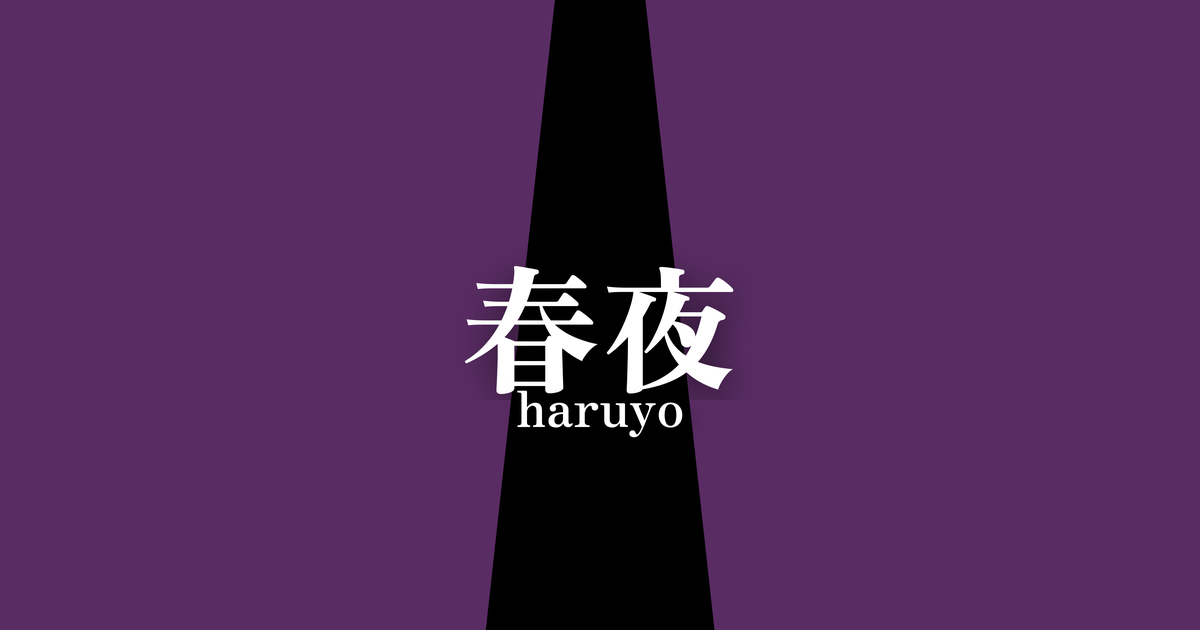
| Japanese color name | spring night |
|---|---|
| reading | haruyo |
| season | 春 |
| Color of the table | Purple (murasaki) |
| Back color | Black (kuro) |
What is a spring night? Origin and etymology
Haruyo (Spring Night), as its name suggests, is a color combination that expresses the scenery of a spring night. The purple used on the outer layer evokes the depth of the spring night sky and the wisteria blossoms illuminated by moonlight. On the other hand, the black used on the inner layer is said to symbolize the quiet darkness of night that envelops everything. This combination of two colors expresses the stillness of a spring night and the fantastical beauty woven by the soft light on the garment. This color scheme was born from the keen observation of nature and rich sensibility of the Heian aristocracy.
Historical background of spring night
The concept of layered colors is a uniquely Japanese aesthetic of color that was established during the mid-Heian period when Japanese culture flourished. The nobility were keenly aware of the changing seasons and devoted themselves to expressing them through the color schemes of their attire, such as the twelve-layered kimono (junihitoe). Purple, used in "Spring Night," has been considered a noble color since ancient times and was the highest-ranking color in the twelve-level court rank system established by Prince Shōtoku. Therefore, it is thought that this color scheme was worn by people of high status in formal occasions such as court ceremonies and private evening banquets.
Related literature, waka poetry, and seasonal words
While it is difficult to pinpoint specific classical literary works that directly use the color name "spring night," spring nights were frequently depicted as an object of beauty in Heian literature. The famous "Spring is dawn" passage from The Pillow Book describes the start of the day, but it presupposes the existence of the quiet night that precedes it. Furthermore, the color purple evokes wisteria blossoms and has been featured in many waka poems.
For example, the *Kokin Wakashū* (Collection of Ancient and Modern Japanese Poems) contains many poems about wisteria blossoms, suggesting that they may have been appreciated in connection with the scenery of a spring night.
The darkness of a spring night is strange; though the color of the plum blossoms is invisible, their fragrance is hidden.
The season and scenery of a spring night
"Haruyo" (Spring Night), as its name suggests, is a color scheme that expresses the spring season, especially the nighttime scenery. The appropriate time to wear it is from February to April, which is considered spring according to the calendar. The purple on the outside represents the depth of the night sky and wisteria blossoms, while the black on the inside represents quiet darkness, creating a fantastical and tranquil atmosphere of a spring night. It is thought to have been worn at elegant events such as evening banquets in the imperial court or gatherings to admire cherry blossoms at night. Even in modern kimono, it is a refined and tasteful color scheme suitable for spring evening parties and theater performances.
Color scheme proposal for spring night
Light blue (#C3D825)
This color scheme evokes the image of young grass sprouting from the darkness of a spring night. The contrast between vitality and tranquility is beautiful. In modern design, using it as an accent color can give a fresh impression within a calm setting.
Cherry blossom pink (#FEEAFA)
This combination evokes cherry blossoms blooming on a spring night. The purple and black of the spring night serve as a backdrop, making the delicate cherry blossom pink stand out. This color scheme, also favored in Heian period attire, expresses an elegant and ephemeral Japanese aesthetic.
Golden (#E6B422)
The moon and stars shining in the spring night sky are represented in gold. The addition of golden shimmer to the deep shades of purple and black creates a very luxurious and dignified impression. It is suitable for creating a sense of luxury in formal wear and special designs.
Practical Scenes
The "Spring Night" color scheme can be used in a variety of situations even today. In the world of kimono, incorporating it into formal kimono or obi sashes creates an elegant look suitable for spring evening parties or theater performances. In interior design, using it for wallpaper or cushions in bedrooms or studies can create a quiet, calm, and sophisticated atmosphere.
Furthermore, in web design and graphics, using it as a background color brings depth and sophistication to the content, giving viewers a refined impression.