
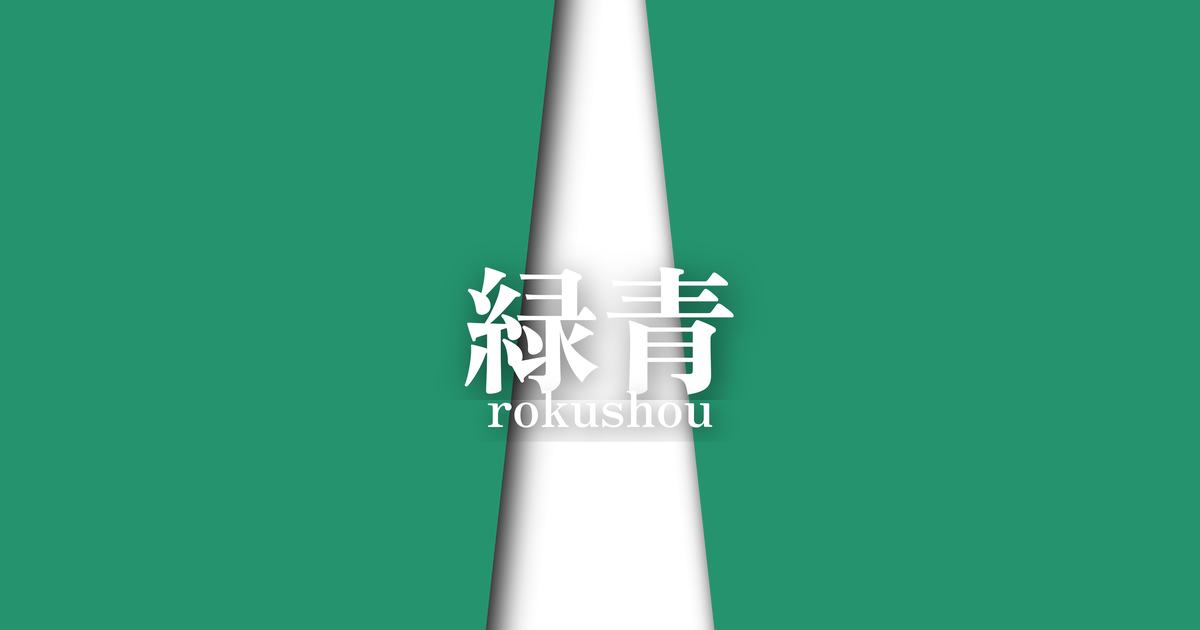
| Japanese color name | Verdigris |
|---|---|
| reading | rokushou |
| season | 夏 |
| Color of the table | Verdigris (rokushou) |
| Back color | White (shiro) |
What is verdigris? Origin and etymology
The color name "rokushō" (緑青) originates from the mineral pigment "rokushō," which is a bluish-green rust that forms on the surface of copper. This pigment has been used since ancient times as a paint for Japanese paintings and for coloring crafts, and it is thought that its deep, vibrant color was also incorporated into the colors of traditional Japanese clothing.
The color "verdigris" used in layered kimono designs represents the deep, rich leaves of trees in summer and the vibrant appearance of bamboo groves. The combination of verdigris on the outside and white on the inside is said to have been devised as a design that brings visual coolness to the hot season, evoking the vibrant green of leaves in the strong summer sunlight, the clear streams flowing beneath, and the cool breezes.
Historical background of verdigris
In the aristocratic society of the Heian period, "kasane no irome," the use of clothing colors to express the changing seasons, was an important cultural practice. "Ryokushō" (verdigris) was one such color, and it was highly valued as a color scheme that accurately represented the feeling of summer.
This color scheme is thought to have been primarily used for summer court ceremonies and everyday attire. It was used in various garments, such as men's noshi (court robes) and kariginu (hunting robes), and women's uchiki (outer robes), and its vibrant colors played a role in indicating the wearer's social status, education, and aesthetic sense.
At the time, producing green shades required complex processes such as combining indigo and yellow dyes. Deep, vibrant blue-green colors, especially "verdigris," were particularly rare, suggesting that they may have been colors only permitted for high-ranking nobles.
Related literature, waka poetry, and seasonal words
While the color name "verdigris" appears directly in waka poems and stories only in limited numbers, Heian literature features numerous scenes describing the green of summer trees. In works such as "The Tale of Genji" and "The Pillow Book," the aesthetic sensibilities of the season are richly expressed through scenes of summer gardens and the colors of the characters' attire.
For example, "The Pillow Book" describes "the deep green of the trees and the cool appearance," and such descriptions resonate with the worldview associated with the color "verdigris." Furthermore, the summer seasonal words in Japanese poetry, "green shade" and "green leaves," are deeply linked to the cool and vibrant image of summer that this color symbolizes.
The season and scenery of verdigris
"Ryokushō" (verdigris) is a color that represents the vibrant life force of nature in the height of summer. Specifically, it is said to have been worn from around May to June in the old lunar calendar, and from late June to August in the modern calendar, when the colors of plants and trees are at their deepest.
This color scheme evokes images of lush, dark green summer trees or a vibrant bamboo grove. The verdigris on the front symbolizes powerful vitality, while the white on the back represents dappled sunlight, a cool breeze, or the white clouds of summer, creating a refreshing feeling during the hot season.
It is believed that these garments were worn at summer banquets in the imperial court and at outdoor events where people sought coolness, giving viewers a cool and sophisticated impression. Rather than anticipating the season, they embody the aesthetics of the Heian aristocracy, reflecting the beauty of the season in their attire during the season itself.
Verdigris color scheme proposal
Golden color (#E6B422)
The combination of the deep green of verdigris and golden yellow is reminiscent of the way strong summer sunlight reflects off the leaves of trees. The colors complement each other, creating a luxurious and vibrant impression. It's possible that this combination was also used in Heian period attire, perhaps paired with gold thread embroidery.
Dark indigo (#0F2350)
The combination of verdigris's bluish-green and deep indigo evokes the stillness of a summer night or the shade of trees in a deep forest. It creates a sense of calm and dignity, giving an intellectual impression. In modern design, using these colors as accents has the effect of tightening the overall design.
Shironeri (#FFFFFF)
This combination is the very reverse color of "verdigris," and is the most basic color scheme. It maximizes the vibrancy of verdigris and emphasizes a sense of cleanliness and coolness. It is a simple yet sophisticated color scheme that can be easily applied not only to traditional Japanese clothing but also to modern designs.
Practical Scenes
In traditional Japanese clothing, incorporating the color "verdigris" into summer kimonos, obi sashes, and accessories such as obi ties can create a stylish and seasonal look. It is particularly well-known as a color suitable for the seasons when wearing unlined or lightweight kimonos.
In modern fashion, using this color in dresses, skirts, and blouses creates a vibrant yet calm and elegant impression. It pairs well with white, beige, and gold accessories, making it a color that can take center stage in an outfit.
In interior design, using it as an accent color for wallpaper, curtains, cushions, etc., brings depth, tranquility, and coolness to a space. In particular, combining it with natural wood or white furniture creates a sophisticated Japanese modern atmosphere.