
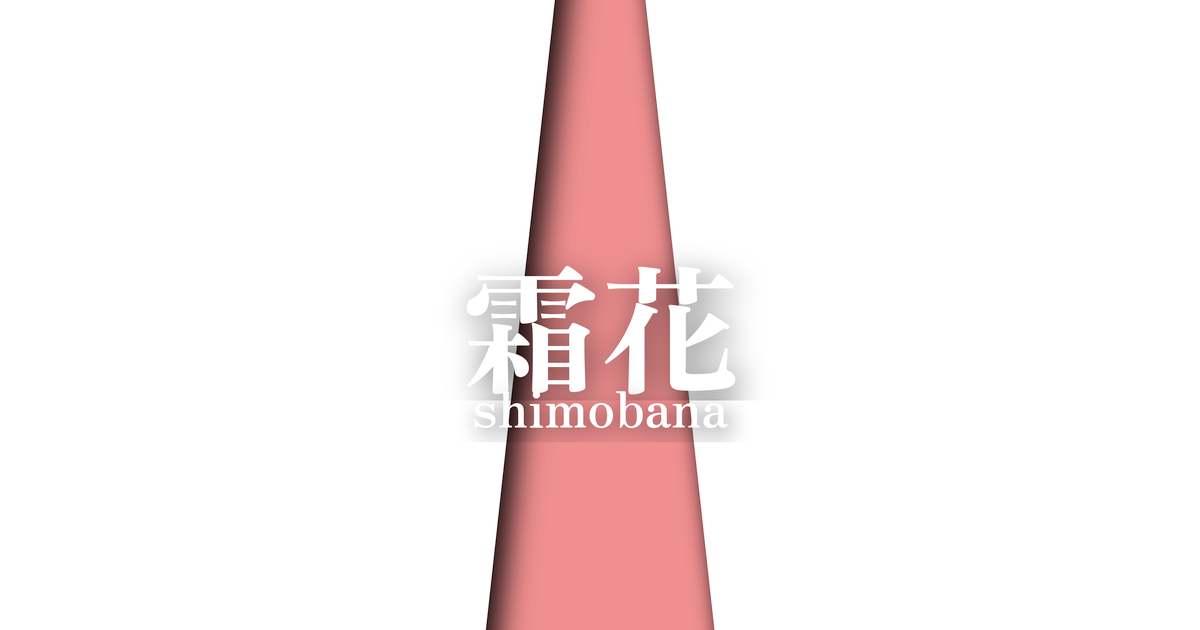
| Japanese color name | frost flower |
|---|---|
| reading | shimobana |
| season | 冬 |
| Color of the table | White (shiro) |
| Back color | Light red (usubeni) |
What is "Shimohana"? Origin and etymology
"Shimobana" (霜花) is a color combination that, as its name suggests, means "frost flowers." It expresses the pure and beautiful scene of frost settling on plants and trees on a winter morning, resembling white flowers. The "white" of the outer fabric is said to symbolize the frost itself, while the "pale pink" of the lining is said to symbolize the faint reddish hue of withered leaves subtly colored beneath the frost, or the plants enduring the cold.
This color scheme, born from the keen observational skills and rich sensibility of Heian-era aristocrats, captures the fleeting and delicate beauty found amidst the harsh winter landscape.
Historical background of Frost Flower
In the aristocratic society of the Heian period, expressing the changing seasons through the delicate colors of clothing was considered an important aspect of refinement. "Kasane no Irome" (layered color combinations) represented the culmination of this aesthetic sense and also served to indicate the wearer's sensibilities and social status. "Shimohana" (frost flowers) is thought to have been particularly favored among women in the imperial court as winter attire. The combination of white, reminiscent of snow and ice, and pale pink, evoking the warmth of human skin, beautifully captures the winter scenery.
This color scheme is more than just a combination of colors; it can be said to symbolize Heian culture, where nature and daily life were closely intertwined.
Related literature, waka poetry, and seasonal words
It is difficult to find direct descriptions of the "frost and flower" color combination in Heian period literary works. However, works such as "The Pillow Book" and "The Tale of Genji" contain many beautiful descriptions of winter scenes that contrast the whiteness of frost and snow with the redness of plants. For example, the line, "In winter, early morning is best. The falling snow is beyond description, but the frost is also extremely white," shows that people at that time had a special aesthetic appreciation for the whiteness of frost.
These literary works provide important clues to understanding the scenes and aesthetic sensibilities evoked by the colors of "frost flowers."
On a chilly night, frost blossoms bloom in the garden; the moon of a winter night casts a cold shadow.
The season and scenery of frost flowers
"Shimohana" is a color combination worn from late autumn to winter. Specifically, it is considered appropriate from around November when the first frost is observed until around February when the cold is at its most severe. This color scheme expresses the sparkling frost on a quiet winter morning and the faint warmth of life breathing beneath it. Because it gives a sense of crisp air and a somewhat ephemeral and lovely impression, it was used when incorporating the feeling of winter into one's attire.
It is thought to have been particularly favored in situations where elegance and refinement were valued, such as private gatherings within the imperial court.
Frost Flower Color Scheme Proposal
Blue and white (#EBEEF6)
The white of the frost blossoms resonates with the color, evoking a deeper, clearer winter sky and thin ice. This color scheme emphasizes a pure and dignified impression, completing a serene winter scene.
Silver mouse (#AFB1B4)
The silver-gray color, reminiscent of a cloudy winter sky or the color of withered trees, harmonizes with the tranquil worldview of Shimohana. It enhances the delicate shades of white and pale pink, adding a calm elegance.
Withered color (#836A39)
The withered colors, reminiscent of the frost-covered grass and earth, blend naturally with the pale pink of the frost blossoms. This adds warmth and depth to the winter landscape, resulting in a more realistic and narrative color scheme.
Practical Scenes
In the Heian period, the "frost flower" color scheme was mainly used in women's clothing, such as the uchiki (a type of kimono). Because it gave a pure and lovely impression, it was likely particularly favored by young women. It is thought to have been worn not so much in ceremonial occasions, but rather in everyday life and elegant gatherings, as a way to express an appreciation for the seasons.
In modern times, incorporating this color scheme into traditional Japanese clothing accessories such as kimonos, obi sashes, and obi ties can elegantly express the delicate seasonal feel unique to winter. In interior design, using it in wallpaper, cushions, and bedding brings a quiet and pure atmosphere to a space. In web design and graphic design, it can be used to create content that conveys the feeling of winter or to build a gentle and clean brand image.