
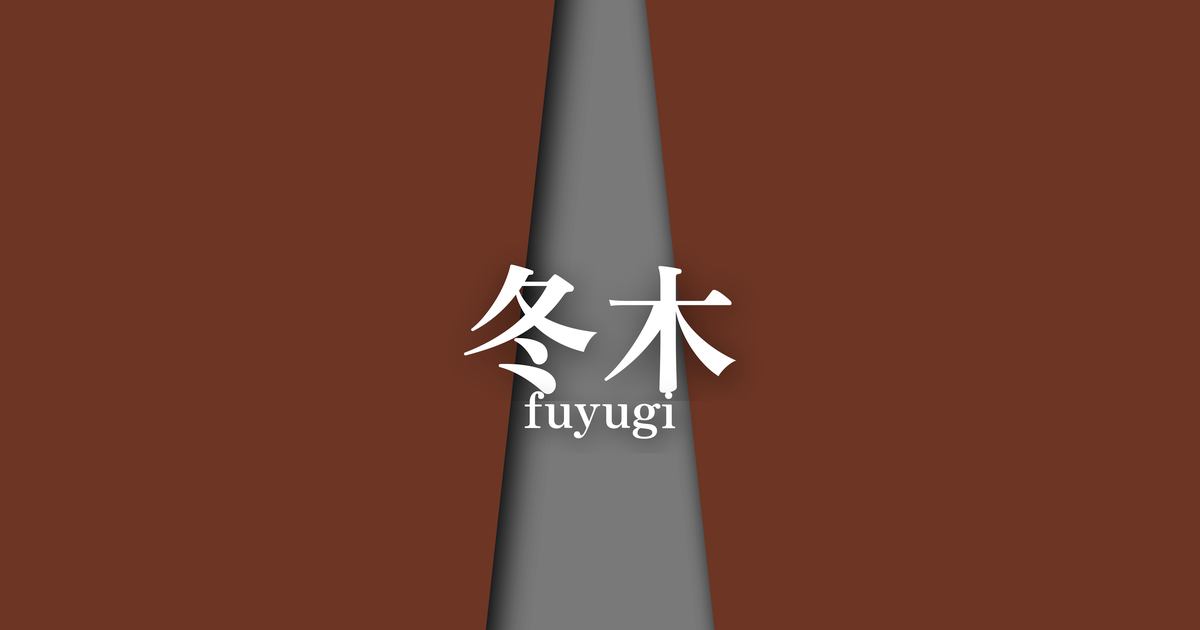
| Japanese color name | Fuyuki |
|---|---|
| reading | fuyugi |
| season | 冬 |
| Color of the table | Kogecha (thick matcha tea) |
| Back color | Ash (hai) |
What is Fuyuki? Origin and etymology
"Fuyuki" (Winter Trees), as its name suggests, is a color combination that represents bare trees in winter. The "dark brown" on the outside represents the color of the trunks and branches of trees that have shed all their leaves, while the "gray" on the inside evokes the cold, cloudy winter sky and the earth lightly covered in snow. This color scheme captures the image of winter nature, when the activity of life is at its quietest, on the garment. Although it is not flashy, it is said to embody a profound aesthetic sense unique to winter, encompassing stillness, solemnity, and the vitality that harbors within, waiting for spring.
The origin of this color scheme is thought to be directly derived from words like "winter trees," specifically "winter groves" or "withered trees." Heian period aristocrats were keenly aware of the changing seasons and reflected these scenes not only in waka poetry and stories but also in the colors of their everyday clothing. Fuyuki is one of the color schemes that symbolizes winter, born from an aesthetic sense based on such observations of nature.
Historical background of Fuyuki
The layered color schemes of the Heian period represent a refined color culture that flourished in aristocratic society during the Heian era, a time when Japanese culture blossomed. As exemplified by the twelve-layered kimono (junihitoe), the harmony of colors created by layering garments was highly valued. Color schemes that depicted natural scenes, such as "winter trees," played a crucial role in the lives of Heian aristocrats who valued a sense of the seasons.
While detailed records of specific instances of its use are limited, it is presumed to have been worn as winter attire, both as everyday wear in the imperial court and for seasonal events. In particular, its subdued and understated colors suggest it may have been preferred for private occasions or as attire for older individuals, rather than for public ceremonies. It also represented a highly spiritual aesthetic, embodying the tranquility of winter.
Related literature, waka poetry, and seasonal words
Currently, no famous classical literary works have been identified that directly use the color name "Fuyuki" (winter trees). However, scenes of withered fields and trees in winter are frequently depicted in Heian period literature, giving us insight into the beauty that people of that time found in winter nature.
For example, in the section "In winter, early morning" in The Pillow Book, the beauty of winter mornings, where the whiteness of snow and frost stands out, is described. Also, in many waka poems, bare winter trees are celebrated as symbols of loneliness and the pathos of things. It can be interpreted that this aesthetic of winter depicted in literature was visually expressed in the color combination of layers, such as "winter trees."
In the mountain village, winter brings even greater loneliness, for I think of both people and the grass withering away.
Winter Trees and Their Seasons and Scenery
As its name suggests, "Fuyuki" (winter tree) is a color scheme best suited for wearing during the winter season, especially from late autumn through the depths of winter, from late November to around February. It evokes the image of bare trees with their leaves completely fallen and branches stretching into the cold night sky, thus harmonizing deeply with nature during this time of year.
The dark brown on the front symbolizes the bark of a withered tree, while the gray on the back represents the low winter clouds and frost-covered ground. This color scheme expresses the Japanese sensibility of finding quiet beauty and a wabi-sabi aesthetic in the often muted colors of winter. It evokes a profound sense of the season, suggesting that even amidst the harsh cold, the breath of life waiting for spring is hidden within.
Fuyuki's color scheme proposal
Withered leaf color (kuchiba-iro) (#917347)
The combination of dark brown and withered leaf green in winter wood expresses the desolate winter landscape more deeply. By using similar colors, a calm and natural harmony is created, resulting in a color scheme that gives a serene and wabi-sabi impression.
Shironeri (#FCFAF2)
The deep brown and ash tones of winter wood, combined with the pure white of the base, evoke the image of snow-covered bare trees. A clear contrast is created, simultaneously expressing the solemnity and purity of winter.
Blue (#274A78)
The combination of dark brown and gray, along with the addition of deep indigo, creates a refined and intellectual impression. It evokes the stillness of a winter night and the crisp, cold air, exuding a calm yet dignified atmosphere.
Practical Scenes
In Heian period attire, "Fuyuki" (winter wood) is thought to have been used as a color scheme for uchiki (a type of kimono worn during the winter season). Because of its subdued colors, it is presumed to have been favored in situations where a subdued style was desired or where spirituality was valued.
In modern Japanese clothing, this color scheme is incorporated into winter kimonos, haori jackets, obi sashes, and obi ties. It is suitable for occasions such as tea ceremonies, theater performances, or visits to quiet, tranquil places, giving an elegant and refined impression.
Beyond traditional Japanese clothing, this color scheme can be used in contemporary design. In interior design, it can be used in wallpaper, curtains, and cushions to create a quiet and calming space. In web design and graphic design, it is effective in expressing a minimalist, sophisticated, and nature-oriented brand image.