
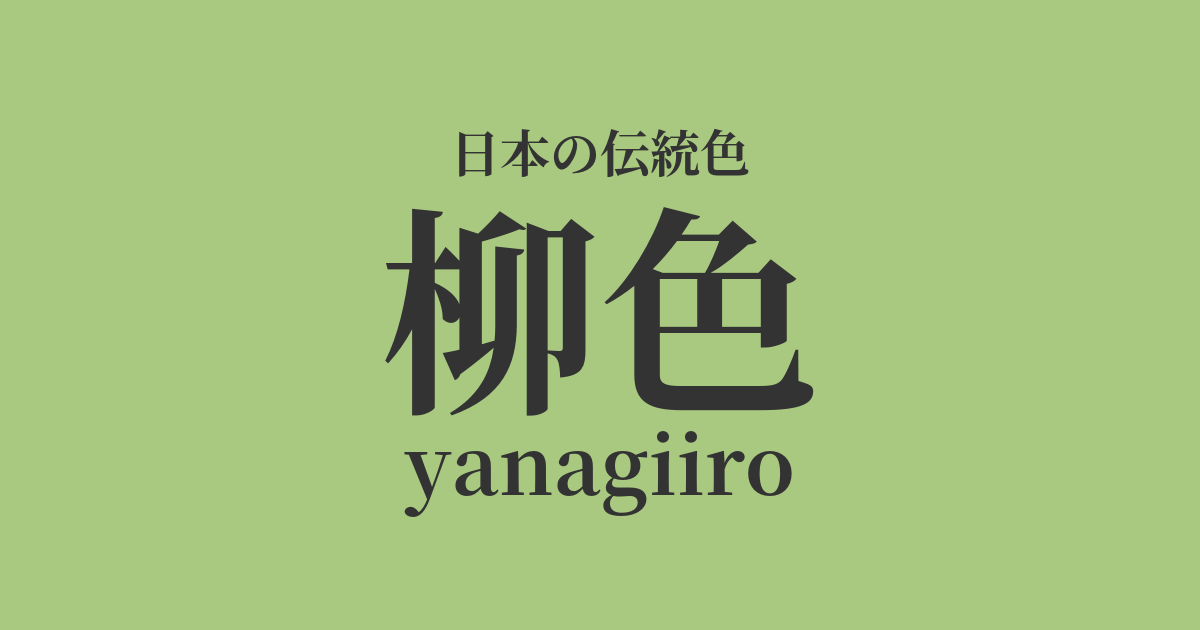
| Japanese color name | Willow green |
|---|---|
| reading | yanagiiro |
| HEX | #A8C97F |
| RGB | 168, 201, 127 |
What is willow green? Origin and etymology.
Willow green is a bright, soft yellowish-green color, like the young leaves of a willow tree that sprout in early spring. Willows grow near water and have been cherished by the Japanese people since ancient times for their supple and vibrant appearance. It is said that this color originated from the reproduction of the fresh color of its young leaves as a dye. It is also called "yanagi-zome" (willow dye), and it is said that willow bark and leaves were used as dye, but in reality, this delicate hue was often achieved by combining yellow dyes such as Japanese knotweed with indigo.
The historical background of the willow green color
Willow green appeared during the Heian period and was a color widely favored by the aristocracy. It is mentioned in the "Nuidono-ryo" (Bureau of Sewing) section of the Engishiki (a compilation of laws and regulations from the Heian period), suggesting that it was established as an official dye color. It was particularly popular as a color for spring clothing, and the combination of "willow" also existed in "kasane no irome" (layered color combinations), which involved layering clothes to enjoy color gradations. This combination was said to represent the appearance of willows budding in spring, with the outer layer being white and the inner layer being blue (green).
During the Edo period, it became a color that was more widely popular among ordinary people.
Related literature, waka poetry, and seasonal words
Willow green appears in many classical literary works and has been celebrated as a color that adorns spring scenes. In "The Pillow Book," it appears as a color scheme for summer clothing, described as "light fabric, willow on top, and sprout green underneath." In "The Tale of Genji," it is also frequently described as the color of the characters' clothing, playing a role in symbolizing youthfulness and a sense of the season. In the world of haiku, "willow" is a seasonal word for spring, and willow green, the color of its young leaves, is also deeply rooted in the Japanese aesthetic sense as a color that heralds the arrival of spring.
The threads of the willow sprout in the spring rain are visible; if I were to dye my clothes with them, they would surely be willow.
Color scheme preview
This is to check the readability of the text when this color is used as the background.
Willow green color scheme proposal
Cherry blossom pink (#FEEAFA)
The combination of willow and cherry blossom colors is representative of spring. The youthful green of the willow and the pale pink of the cherry blossom create a classic and elegant color scheme that heralds the arrival of spring. The colors complement each other, creating a bright yet serene impression, making it suitable for Japanese clothing and Japanese-style designs.
Indigo (#274A78)
The contrast between the bright willow green and the deep, calming indigo creates a beautiful color scheme. The lightness of the willow is given a sense of weight and stability by the indigo, creating a refined Japanese atmosphere. This combination can be used in traditional kimono patterns as well as in modern interior design.
White training (#FEFFBFB)
This combination best brings out the freshness of willow green. The purity of the white highlights the vitality of willow green, creating a clean and refreshing impression. It gives a simple yet elegant impression and can be used in a wide range of applications, such as interior design and web design.
Practical Scenes
In traditional Japanese clothing, willow green is an essential color for expressing the feeling of spring. Incorporating it into formal kimonos such as visiting kimonos, casual kimonos, and accessories like obiage (sash ties) allows for an elegant and youthful look. In particular, combining it with cherry blossom pink or wisteria pink creates a vibrant and spring-like impression.
In interior design, using willow green as an accent color brings brightness and tranquility to a space. Incorporating it into wallpaper, cushions, curtains, etc., can create a natural atmosphere that evokes the breath of nature. It pairs particularly well with spaces based on wood or white.
In the fields of web and graphic design, willow green is suitable for expressing friendliness and youthfulness. It is effective when used as the main color for websites themed around nature and health, or for spring campaign banners. It can give users a calm and positive impression.