
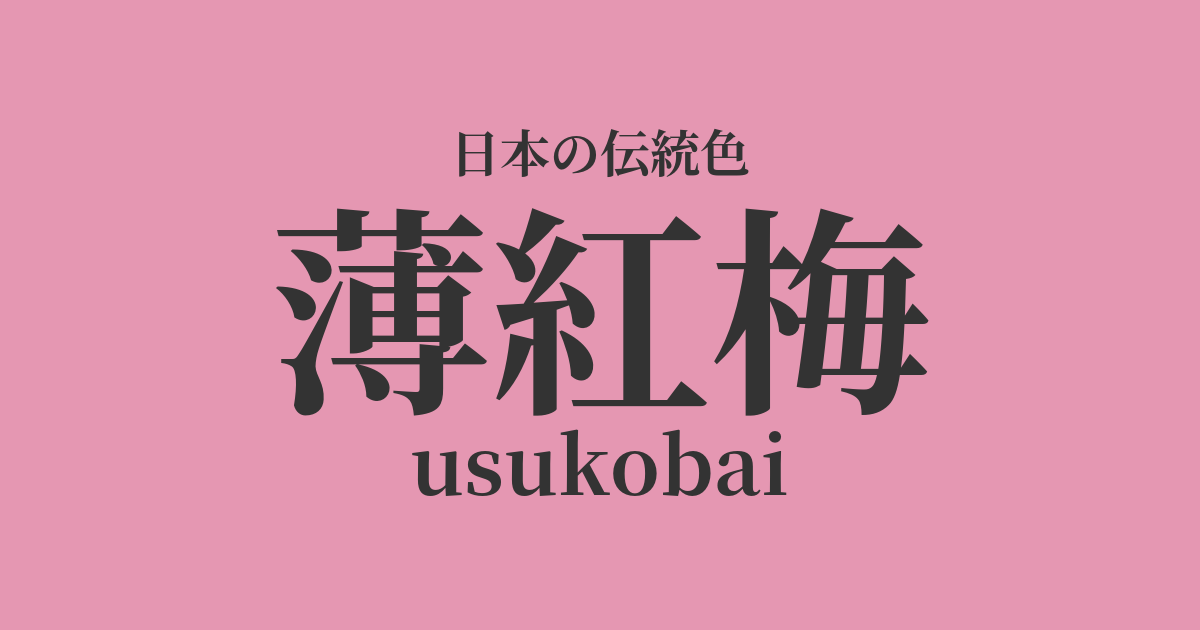
| Japanese color name | light red plum |
|---|---|
| reading | usukobai |
| HEX | #E597B2 |
| RGB | 229, 151, 178 |
What is a pale pink plum blossom? Origin and etymology
As the name suggests, "Usukoubai" (light red plum) derives its name from its paler shade of the "Koubai" (red plum) flower. Koubai is a type of plum that blooms in early spring, and specifically refers to the flowers with a particularly deep color. The soft, gentle reddish-purple color reminiscent of the petals of this Koubai was given the name Usukoubai. Safflower is mainly used as the dye, and it is said that this delicate shade was created by adjusting the concentration of the dye solution and using lye as a mordant.
Historical background of light pink plum blossoms
Light pink plum blossom was one of the colors particularly favored during the Heian period. In the aristocratic society of that time, a culture called "kasane no irome" (layered colors) developed, in which people were sensitive to the changing seasons and expressed them through the colors of their clothing. Light pink plum blossom was used in spring layered colors such as "ume-gasane" (plum blossom layered kimono), where white was used for the outer layer and plum blossom or sappanwood for the lining to represent the blooming plum blossoms.
This color is said to have been a favorite to be used in the clothing and furnishings of court ladies, symbolizing elegance and grace.
Related literature, waka poetry, and seasonal words
The color of pale pink plum blossoms also appears in "The Tale of Genji," a representative work of Heian literature. In the chapter "Young Murasaki," among the garments that Hikaru Genji gives to the young Murasaki no Ue, there is a "pale pink plum blossom undergarment." This is effectively depicted as a color that symbolizes the loveliness and innocence of a young girl. Furthermore, in the world of haiku, "red plum blossoms" are used as a seasonal word for spring, and pale pink plum blossoms have also stimulated the sensibilities of poets as a color that evokes the faint warmth of early spring and the breath of life.
A single layer of pale pink plum blossoms, or a layer of cherry blossoms; what should I wear over the kimono?
Color scheme preview
This is to check the readability of the text when this color is used as the background.
Color scheme proposal for light pink plum blossoms
Nightingale (#928C36)
The color of the nightingale's feathers is the same as the color of the plum blossoms, which bloom in early spring. When combined with the light pink of the plum blossoms, which also bloom in early spring, it creates a natural and harmonious color scheme that evokes a scene announcing the arrival of spring. It is a combination that strongly conveys a Japanese atmosphere.
White training (#F3F3F3)
Shironeri is the color of pure white silk. When combined with the pale, gentle reddish-purple of Usukumobai, it creates a sense of cleanliness and elegance. This color scheme, reminiscent of the court ladies' attire of the Heian period, gives a noble and graceful impression, with each color complementing the others.
Black (#333333)
The deep, rich ink color subtly tones down the sweet and soft impression of the light pink plum blossom, creating a sophisticated and modern atmosphere. The clear contrast allows the colors to complement each other, making it a suitable color scheme for modern designs.
Practical Scenes
Light pink plum blossoms, with their gentle and elegant hue, are widely used in the world of traditional Japanese clothing. In particular, incorporating them into spring formal wear such as visiting kimonos, casual kimonos, and accessories like obiage (sash ties) creates a graceful and seasonal look. Because it's not too flashy, it's a versatile color that can be easily incorporated by people of all ages.
In interior design, using it in fabrics such as cushion covers and curtains brings a gentle and warm atmosphere to the entire room. In web and graphic design, it can be effectively used in products and services aimed at women, or in spring campaign websites, to convey a friendly and elegant impression.