
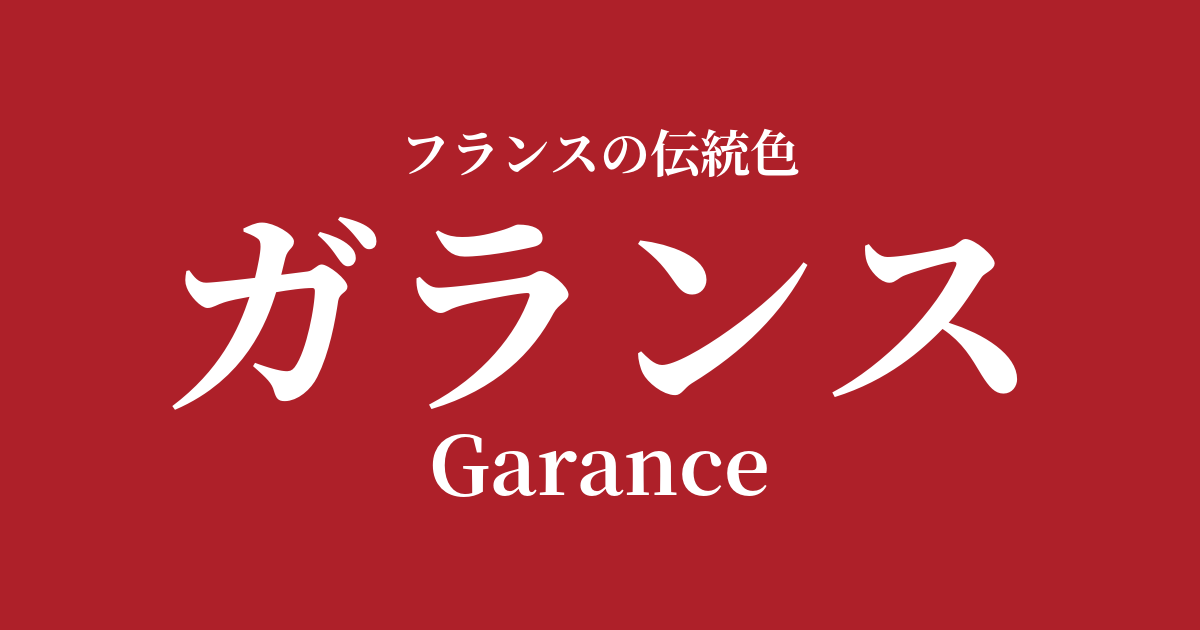
| French | Garance |
|---|---|
| Katakana | Garance |
| HEX | #AE2029 |
| RGB | 174, 32, 41 |
What is Garance? Origin and Etymology
Garance is a French word meaning "madder" or "Rubia tinctoria." As the name suggests, the origin of this color lies in the roots of the madder plant, which has been valued as a red dye since ancient times.
When the roots are dried and powdered, and used with a mordant to dye fabric, a deep yet vibrant, slightly yellowish, warm red color appears. This color possesses the complexity and depth unique to natural dyes, and its history is long, having been found in the bandages of ancient Egyptian mummies, and deeply intertwined with human color culture.
Historical background of Garance
The color garance most symbolically appears in French history in 19th-century army uniforms. In particular, the trousers worn by soldiers, known as "pantalon garance," became synonymous with the French military.
These bright red trousers boosted the morale of soldiers and became a beloved symbol of French pride. However, they also hold a tragic history. In the early stages of World War I, which began in 1914, this conspicuous color made soldiers easy targets for the enemy on the battlefield. This bitter lesson led the French army to change the color of their uniforms to the less conspicuous "Blue Horizon" (blue of the horizon).
Garance is a historical color that tells the story of both the light and shadow of France: its glory and patriotism, and the harshness of modern warfare.
Garance in the world of art and fashion
Garance, as a dye, had a significant influence on the world of art and crafts. From the Middle Ages to the modern era, it was widely used as an important red color to adorn European tapestries, carpets, and the clothing of royalty and nobility. Its beautiful hue can still be seen in many historical textiles that exist today, such as French Gobelin tapestries.
In the world of painting, "madder lake," a pigment extracted from the roots of the garance plant, was a favorite among many artists. Impressionist painters, in particular, who pursued light and color, are said to have added its translucent, deep red to their palettes. Until the invention of the synthetic dye alizarin in the late 19th century, natural garance was one of the most important red pigments.
Le pantalon rouge, c'est la France!
Color scheme preview
This is to check the readability of the text when this color is used as the background.
Garance's color scheme proposal
Blue Roi (#002D6C)
This classic combination is reminiscent of the French tricolor flag. Combining strength and elegance, the colors complement each other perfectly, creating a classic and patriotic impression.
Blanc de Roi (#F7F5E6)
The vibrant red of the garance is gently balanced by the warm white, creating a sophisticated impression. This color scheme perfectly balances cleanliness and elegance, making it ideal for creating a modern and refined space.
Jaune d'Or (#FFD700)
The combination of fiery red and shimmering gold creates a festive and opulent atmosphere. It gives a dramatic and noble impression, reminiscent of historical coats of arms and royal decorations.
Practical Scenes
In interior design, garance is an ideal accent color that brings energy and warmth to a space. Using it in fabrics such as cushions, curtains, and rugs can tighten the overall look of a room and create a passionate atmosphere. It also pairs exceptionally well with antique wooden furniture and gold accessories.
In the world of fashion, garance is a color that expresses confidence and glamour. Incorporating it into statement pieces such as dresses and coats will surely attract attention. Even using it as an accent color in accessories like scarves, bags, or lipstick will bring vitality to the entire outfit.
In web design and graphics, it can be used for call-to-action buttons and important headlines to effectively attract user attention. It is also suitable as a key color for brands that want to convey passion and energy.