
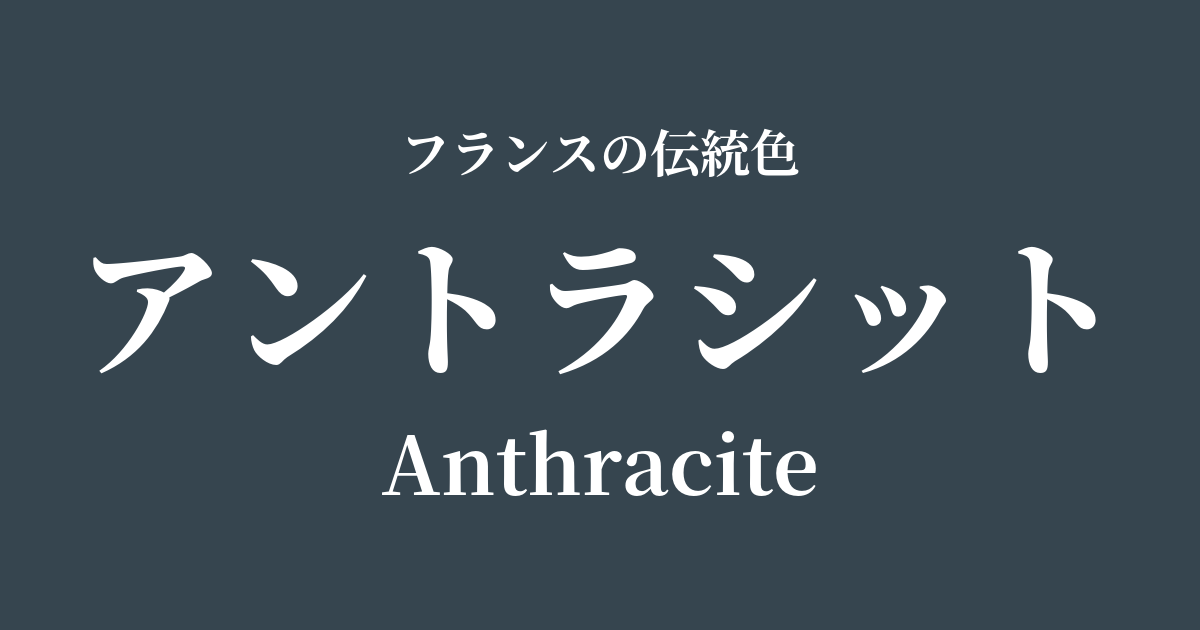
| French | Anthracite |
|---|---|
| Katakana | Anthracite |
| HEX | #36454f |
| RGB | 54, 69, 79 |
What is anthracite? Origin and etymology
Anthracite is a color name derived from the French word for "smokeless coal." Smokeless coal refers to the highest quality coal, which has the highest degree of carbonization and the fewest impurities.
Its color is a deep, dark gray, distinct from pure black. Depending on the lighting, it can appear slightly bluish or have a dull, metallic sheen. This unique, rich, and refined hue of anthracite coal has come to be recognized as "anthracite."
During the Industrial Revolution of the 19th century, as coal became the primary energy source for society, its presence became deeply ingrained in the lives of the French people, and it became one of the symbols of a sophisticated and modern sense of color.
Historical background of anthracite
The color name anthracite is thought to have become widely used in France during the Industrial Revolution of the 19th century. Coal, especially high-quality anthracite, became indispensable for powering steam engines and factories, as well as for heating homes, and its color became a symbol of the modernizing urban landscape.
The colors of these materials resonate deeply with the cutting-edge technology of the time, such as the iron balconies and gates found in the Haussmann-style architecture that characterizes the Parisian cityscape, and the iron structures designed by Gustave Eiffel.
Furthermore, in contrast to the flamboyant colors of royalty and nobility, anthracite was favored by men of the newly emerging bourgeois class as a modest and intellectual alternative to black, and was used in men's clothing such as frock coats. Not as rigid as black, yet maintaining dignity and refinement, anthracite, as a color that combined practicality with sophisticated taste, played a role in shaping the aesthetics of modern France.
Anthracite in the world of art and fashion
Anthracite, with its urban and modern nature, has played a significant role in the world of art and fashion, especially since the modern era.
In the world of art, we can find this nuance in the landscapes of modern Paris painted by Impressionist artists. For example, the rain-soaked cobblestones and the colors of the gentlemen's coats depicted by Gustave Caillebotte, or the color of the smoke rising from the steam locomotive at Saint-Lazare Station painted by Claude Monet, are all expressed as colors that reflect the light and shadow of modernization.
In the world of fashion, anthracite has established itself as a chic and versatile color second only to black. Great couturiers such as Coco Chanel and Yves Saint Laurent also highly appreciated the sophisticated charm of this color. It continues to be loved by many fashion houses as a color that best enhances the texture of high-quality materials such as wool, cashmere, and silk, and expresses timeless elegance.
Color scheme preview
This is to check the readability of the text when this color is used as the background.
Anthracite color scheme suggestion
Rose Pompadour (#D8A7B3)
The chic and mannish anthracite is paired with the elegant and sweet Rose Pompadour, creating a sophisticated and mature feminine look. This captivating color combination blends modernity with classic elegance.
Jaune de Naples (#F7D98E)
The addition of bright, warm Jaune de Naples to the calming anthracite brings an intellectual elegance and vibrancy to the space. The beautiful contrast creates a modern and stylish impression.
Blanc d'Argent (#E8E4E3)
By combining it with Blanc d'Argent, meaning silvery white, a sophisticated monochrome gradation is created. This is an extremely elegant color scheme that creates an urban and minimalist space and highlights the texture of the materials.
Practical Scenes
Anthracite is a very practical color that can be used in a variety of situations due to its versatility.
In interior design, incorporating it into a wall, sofa, or rug tightens the overall space and creates a calm, modern atmosphere. When combined with white, light gray, or natural wood, it creates a sense of warmth and openness within a sense of solidity. It is ideal for spaces where you want to concentrate or relax, such as a study or living room.
In fashion, incorporating navy into classic items like suits, coats, and jackets gives a softer impression than black and a more urban feel than navy. Because it's a color that highlights the texture of materials, you can fully appreciate its appeal with high-quality wool or cashmere knits and leather accessories. It's easy to pair with any color, making it a versatile color that can serve as the foundation of your outfit.
In the fields of web design and graphic design, using it as a background color can enhance the content and create an impression of sophistication and trustworthiness.