
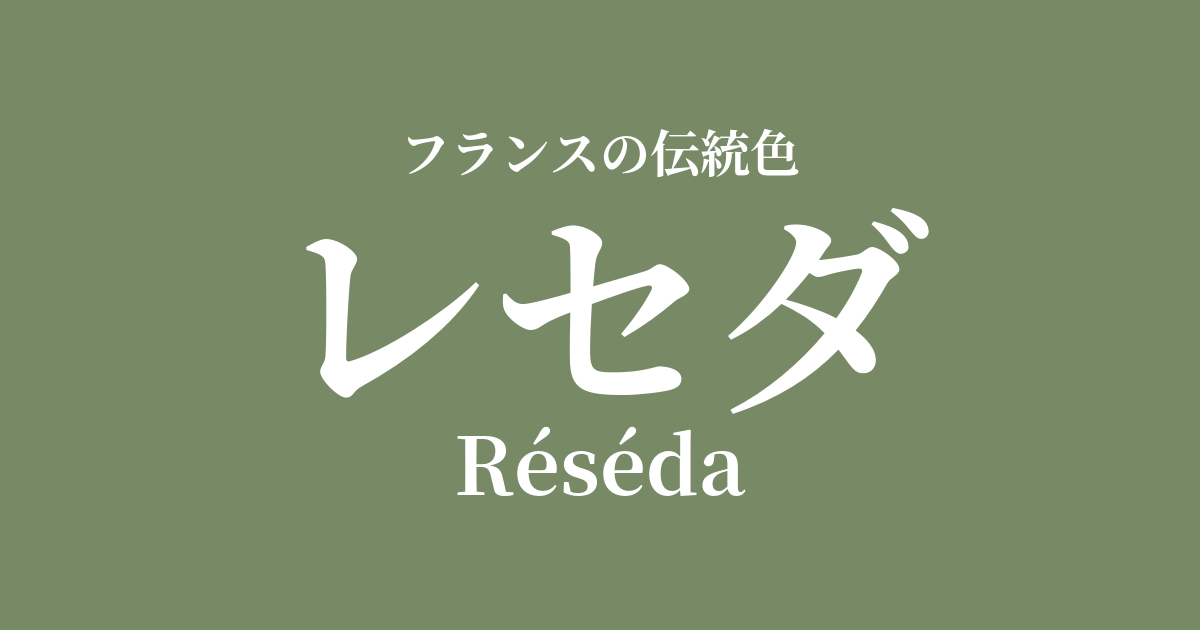
| French | Réséda |
|---|---|
| Katakana | Reseda |
| HEX | #778A65 |
| RGB | 119, 138, 101 |
What is Reseda? Origin and Etymology
Réséda is a gentle, soft yellowish-green color derived from the French word for a plant in the Lamiaceae family. The origin of this color lies in the plant Reseda luteola, also known as "Kibana Mokuseisou" in Japanese, which has been used as a dye in Europe since ancient times.
The dye obtained by boiling the flowers, leaves, and stems of this plant produced a beautiful yellow color. Furthermore, by layering this yellow dye with indigo, another plant-derived blue dye, a deep green color like that of Reseda was created.
The word "reseda" is said to originate from the Latin word "resedare" (to calm, to soothe), and it is believed that in ancient Rome, this plant was thought to have a calming effect. As the name suggests, its charm lies in its peaceful colors that seem to soothe the hearts of those who see it.
Historical background of Reseda
Leseda is a dye plant that has existed since ancient times, but it gained particular prominence in French history during the Second French Empire (1852-1870) under the rule of Napoleon III in the 19th century.
During this era, Empress Eugénie de Montijo wielded immense influence as a fashion leader. She possessed a refined sense of color, and is said to have particularly favored nuanced, muted shades. A calm green like that of Leseda was one of her favorites and became extremely popular, especially among the women of the court.
Ladies of the time embraced this color in their luxurious, crinoline-encrusted dresses, adorning the glamorous social circles. In the pre-chemical dye era, leseda was a precious and beautiful green derived from nature, deeply rooted in people's lives and culture.
Reseda in the world of art and fashion
The color Leseda is inextricably linked to 19th-century fashion culture. Fashion plates in magazines of the time often depict women wearing Leseda-colored dresses, giving us a glimpse into its popularity.
Furthermore, we can find colors reminiscent of leseda in the works of Impressionist painters who were active during this period. In Claude Monet's "Women in the Garden" and Édouard Manet's "Luncheon on the Grass," the clothing of the figures effectively uses a gentle green that reflects the fashion of the time. For them, who sought to capture the ever-changing colors of nature in the light, leseda, derived from plants, may have been a suitable color to give the canvas a sense of life and the atmosphere of the era.
Further down the line, during the Art Nouveau period from the late 19th to the early 20th century, natural motifs such as plants and insects were favored, and organic, subdued color palettes like those of Leseda were widely used in posters, crafts, and architectural decorations.
Color scheme preview
This is to check the readability of the text when this color is used as the background.
Reseda's color scheme proposal
Ecru (#F5F3E9)
The botanical green of Reseda and the natural ecru color harmonize beautifully, creating an organic and comfortable space. This color scheme is perfect for natural interiors and relaxed fashion.
Rose Pompadour (#ED82A2)
The contrast between the calming green and the vibrant pink creates a beautiful color scheme where each color enhances the other. It evokes the vitality of flowers blooming in a garden and the elegance of Rococo style, giving a sophisticated impression.
Gris de Ran (#DCD7D1)
The combination of Reseda's gentle green and the light, linen-like gray creates an intelligent and chic impression. It produces a modern and calm atmosphere that is both urban and warm.
Practical Scenes
In interior design, Reseda is an ideal color for creating a calming space. Incorporating it into wallpaper, curtains, or sofa upholstery in living rooms and studies will soothe the eyes and promote relaxation. It pairs particularly well with natural wood furniture such as oak and walnut.
In fashion, using it in items such as coats, jackets, and knitwear gives an elegant and sophisticated impression. Combining it with natural materials such as silk, linen, and high-quality cotton further enhances the organic appeal of Reseda.
In web and graphic design, using this color as a background or accent color can convey a sense of trust, security, and connection to nature. It is particularly well-suited for lifestyle brands, organic products, and environmentally themed websites.