
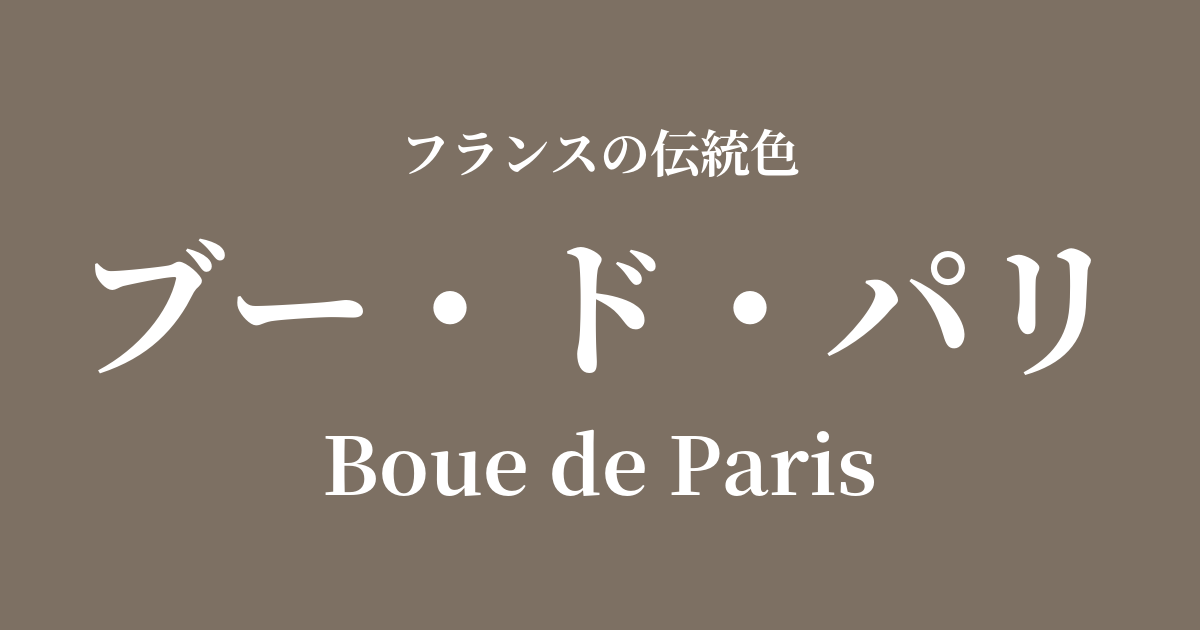
| French | Boue de Paris |
|---|---|
| Katakana | Bou de Paris |
| HEX | #7D7063 |
| RGB | 125, 112, 99 |
What is "Bou de Paris"? Origin and etymology
Boue de Paris, as the name suggests, is a French term meaning "Parisian mud," and is a tasteful grayish-brown color name.
In 19th-century Paris, which was transforming into a modern city through the Industrial Revolution, many roads were still unpaved. Dust would swirl up every time people or carriages passed by, and the streets would become muddy when it rained. It is said that this "color of mud," which was a common everyday sight for people at the time, became established as the name of a color.
This color name doesn't simply refer to a dirty color; it's seen as a color that reflects the raw reality of Paris—the hustle and bustle, the vibrancy, and the very breath of people's lives. In contrast to the glittering colors of court culture, it's a color with a very unique origin, rooted in the reality of ordinary citizens' lives.
The historical background of the Bou de Paris
The 19th century, when "bou de Paris" became established as a color name, was a turbulent time for France. In particular, during the Second French Empire under Napoleon III, a large-scale renovation plan for Paris was carried out by Haussmann, the prefect of the Seine department. The old streets were cleared away, and the beautiful boulevards and squares that led to present-day Paris were developed.
However, behind that glamorous transformation, the city was constantly covered in dust and mud due to the endless construction and the constant flow of people. Bou de Paris can be said to be a color that symbolizes the realistic side of Paris during this process of modernization.
This era also saw the rise of Realism as an artistic trend. Instead of idealized beauty, artists sought to depict the realities of workers, farmers, and everyday urban scenes as they truly were, finding new value in "realistic colors" like those found in works by Bou de Paris. These colors encapsulate the very spirit of the era, becoming witnesses to history.
The Bou de Paris in the world of art and fashion
The colors of the Bou de Paris can be seen in 19th-century art, particularly in the Parisian landscapes painted by Impressionist artists. For example, the wet cobblestones, shadows of buildings, and the colors of people's coats in Gustave Caillebotte's "Parisian Street, Rainy Day" exude the urban, slightly melancholic atmosphere of this color. They sought to capture not only the changes in light but also the realistic colors of the metropolis on their canvases.
In the world of fashion, particularly in men's clothing, practical and understated dark colors became dominant. Bou de Paris is thought to have emerged as a sophisticated, urban earth tone within this trend, incorporated into coats and suit fabrics. Combining not only elegance but also practicality and refinement, this color was perfectly suited to the attire of the modern gentleman.
Color scheme preview
This is to check the readability of the text when this color is used as the background.
Color scheme proposals for Bou de Paris
Rose Pompadour (#EDADC7)
Combining the understated Bou de Paris with the elegant and sweet Rose Pompadour creates a sophisticated impression where chicness and glamour coexist. It's a beautiful color scheme that exudes the elegance of Rococo within a modern urban atmosphere.
Vert Veronnaise (#599287)
The earthy tones reminiscent of Parisian mud and the deep greens derived from Veronese's paintings create a natural and calming harmony. It's a combination that evokes an intellectual, tranquil, and somewhat nostalgic atmosphere.
Gris de Lignan (#DCD7D1)
By using the same grayish tones, a unified, modern, and sophisticated space is created. The warmth of Bou de Paris and the light gray reminiscent of linen give a minimalist yet profound impression.
Practical Scenes
In the field of interior design, Bou de Paris brings a sense of calm and warmth to a space. Incorporating it into a wall, sofa, or rug creates a chic and cozy atmosphere. It pairs particularly well with materials such as antique wooden furniture, leather, and brass, creating a high-quality space that evokes a sense of history.
In fashion, it's an incredibly versatile color that's easy to mix and match. Incorporating it into trench coats, wool jackets, or trousers gives an intelligent and sophisticated impression. It goes well with basic colors like white, black, and navy, as well as bright accent colors, and elegantly pulls together the entire outfit.
In web and graphic design, using this color as a background enhances the content while conveying a sense of reliability and history. It's a deep, neutral color suitable for websites dealing with luxury brands or cultural themes.