
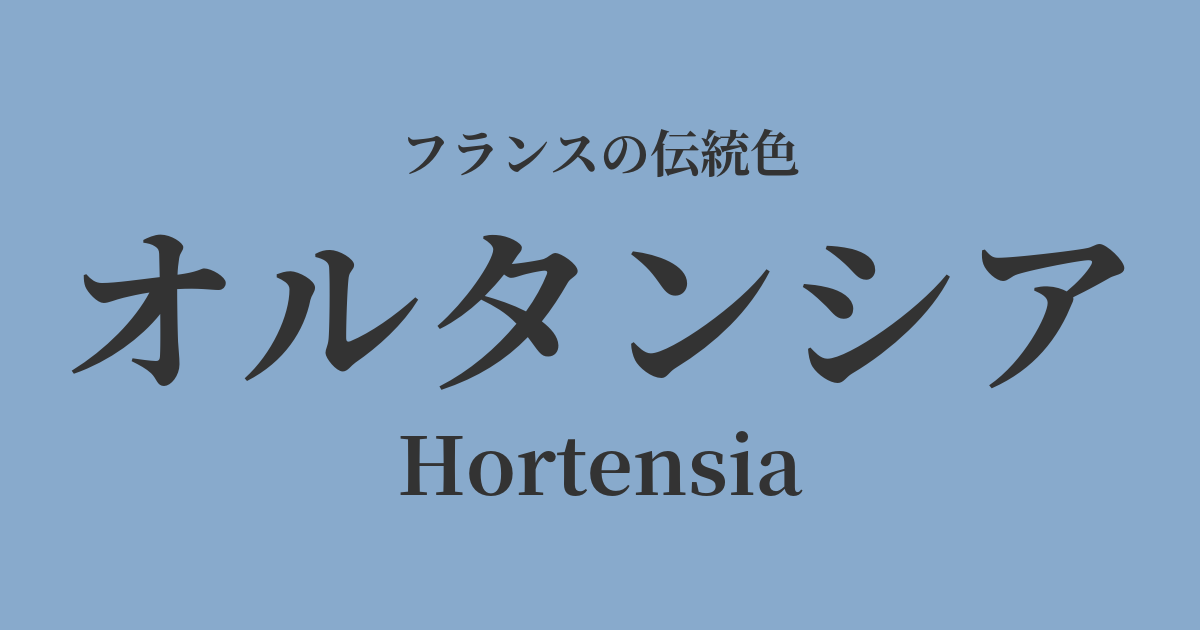
| French | Hortensia |
|---|---|
| Katakana | Hortensia |
| HEX | #88AACC |
| RGB | 136, 170, 204 |
What is Hortensia? Origin and Etymology
"Hortensia" is a French word meaning "hydrangea." As the name suggests, it refers to the elegant, slightly purplish blue color of hydrangeas that bloom during the rainy season.
There are several theories about the origin of this flower's name, but the most widely known is that the 18th-century botanist Philibert Commerson named it after Hortense Valais, the wife of a friend who accompanied him on his exploratory voyages.
Hydrangea flowers are famous for changing color from blue to pink depending on the acidity of the soil in which they grow, but the color name "Hortensia" captures that delicate, nuanced blue that was particularly beloved in French gardens. It symbolizes the fleeting yet beautiful colors hidden within the changing seasons of nature.
Historical background of Hortensia
Hydrangeas became widely known in Europe during the late 18th and 19th centuries. These beautiful flowers, introduced from the East, quickly captured people's hearts and came to play a particularly important role in French garden culture.
The 19th century was a time of the rise of the bourgeoisie, when owning a mansion and garden in the suburbs became a status symbol. In their gardens, colorful hydrangeas were planted in profusion, and the color of hortensia became one of the colors that adorned the peaceful and affluent lifestyle of that era.
Furthermore, this era coincided with the rise of Romanticism. The Romantic spirit, which found value in natural landscapes and the subtleties of human emotions, resonated deeply with Hortensia's somewhat melancholic and sentimental character.
Hortensia in the world of art and fashion
The color of hydrangeas was particularly beloved by Impressionist painters. Claude Monet cultivated many hydrangeas in his garden in Giverny, and he captured the way the flowers changed their appearance moment by moment depending on the light in numerous works. The color of hydrangeas seen in his paintings creates a beautiful harmony unique to Impressionism, where soft light and color blend together.
In the world of fashion, hortensia was a popular pastel color during the Belle Époque period from the late 19th to the early 20th century. This color was used in elegant dresses, hats, and parasols for women, creating a sophisticated and elegant look.
Hydrangeas are sometimes depicted as a plant motif in traditional French textiles such as "Toile de Jouy." Hortensia continues to be a beloved color for curtains, wallpaper, and upholstery, bringing a refreshing and calming atmosphere to interiors.
Color scheme preview
This is to check the readability of the text when this color is used as the background.
Hortensia's color scheme proposal
Rose Pompadour (#EDADC7)
This romantic and elegant combination evokes the blue and pink gradient of hydrangea blossoms. It creates a feminine and sophisticated impression, adding a touch of glamour to interiors and fashion.
Gris de Lignan (#DCD7D1)
The calming gray of the linen complements the refreshing blue of Hortensia. This color scheme creates a natural and modern atmosphere, making it ideal for comfortable and sophisticated spaces andコーディネートs.
Jaune de Naples (#FFF2A7)
The soft cream yellow adds warmth and brightness to Hortensia's cool blue. It's a pleasant color scheme that gives a refreshing and approachable impression, reminiscent of a garden in the South of France.
Practical Scenes
In interior design, hortensia brings a sense of calm and freshness to a space. Incorporating it into wallpaper, curtains, and cushions in living rooms and bedrooms creates a relaxing atmosphere. Pairing it with white or light wood-grain furniture completes a French chic or shabby chic style.
In fashion, hortensia is especially perfect for spring and summer outfits. Hortensia-colored dresses and blouses give an elegant and refreshing impression. They also pair perfectly with natural materials such as linen and cotton, allowing you to enjoy natural and sophisticatedコーディネート.
In web and graphic design, this color instills a sense of security and trust in users. When used on lifestyle brands, wedding-related websites, or beauty-related websites, it effectively conveys an elegant and gentle aesthetic.