
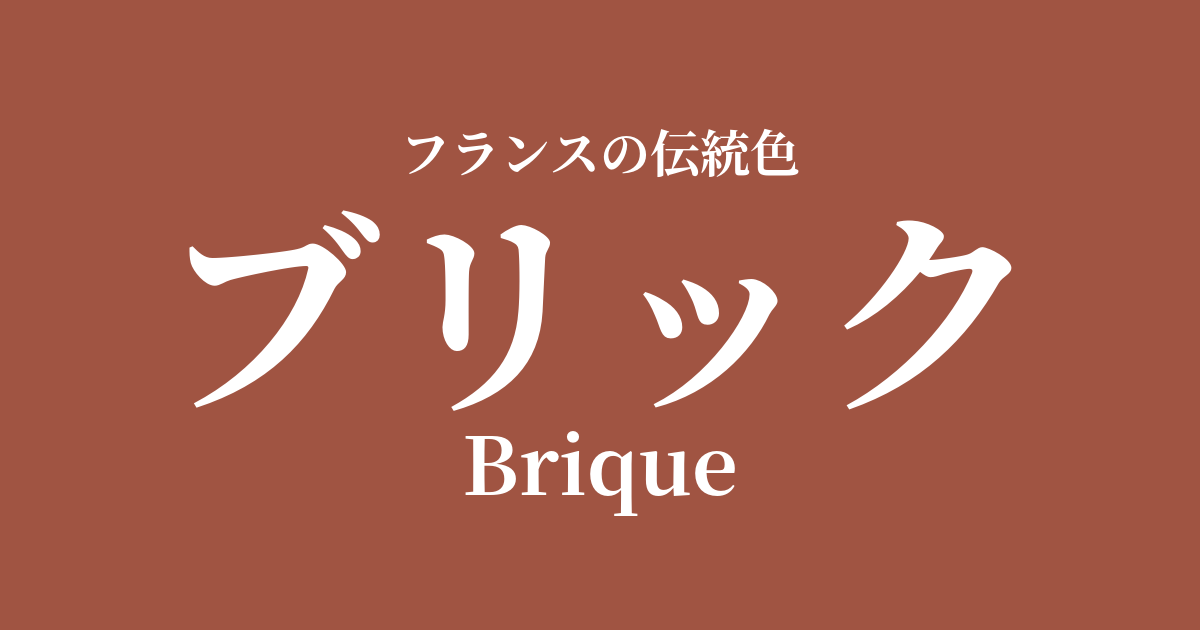
| French | Brique |
|---|---|
| Katakana | Brick |
| HEX | #a05442 |
| RGB | 160, 84, 66 |
What is a brick? Origin and etymology
"Brique" is a French word meaning "brick." As the name suggests, it refers to a reddish-brown color, like a brick made by firing clay.
This color is particularly deeply associated with the landscapes of southern France. In particular, the city of Toulouse, known as "La Ville Rose" (The Rose City), is built with bricks of this color, and its appearance, gleaming in the setting sun, has captivated many. It is characterized by a friendly hue, a blend of the rustic simplicity derived from natural materials like earth and the warmth created by human hands.
Historical background of brick
The history of brick architecture in France is long, dating back to ancient Roman times. In the southwestern region of Gaul, where stone was relatively scarce, bricks became widely used as an important building material.
In the Middle Ages, this culture flourished in cities like Toulouse and Albi. Albi's Sainte-Cécile Cathedral, built in brick rather than stone in the Gothic style, is a symbolic example, watching over the city with its imposing, fortress-like appearance. In this region, the entire town, from churches to private residences, was unified by the color of brick, creating a unique and beautiful landscape.
Since the Industrial Revolution in the 19th century, brick has been used in a wider range of buildings, including factories, railway facilities, and workers' housing, making brick an even more familiar color to the French people.
Bricks in the world of art and fashion
The color of brick has also inspired French art and fashion. Post-Impressionist painter Henri de Toulouse-Lautrec was from Albi, a city known for its beautiful brick-colored streets. The warm reddish-brown tones that frequently appear in his works are said to be influenced by the landscapes of his hometown.
In the world of fashion, brick is a beloved staple color, especially for the autumn/winter season. Incorporated into wool coats, corduroy trousers, and leather accessories, it creates a classic and sophisticated impression. Its understated yet not overly dull hue makes it perfect for creating a refined, mature style.
Furthermore, in the fields of interior design and textiles, it is used in the color scheme of "Toile de Jouy," a traditional French pattern, and is a popular color indispensable for creating warm, country-style spaces.
Color scheme preview
This is to check the readability of the text when this color is used as the background.
Brick color scheme proposal
Ecru (#f5f2e1)
The warmth of the brick and the natural, soft hues of the ecru color harmonize beautifully. This combination, reminiscent of natural materials, creates a comfortable, relaxed, calm, and sophisticated impression.
Blue Nuit (#0f2540)
The deep blue, reminiscent of the darkness of night, vividly complements the reddish tones of the brick. Their near-complementary relationship enhances each other, creating an intelligent and stylish impression where weightiness and modernity coexist.
Vert Olive (#58543a)
This combination of earth tones evokes the landscapes of Southern France. The earthy color of the brick and the color of the olive trees blend naturally, creating a rich, calming, and organic impression.
Practical Scenes
In interior design, brick is a color that brings warmth and depth to a space. Using this color as an accent wall tightens the overall look of the room and creates a calm atmosphere. It's also easy and recommended to incorporate it through fabrics such as cushions, rugs, and curtains. It pairs perfectly with wooden furniture and houseplants, creating a comfortable and inviting space.
In fashion, using it in key items like coats, jackets, and trousers creates a classic and sophisticated look. If you're hesitant to incorporate it in large areas right away, simply adding it as an accent color in leather accessories such as bags, shoes, or belts will instantly refine your outfit.
In the fields of web and graphic design, it is effective when you want to convey a sense of trust, history, and the warmth of handcrafted work. Its appeal will be particularly evident in brands dealing with traditional crafts and organic products, as well as in lifestyle media.