
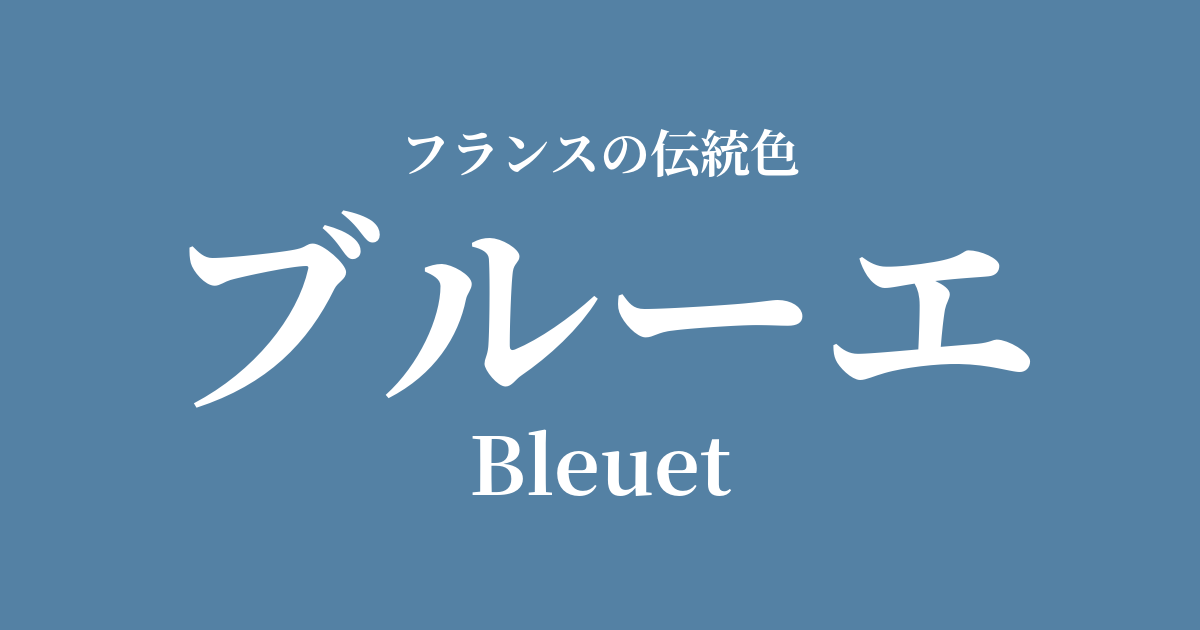
| French | Bleuet |
|---|---|
| Katakana | Blueet |
| HEX | #5481a4 |
| RGB | 84, 129, 164 |
What is a Blueet? Origin and etymology
"Bleuet" is a French word meaning cornflower. As the name suggests, it is derived from the delicate color of the petals of the cornflower, which grows wild in the fields and meadows of France.
Rather than a vibrant blue, it features a calm, gentle blue with a hint of gray. This muted hue evokes the simplicity of the French countryside and a somewhat nostalgic, poetic feeling.
With its gentleness and understated elegance, characteristic of colors found in nature, blue is one of the colors that has been cherished by the French people for centuries.
Historical background of Bleuet
The most important historical background of the color Bleuet is its deep connection to World War I. In France, this color is known as "Bleuet de France" (French cornflower), a symbol of remembrance for fallen soldiers and veterans, and of passing on their memory.
It is said that in the trenches of the Western Front during the fierce fighting of World War I, where all other plants had been flattened, the cornflower was the only flower that continued to bloom resiliently. Also, young soldiers newly assigned to the battlefield were nicknamed "Bleuets" (the blue ones) because of the color of their brand-new blue uniforms.
These episodes made the blue flower a symbol of the soldiers' courage and sacrifice. Even today, every year on November 11th, Armistice Day, many French people wear decorations shaped like blue flowers on their collars to show their respect and gratitude to those who served their country.
Blue in the world of art and fashion
The gentle hues of the Bleuet flower have inspired many artists. In particular, the cornflower, which Bleuet modeled after, often appears in the works of Impressionist painters who loved the French countryside. You can find these blue flowers scattered throughout the idyllic landscapes painted by Claude Monet and Camille Pissarro, adding a natural touch of color to the canvases.
In the world of fashion, it is a beloved color that symbolizes French casual and country styles. It pairs exceptionally well with natural materials such as linen and cotton, and incorporating it into shirts, skirts, and scarves creates an effortlessly elegant and sophisticated look.
Furthermore, the blue motif is frequently used in traditional textiles from the Provence region of southern France, adorning tablecloths and curtains and adding color to everyday life.
Color scheme preview
This is to check the readability of the text when this color is used as the background.
Blueet's color scheme proposal
Jaune de Naples (#f7d98d)
This combination evokes images of cornflowers blooming in a golden wheat field. It creates a warm and peaceful French country-style impression, bringing to mind natural landscapes.
Gris de Pars (#d3d3d9)
The gentle, muted tone of the blue hue harmonizes beautifully with the bright, pearly gray. This is recommended for those who want to create a sophisticated, chic, and calming urban atmosphere.
Rose Pompadour (#ed82a2)
This color scheme features a calming blue and a vibrant, lovely pink that complement each other beautifully. It creates an elegant and charming impression, combining classic sophistication with modern dainty.
Practical Scenes
In interior design, blue brings a sense of calm and gentleness to a space. It's recommended as an accent color for French country or shabby chic styles, used in wallpaper, curtains, cushions, and other elements. Adding it to a room with a white or beige color scheme creates a fresh and elegant atmosphere.
In fashion, it's a versatile color that works well in any season. Especially in spring and summer outfits, incorporating it with linen shirts or cotton dresses creates a cool and natural impression. In autumn and winter, adding depth with wool knits or coats completes a chic and sophisticated style.
In web and graphic design, its calming color palette makes it suitable for corporate websites and brands that want to convey trustworthiness and integrity. It's easy on the eyes and doesn't cause fatigue even after prolonged viewing, making it a versatile color for backgrounds.