
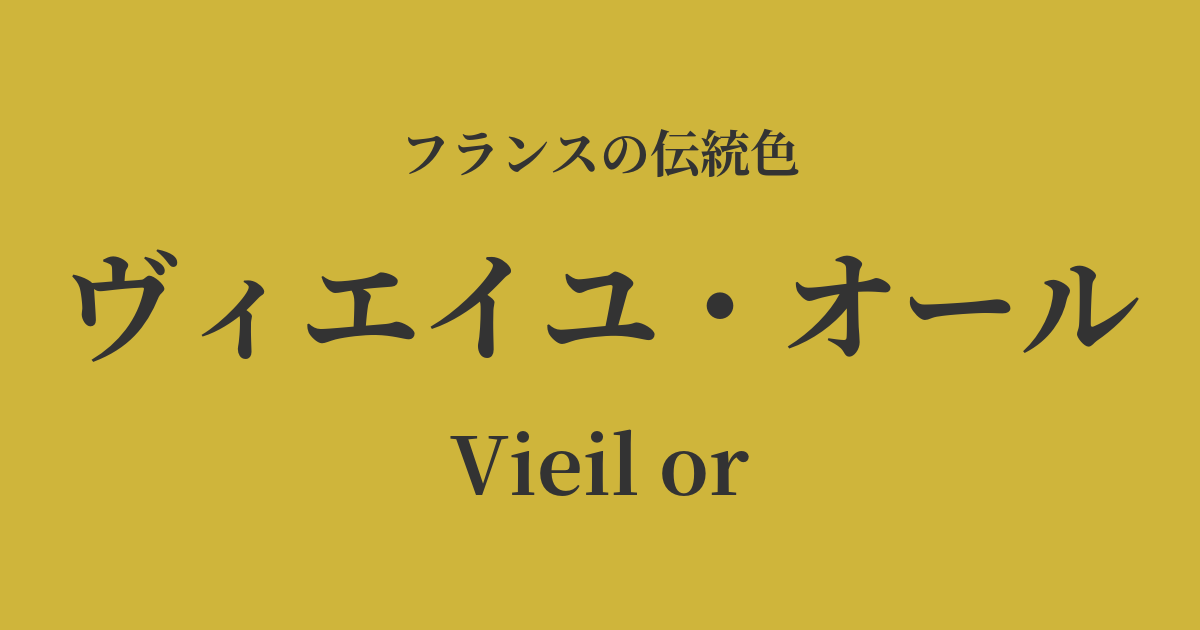
| French | Vieil or |
|---|---|
| Katakana | Vieille Or |
| HEX | #cfb53b |
| RGB | 207, 181, 59 |
What is Vieille Or? Origin and Etymology
"Vieil or" is a French term meaning "old gold." As the name suggests, it refers to the color of antique gold that has deepened in luster and mellowed with age.
In contrast to the dazzling luster of new gold, Vieille Or has a slightly muted, gentle, and nostalgic feel. This color can be found in items cherished throughout France's rich history, such as the decorations of historical buildings, antique jewelry, gold leaf on old books, and well-worn furniture. It is a color that symbolizes a unique elegance and gravitas that only the passage of time can create.
Historical background of Vieille Or
The colors of Vieille Or are associated with memories of various eras that tell the story of France's glory. In particular, they strongly reflect the Baroque and Rococo styles of the 17th and 18th centuries, exemplified by the Palace of Versailles built by Louis XIV.
At the time, the palace's interior was lavishly decorated with gold leaf, but over the centuries, its brilliance has mellowed, transforming into a deep, rich hue truly worthy of the name "Vieille Hor." The decorations found in places like the Hall of Mirrors and the King's Bedroom convey both the splendor of that era and the weight of history in the present day.
Furthermore, in the Empire style under the Napoleonic Empire, gold was frequently used in the majestic designs reminiscent of ancient Rome. The subdued golden hue that permeates these historical legacies quietly speaks to the French aesthetic sense and the depth of its history.
Vieille Or in the world of art and fashion
In the world of art and crafts, old frames have played a special role. The opulent frames that housed Baroque and Rococo paintings were often decorated with gold leaf, and the patina that developed over time gave the paintings themselves even greater depth and authority.
In the field of fashion, this color regained attention during the Art Nouveau and Art Deco periods of the early 20th century. Oriental-inspired dresses by designers such as Paul Poiret, and evening gowns adorned with delicate bead embroidery, effectively utilized muted gold threads and materials like Vieille Or, creating an elegant and sophisticated impression.
Furthermore, gold threads were lavishly used in high-quality textiles such as brocade and damask, which were used in the royal court. Over time, these textiles have mellowed in color and are no longer merely decorative items, but possess the value of works of art imbued with history.
Color scheme preview
This is to check the readability of the text when this color is used as the background.
Vieille Or's color scheme proposal
Rouge de Bordeaux (#6C2C2F)
When combined with a deep red reminiscent of aged wine, it creates a very luxurious and classic impression. It's a dignified color scheme that exudes a sense of historical weight and elegance.
Blue Roi (#2A52BE)
By combining it with Blue Roi, a symbol of the French royal family, it creates a noble and dignified atmosphere reminiscent of royalty. The colors complement each other, creating a refined and elegant space.
Blanc Cassé (#F3EAD3)
By pairing it with a soft off-white, the heaviness of Vieille Or is softened, creating an elegant and refined impression. It creates a bright yet calm and graceful space.
Practical Scenes
Due to its historical background, Vieille Or brings elegance and depth to spaces and designs.
In interior design, incorporating it as an accent in fabrics such as wallpaper, curtains, and cushions can create a classic and calming atmosphere. It pairs particularly well with antique furniture, and using it in picture frames, lighting fixtures, and small accessories will give the entire space a refined look.
In fashion, it's recommended to incorporate it through accessories such as bags, shoes, and jewelry, rather than using it on the entire dress. Simply adding it to outfits in deep colors like black, navy, or burgundy can add a touch of elegant glamour and a vintage feel to your look.
In web and graphic design, it's ideal for luxury brand websites and pages showcasing historical products. Using it as an accent in headings, logos, buttons, etc., can visually convey trustworthiness and traditional value.