
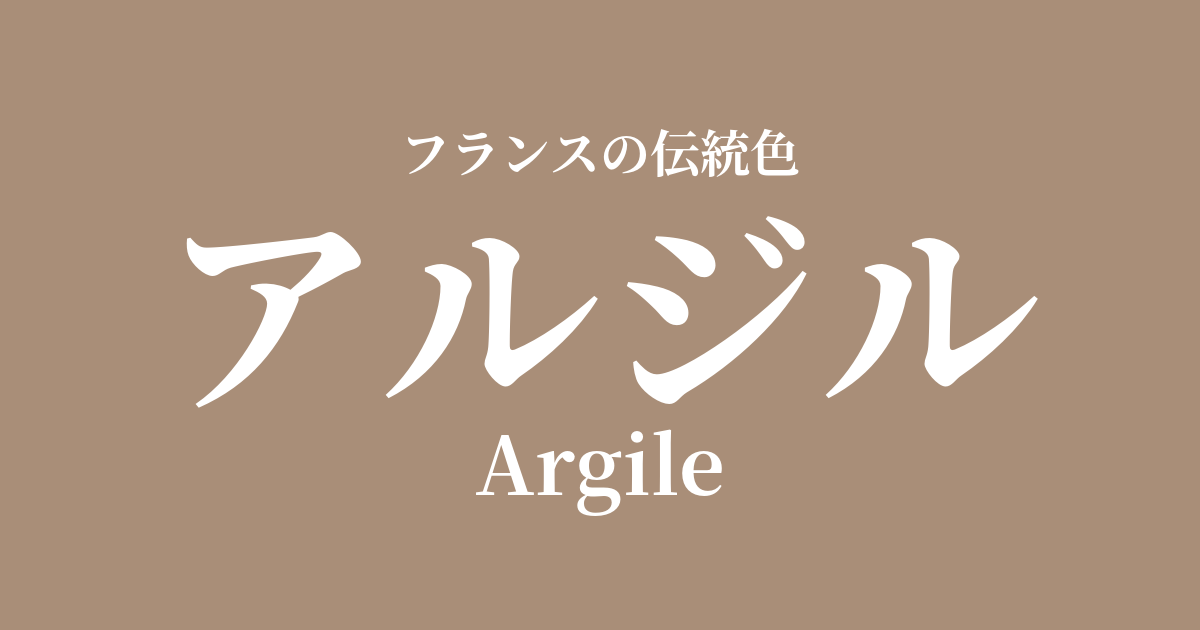
| French | Argile |
|---|---|
| Katakana | Argil |
| HEX | #a98e78 |
| RGB | 169, 142, 120 |
What is Argil? Origin and Etymology
Argile is a French word meaning "clay." As the name suggests, it is derived from the color of the clayey soil found in the fertile land of France, especially in the Provence region.
The warm, grayish-brown color, reminiscent of dry earth bathed in sunlight, is a color that is truly natural. It gives us a simpleness that cannot be artificially created, and a sense of comforting familiarity.
Since ancient times, people have used this clay as a building material for sun-dried bricks and mud walls, or as a pottery material for making simple vessels. Argile is a color deeply rooted in the lives of the French people, a color of everyday life.
Historical background of Argile
In contrast to the dazzling gold and silver threads favored by royalty and nobility, Argile is a color that has been deeply rooted in the French countryside and the lives of ordinary people.
From the Middle Ages to the modern era, houses in the rural areas of southern France were built using soil sourced from the region as building material. The landscape, with its Argile-colored walls and terracotta roof tiles, remains a part of the quintessential French scenery that continues to fascinate many people today.
In particular, the landscape around Mont Sainte-Victoire in southern France, which was beloved by the painter Paul Cézanne, is composed of various earthy colors, including Argile. The colors of the earth, which change their appearance moment by moment depending on the sunlight, have inspired many artists.
In recent years, earth tones like Argile have been gaining attention again, driven by a return to natural materials and a growing interest in sustainable living. Their gentle and sincere hues harmonize with modern lifestyles, creating a comfortable and inviting space.
Argile in the world of art and fashion
The color Argile has long been considered an indispensable color in French art, crafts, and fashion for expressing the warmth of nature and rustic beauty.
In the world of painting, argile can be found as a color symbolizing the earth in the depictions of peasants and rural landscapes by 19th-century Barbizon School painters, particularly Jean-François Millet. Furthermore, Paul Cézanne effectively uses this reddish, earthy color in his works depicting the landscapes of his hometown, Provence.
In the world of traditional French pottery, argile is a fundamental color. Simple terracotta pottery, fired without glaze, is truly the color of the clay itself and has been cherished in French homes for centuries.
In fashion, earth tones are very compatible with natural materials such as linen, cotton, and wool, and are popular as a color that embodies a natural and sophisticated "French chic." As an earth tone with a timeless appeal that is not influenced by trends, it continues to be loved across generations.
Color scheme preview
This is to check the readability of the text when this color is used as the background.
Argil's color scheme proposal
Blue Lavande (#967bb6)
This symbolic color scheme evokes the lavender fields and earth of Provence in southern France. The gentle blue enhances the warmth of Argile, creating a natural, comfortable, and relaxing impression.
Blanc Cassé (#efe9d9)
The warm, earthy feel of Argile is enhanced by the soft off-white of Blanc Cassé, creating a sophisticated, minimalist space. It gives a bright, clean, and very elegant impression.
Vert Olive (#5d5a3c)
The earthy color of argil and the green reminiscent of olive trees create a color scheme that evokes a sense of harmony in nature. It gives a deep, calm, intelligent, and chic impression of a mature adult.
Practical Scenes
Argil's warm and calming atmosphere makes it suitable for a variety of situations.
In interior design, using this wallpaper in living rooms and bedrooms creates a calming and reassuring atmosphere. It's effective not only when used on all walls, but also when incorporated as an accent wall on just one surface. Combining it with solid wood furniture, linen fabrics, and the greenery of houseplants further enhances the natural and comfortable ambiance.
In fashion, incorporating it into basic items such as coats, jackets, and trousers creates an elegant and sophisticated impression. It pairs particularly well with clothing made from natural materials such as cotton, linen, and wool, making it easy to create an effortlessly chic French style.
In web and graphic design, using this color as a background enhances the content while giving the entire site a trustworthy and warm impression. It is a particularly compatible color for brands that handle organic products and lifestyle media.