
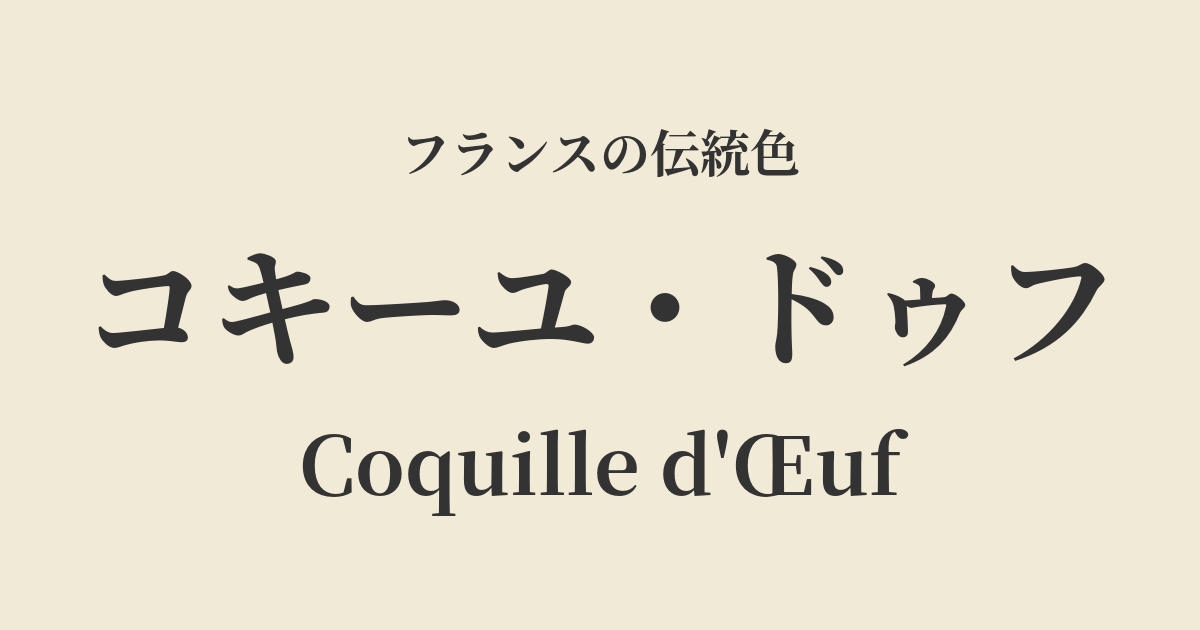
| French | Coquille d'Œuf |
|---|---|
| Katakana | Coquille Duf |
| HEX | #F0EAD6 |
| RGB | 240, 234, 214 |
What is Coquille de Fou? Origin and Etymology
Coquille d'Œuf is a very delicate and beautiful color name, meaning "eggshell" in French.
As the name suggests, it refers to a warm white color that is not pure white, like a chicken eggshell, but slightly yellowish or beige. Also known as "eggshell white" in English, it is characterized by its gentle and calm hue, inspired by the natural colors found in nature.
Its natural and soft appearance, distinct from artificial white, has long captured the aesthetic sensibilities of the French people.
The historical background of Coquille Duf
Coquille Defe's particular popularity dates back to the 18th century in France, during the Rococo period. During this era, court culture, guided by the refined tastes of Madame de Pompadour, Louis XV's mistress, and later Queen Marie Antoinette, established a magnificent and elegant style.
In contrast to the powerful and majestic Baroque style, the Rococo style favored light and bright pastel colors. Coquille de faute was the dominant color in this color palette, used in every aspect of the Palace of Versailles, from the wall decorations (boiserie) and furniture to porcelain and even the dresses of the noblewomen.
As seen particularly in the interior of the Petit Trianon, which Marie Antoinette loved, this color was combined with gold accents and graceful curved motifs to create a refined elegance and a comfortable, tranquil space.
Coquille Duf in the world of art and fashion
In the art world, Coquille Def is deeply associated with Rococo painting. Painters such as François Boucher and Jean-Honoré Fragonard depicted sweet and dreamlike worlds based on mythology and pastoral landscapes. This delicate off-white is effectively used in the skin tones and clothing of the figures in their works, as well as in the elegant interior decorations, creating a light and airy atmosphere that seems to play with light.
In the fields of fashion and textiles, coquille deuf is a color that has been loved across generations. When combined with lustrous materials such as silk, satin, and lace, its elegance is highlighted, and it is known as a classic color for wedding dresses. It is also frequently used as the base color for Toile de Jouy, a traditional French printed fabric, gently coloring the background of classical and narrative designs.
Color scheme preview
This is to check the readability of the text when this color is used as the background.
Coquille Def's color scheme proposal
Rose Pompadour (#EDADC7)
This elegant and feminine combination is symbolic of the Rococo era. The sweet pink, named after Madame de Pompadour, stands out beautifully against the soft white of the Coquille Def, creating a romantic impression.
Vert Veronnaise (#599A82)
The calming, classic green color scheme evokes a sense of natural tranquility. The warmth of Coquille Deuf complements the intelligent, deep green of Veronnaise, creating an elegant and peaceful space.
Gris de Lignan (#DCD3C4)
Combining it with a grayish beige of flaxen creates a sophisticated tone-on-tone color scheme. The subtle variations in color complete a minimalist and refined French chic style.
Practical Scenes
In interior design, Coquille de Fou is a versatile base color that brightens and expands a space without giving a cold impression. When used on walls and ceilings, it softly reflects light, creating a warm and comfortable atmosphere. It is ideal for French chic and shabby chic interior styles and harmonizes beautifully with antique furniture and linen fabrics.
In the world of fashion, its natural and elegant hue expresses effortless elegance. It's a color that brings out the best in high-quality materials such as cotton and linen shirts and silk blouses. It blends easily with any other color and works well as a foundation for outfits, while a monochrome outfit using only this color also gives a sophisticated impression.
In web and graphic design, using this color as a background is pleasing to the eye and subtly enhances the content. It is particularly effective when you want to convey elegance and trustworthiness, such as on luxury brands, lifestyle websites, or wedding-related sites.