
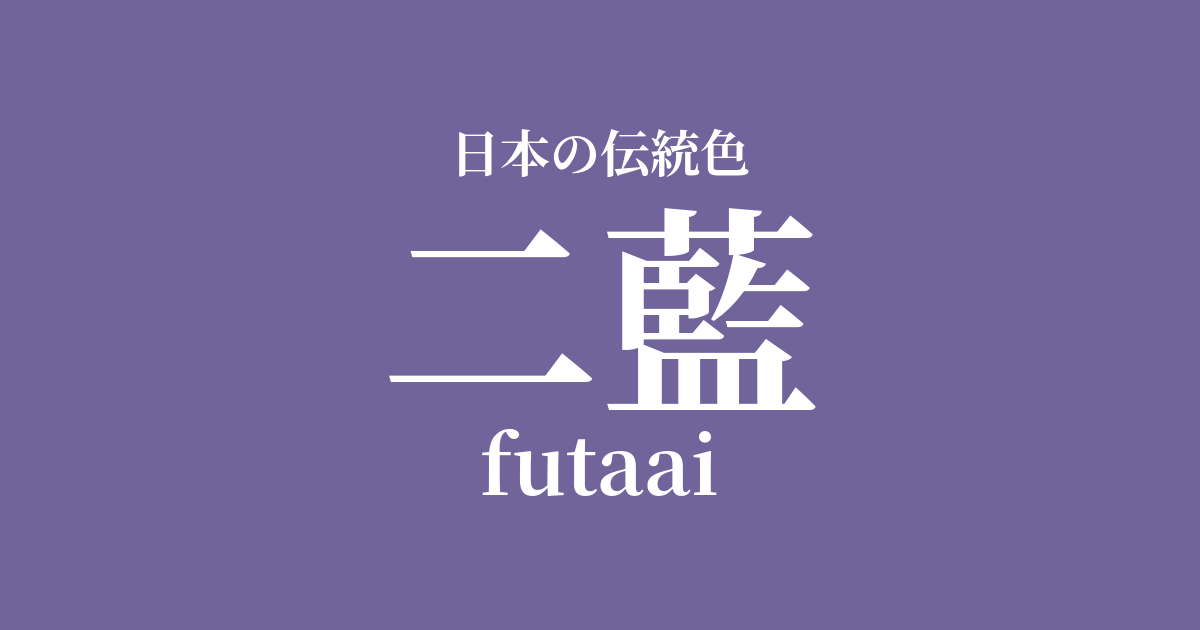
| Japanese color name | Two indigo |
|---|---|
| reading | futaai |
| HEX | #70649A |
| RGB | 112, 100, 154 |
What is "Niai"? Origin and etymology
Futaai is a deep, vibrant bluish-purple color created by applying a dye extracted from safflower to a fabric that has been pre-dyed with indigo. Its name is said to derive from the use of two dyes, and it is written as "two indigo," but it is actually interpreted as referring to indigo and crimson (in ancient times, safflower was also called indigo). This complex process creates a unique color with depth that cannot be expressed with a single dye.
This dyeing technique required highly advanced skills, considerable effort, and expensive dyes. Safflower, in particular, was a precious dye, making the color "Niiai" (indigo) a luxurious shade. The exquisite blend of indigo blue and safflower red created a noble purple that was a color of special aspiration for people at the time, and its value was extremely high.
Historical background of Niai
The history of the color "Niai" dates back to the Heian period. At that time, the imperial court had a system called "Ishiki" (rank colors), which strictly determined the colors of clothing that could be worn according to one's rank. Among these, Niai was considered a particularly noble color and was designated as one of the "Kinjiki" (forbidden colors), which only the emperor and some high-ranking nobles were permitted to wear.
The Engishiki, a set of regulations detailing the implementation of the Ritsuryo legal system, states that a deep blue (futa-ai) was designated as the color of the robes worn by those of the fifth rank or higher. This indicates that futa-ai was not merely a beautiful color, but played an important role in symbolizing the wearer's social status and authority. This color can be said to be one of the colors that symbolizes the elegant culture of the Heian aristocracy.
As time passed and society shifted to a samurai class, the system of forbidden colors gradually became a mere formality, but the noble image associated with dark blue remained. Its tradition continued to be passed down to future generations as a color used in special occasions, such as in the attire of court nobles, samurai formal wear, and Noh costumes.
Related literature, waka poetry, and seasonal words
The color "Niai" (double blue) can also be found in literary works from the Heian period. In particular, in "The Tale of Genji," the colors of the characters' clothing play an important role in expressing their social status, feelings, and the atmosphere of the scene, and Niai is effectively used as a color symbolizing noble characters.
For example, the splendid attire of Prince Genji and other noblemen is often described in shades of dark blue or similar purple hues. These descriptions illustrate how special a color dark blue was recognized in the aristocratic society of the time. Through literary works, we can catch a glimpse of the cultural value behind the color dark blue.
Color scheme preview
This is to check the readability of the text when this color is used as the background.
Color scheme proposal for two shades of blue
White training (#FEFFBFB)
By combining a noble, deep indigo with a pure, clean white, the colors complement each other, creating a dignified and refined impression. This elegant and clean color scheme is reminiscent of the attire of Heian-era nobles.
Blue gold (#FABE00)
Combining the deep purple of the two-tone blue with turmeric yellow, its complementary color, creates a vibrant and gorgeous impression. The elegant yet powerful contrast makes for an attractive color scheme that catches people's eyes.
Dark blue (#00163A)
This combination uses dark indigo, a deeper shade of indigo dye, which is one of the dyes used in the Futai (double indigo) family. The gradation created by the varying shades of the same color brings a sense of calm and depth, creating an intelligent and dignified atmosphere.
Practical Scenes
In the world of traditional Japanese clothing, dark blue is used for formal kimonos and obi sashes such as visiting kimonos, colored formal kimonos, and fukuro obi sashes, where elegance is required. It pairs very well with classical patterns and is highly valued as a color that adds dignity and depth to the entire outfit. Even incorporating it into accessories can give a coordinated look a refined feel.
In interior design, using it as an accent color brings a sense of luxury and tranquility to a space. Incorporating it partially through cushions, rugs, or art panels can create a sophisticated, adult atmosphere. It pairs particularly well with white, gray, and natural wood tones.
In the fields of web and graphic design, it is suitable as a theme color for brand websites that value tradition and prestige, or for those dealing with high-end products. Rather than using it as a background color, using it for key elements such as headings, buttons, and logos can create an elegant and trustworthy image.