
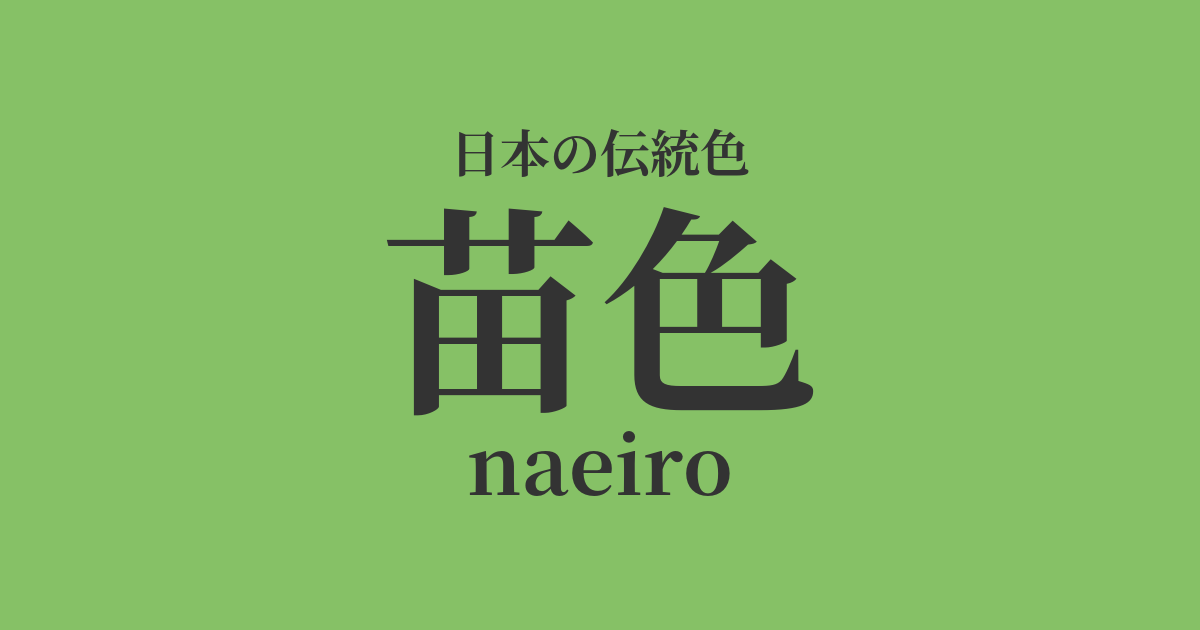
| Japanese color name | seedling color |
|---|---|
| reading | naeiro |
| HEX | #86C166 |
| RGB | 134, 193, 102 |
What is "Naeiro"? Origin and etymology
As the name suggests, "naeiro" refers to a vibrant, fresh yellowish-green color, like rice seedlings that have just been planted. Deeply connected to Japan's core rice-farming culture, it has long been cherished by the Japanese as a color symbolizing the breath of life, healthy growth, and the arrival of early summer. Its hue evokes a sense of hope and reassurance in those who see it.
Traditionally, the dye used to achieve this color was kariyasu, which is made by boiling the grass plant *Caribbeanus sieboldii*. By adding lye extracted from the ash of camellia or *Sakaki* as a mordant to the kariyasu dye solution, this bright, vibrant yellow-green color is obtained. It is a color that possesses both depth and gentleness, characteristic of naturally derived dyes.
Historical background of seedlings
The name "naeiro" (苗色) is a color with a long history, as it appears in the Engishiki, a collection of laws compiled in the mid-Heian period. In the section on the Imperial Sewing Bureau, "naeiro" is listed alongside "yellow-green" as a dye name, indicating that it was an officially recognized color name at that time.
During the Heian period, it is said that this color was favored for use in the clothing of young women and children, as it conveyed a sense of youthfulness and vitality. It was also used in layered garment combinations, such as "nawashiro," and was an important color for expressing the feeling of the seasons.
During the Edo period, the color "naeiro" (rice seedling color) became more widespread among ordinary people and was used in various everyday items such as kimonos, hand towels, and accessories. Around this time, derivative colors that evoked more specific scenes, such as "sanae-iro" (rice seedling color), also emerged, enriching Japan's color culture.
Related literature, waka poetry, and seasonal words
The color of seedlings has been featured in many literary works, waka poems, and haiku as a symbol of the rural landscape in early summer. In the world of haiku in particular, "sanae" (rice seedlings) and "nawashiro" (seedling bed) have become established as seasonal words for summer, and seedling color, along with these words, has become an indispensable color for depicting the vibrant scenes of early summer.
In classical literature, the colors of characters' clothing are sometimes described as seedling green or a similar shade of green. For example, in works such as "The Tale of Genji," the colors of the clothing play an important role in suggesting the character's age, social status, and the season, and seedling green is said to have been effectively used as a color symbolizing youth and freshness.
The rice seedlings are planted in the field, and the coolness in my hands is refreshing.
Color scheme preview
This is to check the readability of the text when this color is used as the background.
Suggested color scheme for seedlings
Dark brown (#6A4028)
The combination with dark brown, reminiscent of the earth where seedlings grow, is a color scheme that expresses the natural landscape itself. The harmony between the earth tones creates a calm, reassuring, and grounded impression.
Dayflower color (#38A1DB)
The combination with the dayflower green color, which symbolizes the water essential for rice growth, highlights a sense of coolness and freshness. It gives a refreshing and clean impression, and the color scheme evokes the clear air of early summer and the flow of pure water.
Fuko Eiro (#FFD900)
By combining it with dandelion yellow, another color associated with spring and early summer, it creates an even brighter and more hopeful impression. It is suitable for expressing youthfulness and vitality, and is a color scheme that will lift the spirits of those who see it.
Practical Scenes
In the world of traditional Japanese clothing, the color of "nae-iro" (sprout green) is used to color early summer, appearing in unlined kimonos, summer obi sashes, and accessories such as obiage (sash ties). Because it gives a youthful and refreshing impression, it tends to be particularly favored in the attire of younger generations. It is also a popular color for yukata patterns.
In interior design, using it as an accent color brings a bright and fresh atmosphere to the entire room. Incorporating it into parts of the wallpaper, cushions, or curtains can create a comfortable space that evokes the breath of nature. It also pairs very well with wooden furniture.
In the fields of web and graphic design, it is ideal as an image color for natural and organic products. Its high visibility and ability to convey a sense of security and health make it effectively used in websites and advertisements related to food, healthcare, and the environment.