
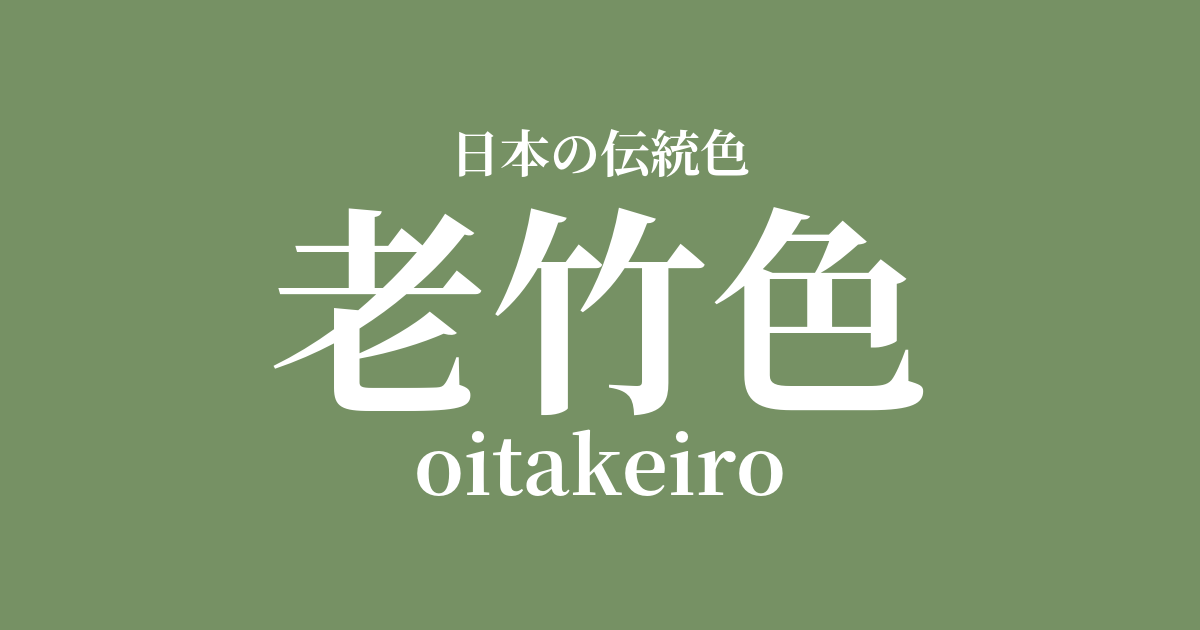
| Japanese color name | old bamboo color |
|---|---|
| reading | oitakeiro |
| HEX | #769164 |
| RGB | 118, 145, 100 |
What is "old bamboo green"? Origin and etymology.
"Old bamboo green" refers to the dark, subdued green color of a fully grown bamboo stalk. In contrast to the vibrant green of young bamboo, "young bamboo green," it is characterized by a color that conveys a sense of calm and depth that comes with age. The word "old" in "old" has positive connotations, including not only the meaning of being old, but also maturity and refinement.
This color name originated from a sense of color deeply rooted in Japan's rich natural environment, especially the landscapes of rural mountains, and is considered one of the colors that symbolizes the Japanese aesthetic.
Historical background of the old bamboo color
The color name "Oitake-iro" (old bamboo color) is believed to have originated in the Edo period. From the mid-Edo period onward, as townspeople's culture matured, subdued and calm tones, such as brown and gray, came to be favored as "chic" rather than flashy and vibrant colors. Oitake-iro is said to have been one of the colors that was widely accepted among people during this trend of "48 shades of brown and 100 shades of gray." It is said to have been used in a variety of items, regardless of gender, including samurai formal wear, commoner's clothing, and accessories.
Related literature, waka poetry, and seasonal words
The word "old bamboo" itself has been used in waka and haiku poetry since ancient times. Its appearance, which withstands wind and snow and remains green even after the passage of time, has been seen as a symbol of unwavering integrity, longevity, or quiet strength. Although it is not designated as a specific seasonal word, its tranquil appearance makes it often used to express the sense of loneliness and stillness, especially in autumn and winter. In literary works, it is an important element in depicting the dignity and wabi-sabi aesthetic that comes with age.
Green icicles on old bamboo and snow on the eaves
Color scheme preview
This is to check the readability of the text when this color is used as the background.
A proposed color scheme in the shade of old bamboo green.
Moss color (#607C3D)
This combination of similar colors both represent the deep green of nature. The subdued tone of old bamboo green harmonizes with the tranquility of moss green, creating a very calm and stable impression. It is suitable for Japanese-style spatial design and graphics with traditional themes.
Persimmon color (#ED6D3D)
The deep green of old bamboo combined with the vibrant orange of a ripe persimmon creates a near-complementary color relationship, where each color enhances the other. This color scheme evokes the bountiful harvest of autumn, giving a warm and lively impression.
Off-white (#FBFBF4)
The deep, rich feel of the aged bamboo green is softened by the soft, natural white of the off-white color. This color scheme creates a sense of cleanliness and elegance, making it suitable for modern Japanese-style designs and minimalist interiors. It's a combination that evokes a refined and calming atmosphere.
Practical Scenes
In traditional Japanese clothing, the color "old bamboo green" gives a sophisticated and calm impression, and is often used in men's kimonos and haori jackets, as well as in women's obi sashes and obiage sashes. It particularly adds depth and a sense of the season to autumn and winter attire. Its subdued hue exudes elegance regardless of age.
In interior design, using it on large areas such as wallpaper, sliding doors, and curtains brings a sense of tranquility and calmness to the space. It pairs exceptionally well with natural materials such as wood, Japanese paper, and diatomaceous earth, making it ideal for coordinating a Japanese modern study or bedroom.
In web design and graphic design, using it as a background or accent color can convey a sense of reliability, tradition, and authenticity. It is suitable for the color schemes of established websites, natural brands, and services that emphasize luxury.