
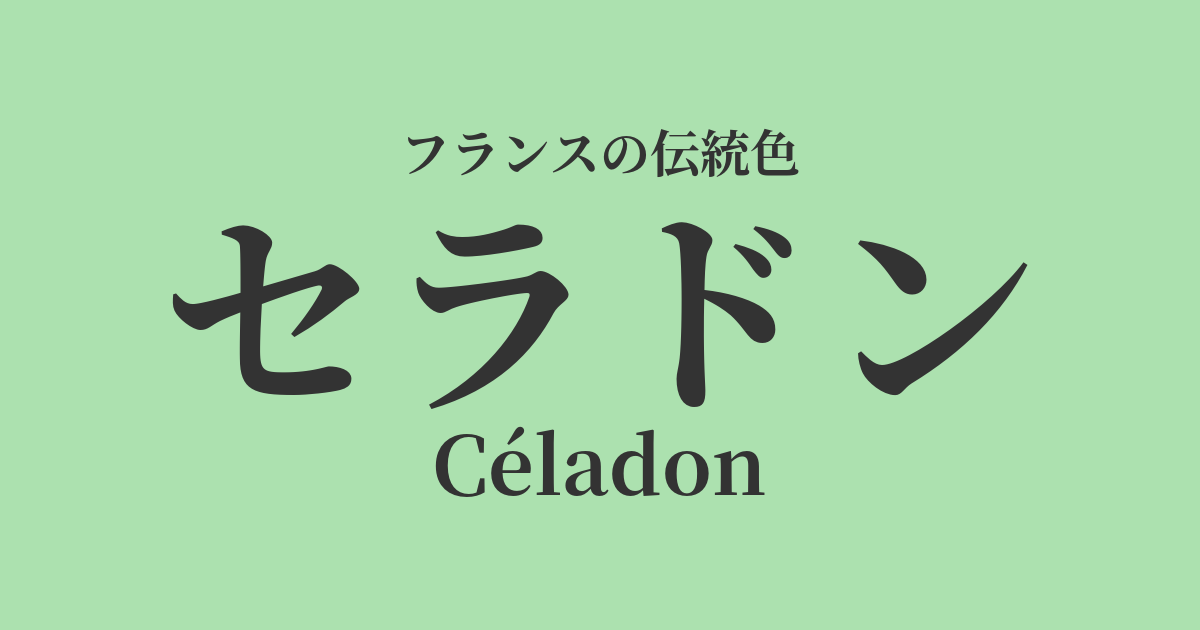
| French | Céladon |
|---|---|
| Katakana | Celadon |
| HEX | #ACE1AF |
| RGB | 172, 225, 175 |
What is celadon? Origin and etymology
Celadon is a traditional French color referring to a pale blue-green color resembling jade. Its name originates from the shepherd Celadon, the protagonist of the 17th-century French novel *L'Astrée* by Honoré Durfe.
In the story, Celadon wore a pale green ribbon as a symbol of her unwavering love for her lover, Astre. The novel became immensely popular in Europe, and the expression "Celadon green" became widely known as a term referring to a specific, beautiful shade of color.
Interestingly, this "celadon green" referred to the color of Chinese celadon porcelain, which was highly prized among European royalty and nobility at the time. The translucent, mystical blue-green of celadon was a color that had never existed in the West before, and it captivated people.
Thus, the color name "Celadon" was born in a way that symbolizes the crossroads of cultures, as the name of a character in French literature became established as a word describing the color of porcelain brought from the East.
Historical background of celadon
Celadon was particularly beloved in France during the 17th and 18th centuries. Under the reign of Louis XIV, a Chinese-inspired style known as "Chinoiserie" became extremely popular, centered around the Palace of Versailles. Celadon imported from China was fitted with gold and silver pedestals and treated as the finest works of art to adorn the palace.
Its elegant and delicate colors perfectly matched the refined aesthetic of French court culture and became a status symbol for royalty and nobility.
As the Rococo style flourished in the 18th century, celadon's popularity soared even higher. Madame de Pompadour, Louis XV's mistress, is said to have been particularly fond of this color. Under her patronage, the Sèvres porcelain factory produced numerous masterpieces based on celadon, alongside "Rose Pompadour."
During this period, celadon was not only used in porcelain but also in interior wallpaper, textiles, and the dresses of noblewomen, becoming one of the colors that symbolized the elegant and lighthearted atmosphere of the Rococo era.
Celadon in the world of art and fashion
In the works of François Boucher and Antoine Watteau, leading painters of Rococo art, a delicate blue-green color reminiscent of celadon frequently appears. This soft hue adds vibrancy and elegance to the paintings, whether used for the elegant dresses of noblewomen in mythological settings or pastoral landscapes, or as the color of curtains and furniture adorning interiors.
Furthermore, Marie Antoinette was also fond of this color, and it is said that she incorporated it into the interior design of her private chambers at the Petit Trianon Palace. In the world of fashion, celadon pairs exceptionally well with lustrous fabrics such as silk and satin, and it has always been a beloved color for designers to express elegance.
Even today, celadon remains a popular color in the fields of fashion, interior design, and product design. Its subdued hue, in particular, pairs well with French chic and minimalist styles, creating a sophisticated and refined atmosphere. Furthermore, in the world of ceramics, many artists continue to strive to recreate the mystical celadon hue.
Celadon was dressed in shepherd's clothes and wore a green ribbon, the color of hope.
Color scheme preview
This is to check the readability of the text when this color is used as the background.
Celadon color scheme proposal
Rose Pompadour (#EDADC7)
This elegant and feminine combination is reminiscent of the Rococo era. The colors were both beloved by Madame de Pompadour, evoking a sense of history while creating a vibrant and sophisticated impression.
Gris de Lignan (#DCD3C4)
Pairing it with a muted beige, like flaxen, creates a natural and calming atmosphere. The gentle quality of celadon is highlighted, giving an elegant and comfortable French chic impression.
Blanc d'Argent (#E8E4E3)
By combining it with a pure, silvery-white, the transparency and porcelain-like texture of celadon are highlighted. This clean and modern color scheme is perfect for minimalist spaces and designs.
Practical Scenes
In interior design, celadon is a color that brings calmness and tranquility to a space. When used on large areas such as wallpaper, curtains, and sofas, it brightens the entire room and creates a sophisticated atmosphere. Combining it with white, light gray, and natural wood-grain furniture creates a comfortable French chic space.
Even incorporating small items like cushions, vases, and tableware can add a touch of elegance.
In the world of fashion, celadon is a particularly perfect color for the spring and summer seasons. When incorporated into light materials such as silk blouses or linen dresses, the freshness and elegance of the color are brought out to the fullest. It is also said to have the effect of making skin tone look beautiful, and when worn near the face, it gives a soft impression.
It pairs perfectly with basic colors like beige, white, and gray, giving your outfit a refined and elegant look.
In web and graphic design, celadon is effective when you want to convey a sense of trust, reliability, and sophistication. When used as a background color, it enhances content while creating a user-friendly impression. It's particularly suitable for lifestyle brands, beauty-related websites, and wedding-related designs.