
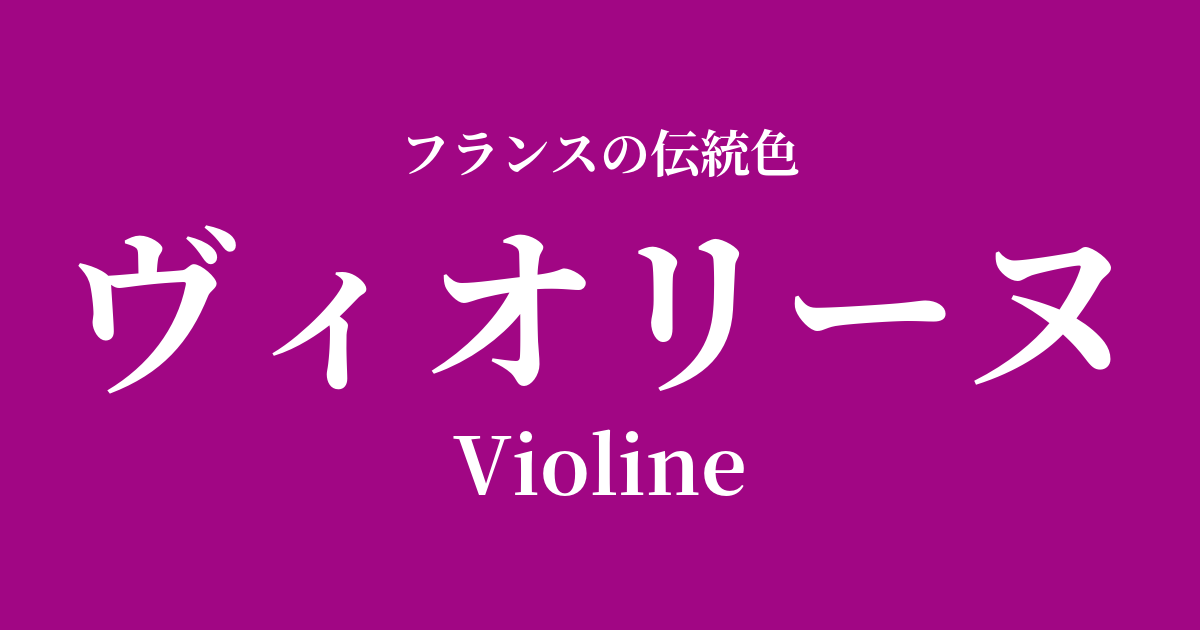
| French | Violine |
|---|---|
| Katakana | Violine |
| HEX | #A10684 |
| RGB | 161, 6, 132 |
What is Violine? Origin and Etymology
Violine is a mysterious reddish-purple color that is said to have two beautiful origins, judging from the sound of its name.
One example is the stringed instrument, the violin (French: violon). However, this name doesn't refer to the color of the violin's wood itself, but rather to the image evoked by its passionate and sensual tone, and sometimes melancholic melodies. The deep, lustrous hues were associated with the violin's sound, which deeply moves the listener's heart.
Another possible origin is the violet flower (French: violette). It is believed to have been derived from "violette," the color of the violet, which has been loved in France since ancient times and is also known as a symbol of Napoleon. Violine was distinguished from the common violet color as having a stronger reddish tint and a deeper, more ripe-like depth. It is a complex and rich color, a blend of passionate red and mysterious purple.
The historical background of Violline
Purple has long been a rare and expensive dye in Europe, and for a long time it was a noble color that only a select few, such as emperors, royalty, and clergy, were allowed to wear.
In France, purple held special significance as a color symbolizing royal authority. However, it wasn't until the 19th century that reddish-purples like violine became widely recognized among the public. With the development of chemical dyes, it became easy to create vibrant and diverse colors that had previously been difficult to achieve, and purple opened up new possibilities for expression in the worlds of fashion and art.
In particular, during the Romantic era, which emphasized the inner world and emotions of the individual, and the Symbolist era, which sought to depict the unseen world, Violine's mystique, passion, and somewhat decadent atmosphere strongly stimulated the sensibilities of artists. It was also the moment when purple, which had traditionally been a symbol of authority, was reborn as a color of more personal and artistic sensibility.
Violine in the world of art and fashion
The mystical allure of the violine inspired artists of the late 19th century. Symbolist painters Gustave Moreau and Odilon Redon effectively used this deep, enigmatic purple to fantastically depict the world of myth and dreams. In their works, the violine blurred the boundaries between reality and unreality, drawing the viewer into an inner world.
In the world of fashion, from the Belle Époque to the Art Deco era, violine became a symbol of sophistication and individuality. Innovative designers like Paul Poiret incorporated bold, oriental-influenced colors along with new silhouettes that liberated women from corsets. Amidst this, violine shimmered brilliantly on luxurious materials like velvet and silk, becoming a beloved color for evening dresses. It was a color perfectly suited to expressing the independence and hidden passion of women in this new era.
The first feelings of love are modest and fragrant, like a violet flower.
Color scheme preview
This is to check the readability of the text when this color is used as the background.
Violine's color scheme proposal
Gris Perle (#D4D4D4)
Pairing it with a pale, pearly gray highlights the nobility of Violine. It gives off a sophisticated, urban, and calmly elegant impression.
Blue Nuit (#0F2540)
The combination with a deep navy blue, meaning "midnight blue," creates a mysterious atmosphere reminiscent of the veil of night. It gives a sense of gravitas, drama, and intellectual impression.
Rose Pompadour (#ED82A2)
The elegant pink, symbolic of Rococo splendor, accentuates Violine's passionate side. It gives a romantic impression that is feminine yet not overly sweet.
Practical Scenes
For interior design, violine is an ideal accent color that adds depth and a sense of luxury to a space. Painting just one wall in the living room in this color, or incorporating it into velvet sofas, cushions, or curtains, instantly creates a dramatic atmosphere. Combining it with gold or brass lighting and frames will create an even more classic and sophisticated ambiance.
In fashion, violine is a color that takes center stage. A violine dress or coat will add a touch of glamour to your outfit for special occasions. For everyday wear, try incorporating it into silk blouses or knitwear, or using it as an accent color in accessories such as bags, scarves, or pumps. It will pull the whole outfit together, creating an elegant and mysterious adult charm.
In web design and graphic design, it is effective for expressing a brand's worldview on luxury brands, art, and beauty-related websites. Rather than using it extensively as a background color, using it as an accent for headings, buttons, and key visuals can leave a strong impression on users.