
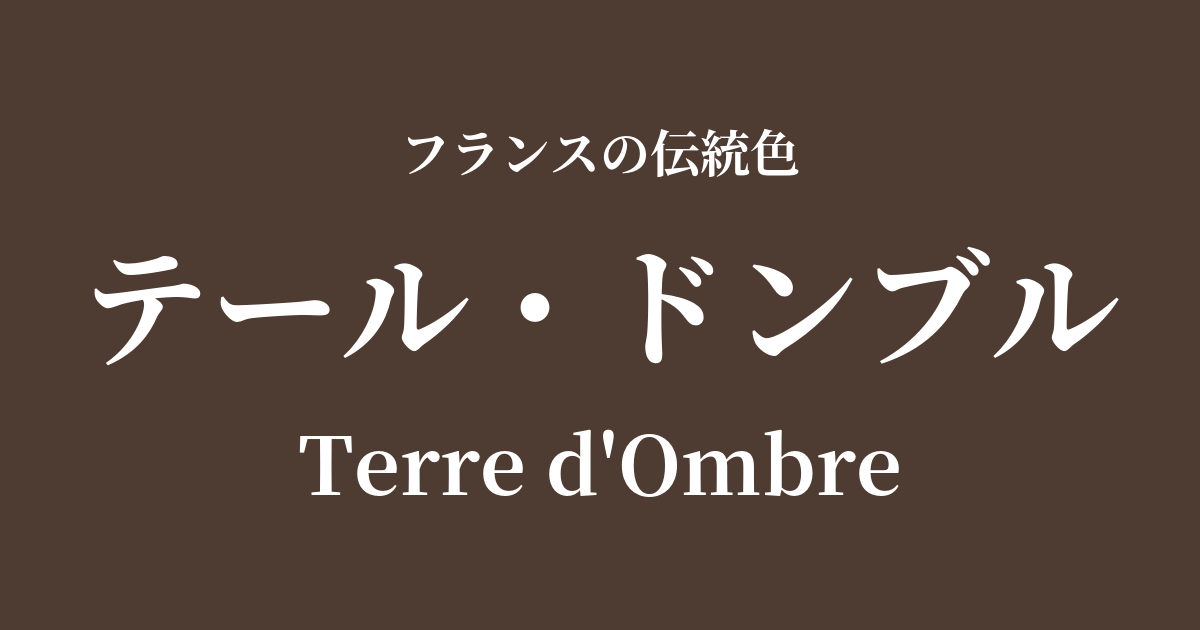
| French | Terre d'Ombre |
|---|---|
| Katakana | Terre d'Ombre |
| HEX | #4e3b31 |
| RGB | 78, 59, 49 |
What is Terre d'Ombre? Origin and Etymology
Terre d'Ombre is a deep, calming brown color, meaning "land of shadows" in French. As the name suggests, it embodies both the warmth of the natural earth and the tranquility cast by its shadows.
The most widely accepted origin of this color is that it comes from the Umbria region in central Italy, where the pigment was produced. The name of the region is said to originate from the Latin word "umbra," meaning "shadow," and the color came to be called "shadow soil," which evolved from "earth of Umbria."
The main components are iron hydroxide and limonite, which is rich in manganese dioxide, a compound that darkens the color. The natural form is known as "raw umber," while the form that has been calcined to give it a reddish tint is known as "burnt umber." Terre d'Ombre is used as a general term for these umber pigments.
Historical background of Terre d'Ombre
The history of Terre d'Ombre is very old, dating back to the time when humankind first used color. Traces of this pigment have been found in prehistoric cave paintings, such as those in Lascaux, to depict the outlines and shading of animals.
Although it was widely used as a painting material since ancient Roman times, its value particularly increased during the Renaissance. Masters such as Leonardo da Vinci and Caravaggio made extensive use of this color in a technique called "chiaroscuro," which expresses a dramatic contrast between light and shadow, giving their works a deep sense of three-dimensionality and realism.
Terre d'Ombre was an indispensable color for 17th-century French Baroque painting, especially for "painters of the night" like Georges de La Tour. It was highly valued for depicting the soft light and deep shadows created by candlelight. It was used not only in painting but also for coloring furniture and as a building material, and has become deeply rooted in French art and lifestyle.
The Terre d'Ombre in the world of art and fashion
In the history of art, terre d'ombre has been a favorite color of many painters across different eras and schools, as one of the most fundamental colors for depicting light and shadow. In particular, the 17th-century Dutch master Rembrandt skillfully used this color to create a profound world of light and shadow that seemed to capture even the inner lives of his subjects.
The Barbizon School painters of 19th-century France were also known to love this color. Jean-François Millet used a palette based on Terre d'Ombre to express the power and simplicity of the earth itself when depicting French peasants and rural landscapes.
In the world of fashion, earth tones have established an unshakeable position as a quintessential choice. They pair particularly well with warm materials such as tweed, wool, and leather, and are a staple color in autumn and winter collections. Their timeless, classic appeal adds elegance and depth to items that are meant to be cherished for years, such as trench coats and leather goods.
Color scheme preview
This is to check the readability of the text when this color is used as the background.
Color scheme proposal for Terre d'Ombre
Blanc Cassé (#dcd3c4)
The deep hue of Terre d'Ombre is complemented by the soft, warm white of Blanc Cassé, creating an elegant and calming contrast. This color scheme is perfect for creating a natural, sophisticated, and comfortable space.
Veil Olive (#59532f)
The earthy color of Terre d'Ombre and the plant-like Vert Olive create a harmonious combination reminiscent of natural landscapes. It gives a calm, relaxed, deep, and peaceful impression.
Rouge Grenat (#8b2938)
The combination of the subdued brown of Terre d'Ombre and the deep, ripe red of Rouge Grenat creates a weighty and elegant impression. It's a sophisticated color scheme that is both classic and passionate.
Practical Scenes
In interior design, the Terre d'Ombre brings a sense of calm and gravitas to a space. Used as an accent wall in a study or living room, it creates an intellectual atmosphere. Combining it with antique wooden furniture, leather sofas, and brass lighting creates a warm, classic space.
In fashion, it's perfect for key pieces like coats, jackets, and leather boots. It's a timeless color that transcends trends and pairs easily with various other colors, expanding your styling options with just one piece. It's especially great for creating a sophisticated, mature style from autumn through winter.
In web and graphic design, using this color as a background can convey a sense of trust and sophistication to the content. It is particularly effective as the brand color for websites themed around history and tradition, or for brands dealing with organic products. The key is to pair it with lighter colors for text to ensure readability.