
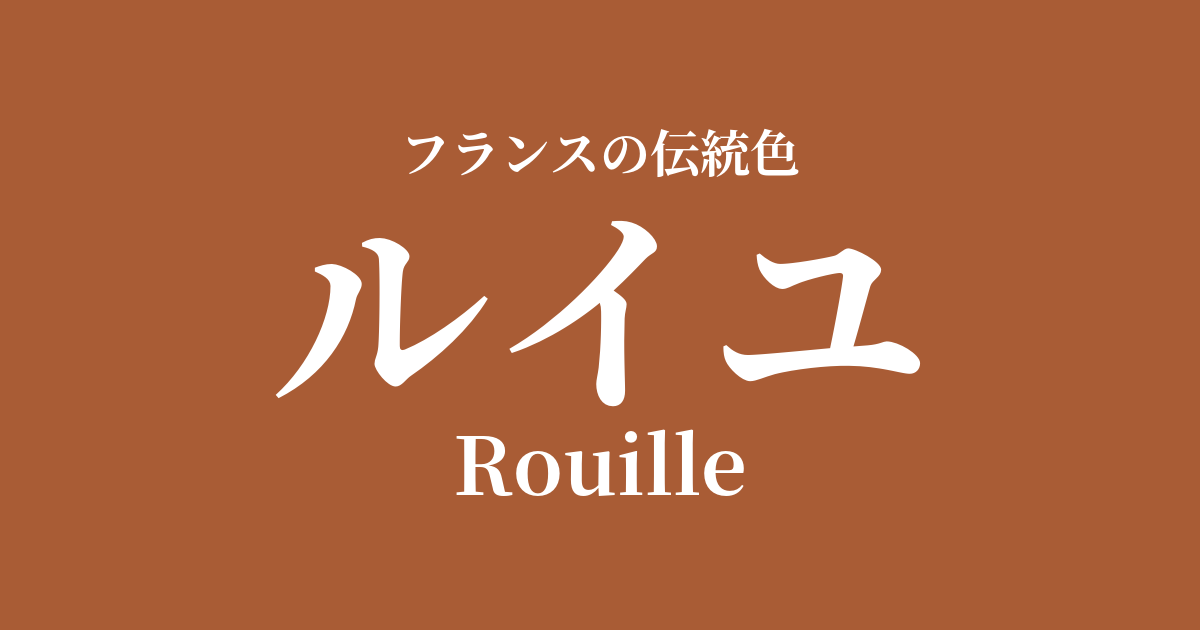
| French | Rouille |
|---|---|
| Katakana | L'Ouil |
| HEX | #a95c35 |
| RGB | 169, 92, 53 |
What is a rouille? Origin and etymology
"Rouille" is a French word meaning "rust." As the name suggests, it refers to the reddish-brown color that is produced when iron comes into contact with air and water and oxidizes.
Long before artificial pigments existed, this color, which has been present in nature, has been deeply rooted in people's lives. Walking through the French countryside, you can find the hue of rouille everywhere—on the iron gates and farming tools of old farmhouses, on the corrugated iron roofs of buildings, and so on. It is a color that evokes a sense of history and stories, etched into the landscape over many years.
The name "rouille" also appears in culinary culture. The vibrant orange sauce served with bouillabaisse, a seafood soup that is a specialty of Marseille, a port city in southern France, is also called "rouille sauce." It is made by mixing garlic, chili peppers, saffron, and other ingredients, and is named for its color, which resembles the color of rust.
The historical background of L'Ouille
Ruille was not so much a glamorous color favored by royalty and nobility, but rather a color associated with the daily lives and labor of ordinary people. Especially after the Industrial Revolution in the 19th century, as the railway network developed in France and the number of buildings using steel frames increased, the color of iron and its aging process, "rust," became an even more familiar part of the landscape.
Iron has always been a symbol of modernization, from iron structures like the Eiffel Tower to factories and bridges. The rouille color that iron acquires from being used and exposed to the elements may not have been seen as mere deterioration, but rather as a deep, rich expression that tells the story of the passage of time.
Furthermore, the walls and roof tiles of traditional houses in the Provence region of southern France have long been made with a natural pigment called ochre. This reddish-brown hue is very similar to that of rouille, and the way it shines in the sunlight has captivated many artists, including Van Gogh. Rouille can be said to be a color that reflects both the industrial and natural history of France.
Ruille in the world of art and fashion
In the art world, 19th-century realist painters effectively used the colors of rouille in their depictions of unadorned rural landscapes and the lives of laborers. The textures of soil and worn farm tools, as seen in the works of Jean-François Millet, are precisely expressed through earthy tones like rouille. They believed that true beauty lay in the unadorned everyday, and they cherished these natural colors.
In the world of fashion, rouille is a particularly popular staple color for the autumn and winter seasons. It pairs exceptionally well with warm materials such as leather jackets and boots, corduroy pants, and wool coats. This color, which evokes a sense of nostalgia, is reminiscent of 1970s retro style and adds depth and sophistication to any outfit.
In the fields of textiles and interior design, rouille is highly valued as a color that adds warmth and accent to a space. When combined with natural materials such as linen and cotton, it can create a comfortable and relaxed atmosphere.
Color scheme preview
This is to check the readability of the text when this color is used as the background.
Ruille's color scheme proposal
Blue Nuit (#0f2540)
The warm rouille and the calm, intellectual blue nuit are almost complementary colors that enhance each other. They create a sophisticated, urban, and tranquil atmosphere in spaces and fashion.
Celeste (#b9d8e8)
This combination evokes the natural and open feeling of the sky and land stretching across the French countryside. The warmth of rouille is enhanced by the brightness of celeste, creating a refreshing and pleasant impression.
Gris de Lignan (#dcd5c8)
The soft Gris de Lignan, reminiscent of natural flax, gently envelops the earthy warmth of Rouille. It creates a natural, elegant, and relaxed atmosphere.
Practical Scenes
In interior design, rouille brings warmth and comfort to a space. It's recommended to use it as an accent wall, or incorporate it into fabrics such as sofas, cushions, and rugs. It pairs wonderfully with wooden furniture and houseplants, creating a natural and calming atmosphere. It's also ideal for industrial styles that combine concrete and metal, adding a touch of humanity to a sophisticated look.
In fashion, rouille is especially useful for autumn and winter outfits. Simply incorporating it into key items like coats, knits, or leather skirts instantly creates a seasonal look. It also pairs well with denim, adding depth to casual styles. Combining it with basic colors like navy, gray, and off-white will create an elegant and sophisticated impression.
In web and graphic design, this color is suitable for brands that want to convey trustworthiness, history, and the warmth of handcrafted work. When used as an accent color for buttons and headings, it attracts the user's attention while bringing a sense of calm and approachability to the entire site.