
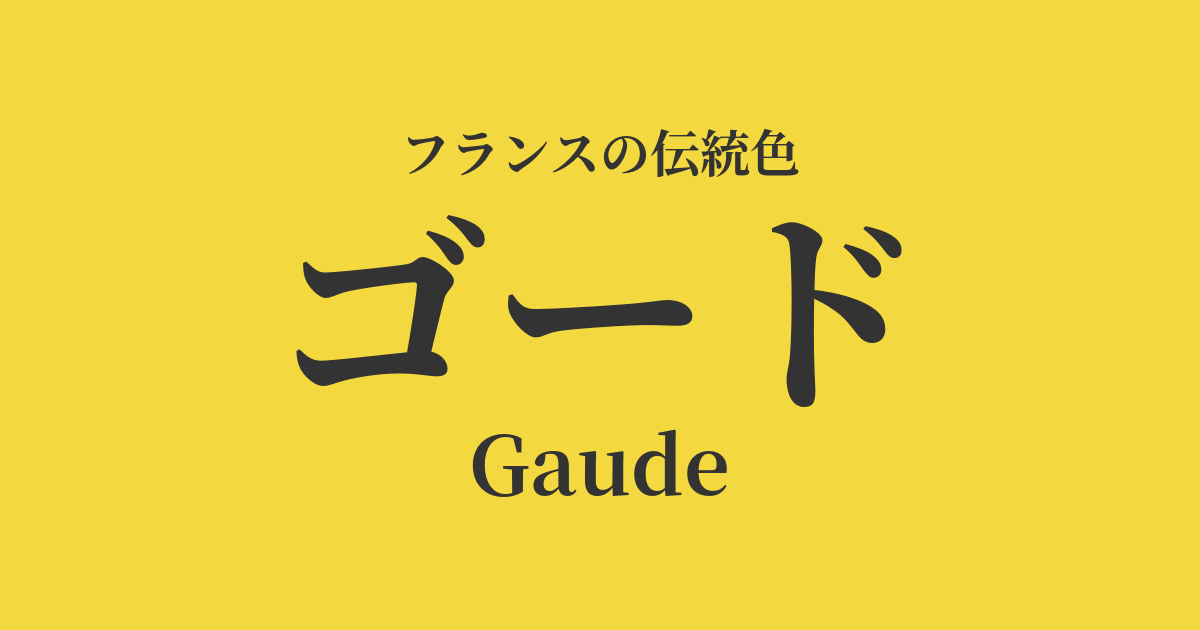
| French | Gaude |
|---|---|
| Katakana | Gordon |
| HEX | #F3D93F |
| RGB | 243, 217, 63 |
What is a Gordo? Origin and etymology
The name "Gaude" originates from the bright yellow dye extracted from the plant *Reseda luteola*, a member of the Liliaceae family that grows wild from Europe to West Asia. The color name became established because the plant is called "Gaude" in French.
Its history is very old, with fabrics dyed with this plant having been discovered in Neolithic sites in Europe. The ancient Romans are also said to have used it to dye wool, and it is mentioned in Pliny the Elder's "Natural History." Because it is inexpensive yet produces a vibrant and durable yellow, it has been widely loved throughout the ages.
Historical background of Gord
In medieval Europe, goat was one of the most important and common yellow dyes. In France in particular, it was cultivated on a large scale in Lyon and the Languedoc region, which were centers of the dyeing industry, and was considered an important crop that supported the economy.
The value of goat's dye lies not only in its use as a standalone yellow dye, but also in its ability to shine when combined with other dyes. By dyeing goat's dye with pastel (Ilex crenata), another important blue dye at the time, it was possible to create a vibrant green color. This technique was essential for creating the beautiful greens seen in medieval tapestries and textiles.
With the invention of inexpensive chemical dyes in the 19th century, the demand for natural dyes, including goat's, rapidly declined. However, their bright, sun-like hues remain deeply etched in French color culture.
Gord in the world of art and fashion
Gaut's vibrant yellow was frequently used to decorate medieval manuscripts and lavish tapestries. Its brilliance was particularly valued as a substitute for expensive gold, or when depicting the halos of saints or the robes of royalty.
In Renaissance painting, it is believed that lake pigments made from gold (often called "Dutch pink") were used by painters such as Vermeer. Painters skilled in depicting light layered this translucent yellow like a glaze, creating a luminous effect.
In the world of fashion, it was a familiar color used to dye the everyday clothes of ordinary people, and at the same time, its vibrant hues led to its use in court dresses. In modern times, with the growing interest in natural dyes, it has been re-evaluated by textile artists and environmentally conscious designers, and its sustainable appeal is attracting attention.
Color scheme preview
This is to check the readability of the text when this color is used as the background.
Gord's color scheme proposal
Blue de Roi (#2D56A6)
The combination of royal blue and sun yellow is a traditional color scheme also seen in French coats of arms. The colors vividly complement each other, creating a noble yet energetic and modern impression.
Vert Veronnaise (#5A8F68)
The natural warmth of the coral tree harmonizes with the calming green, creating a very natural and comfortable atmosphere. It gives the impression of a tranquil and vibrant landscape reminiscent of the countryside in southern France.
Rouge de Mars (#984945)
By combining a bright goat with a reddish-brown that evokes the strength of the earth, a warm and deep color scheme is created that reminds us of the bountiful autumn harvest. It's a sophisticated yet somehow comforting combination.
Practical Scenes
In interior design, goat's red is an ideal accent color that brings brightness and warmth to a space. Simply incorporating it into fabrics such as cushions, curtains, and rugs will fill the entire room with a cheerful atmosphere. It pairs particularly well with white, beige, and natural wood, and looks great in Scandinavian and country-style spaces.
In fashion, simply incorporating one goat-colored item can brighten up an entire outfit. Especially during the spring and summer seasons, using goat-colored items such as dresses, blouses, or scarves creates a cheerful and positive impression. Pairing it with dark colors like navy or charcoal gray tightens the color palette and results in a sophisticated look.
In web and graphic design, this color is effective in attracting user attention and creating a sense of familiarity. Using it on important elements such as buttons and headings can give the entire site a vibrant and positive image.