
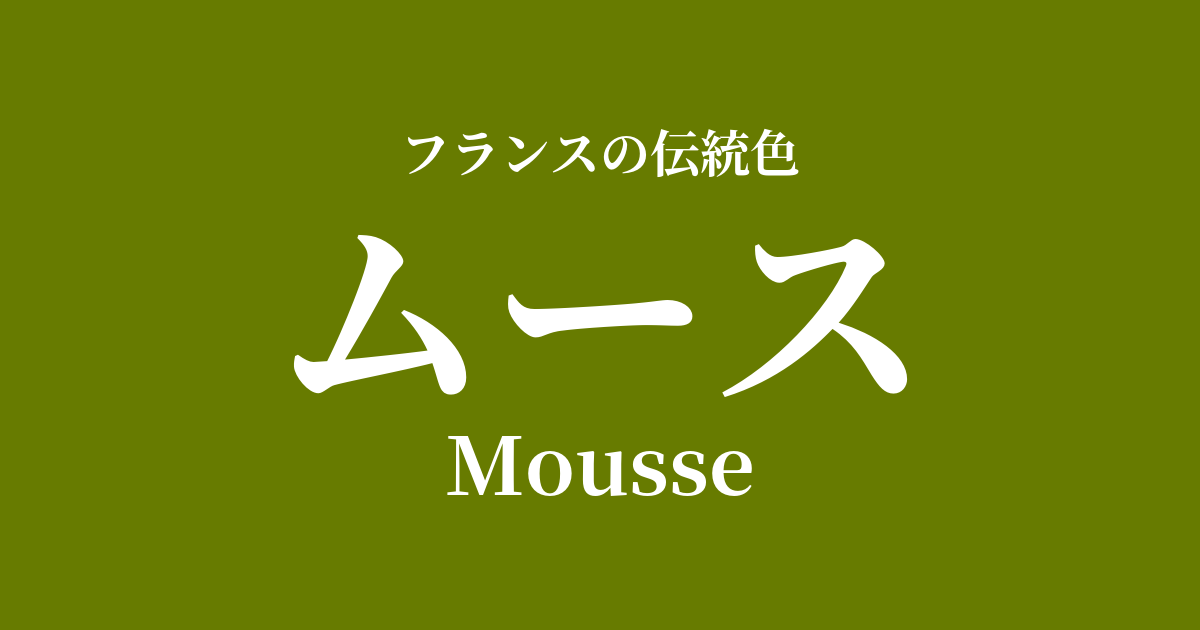
| French | Mousse |
|---|---|
| Katakana | mousse |
| HEX | #677B00 |
| RGB | 103, 123, 0 |
What is a moose? Origin and etymology
"Mousse" is a French word meaning "moss." As the name suggests, it derives from the velvety color of moss that covers damp rock surfaces and the trunks of old trees in the deep forests of France.
This color is not simply green; it evokes the vitality of nature nurtured over many years, the tranquility of the depths of the forest, and the gentle flow of time. It is a simple yet profound color deeply connected to France's rich natural environment, especially the forest culture that its people have cherished.
Historical background of the moose
Earth tones, such as mousse, have been deeply rooted in people's lives throughout French history, serving as practical colors that contrasted sharply with the opulent court culture. Because they do not require expensive dyes, they are believed to have been used since ancient times for the clothing of commoners, hunting attire, and military uniforms.
In the late 18th century, a return to nature became popular even at court, exemplified by Marie Antoinette's longing for rural life at the Petit Trianon. It is said that this historical context provided an opportunity for natural, mousse-like colors to be re-evaluated as possessing a different kind of appeal than artificial colors.
In the 19th century, the Industrial Revolution led to the development of chemical dyes, allowing for the creation of more vibrant colors. However, these subdued color palettes, like the unadorned natural landscapes beloved by the Barbizon School painters, remained a constant presence in the French psyche.
Moose in the world of art and fashion
The shades of mousse resonate deeply with the artistic world of the Barbizon School painters who were active in the mid-19th century. Jean-François Millet and Camille Corot, among others, depicted the light and shadow of the Fontainebleau Forest, as well as its moss-covered trees and rocks, with unadulterated beauty. On their palettes, mousse was an important color that even expressed the dampness of the forest and the scent of the earth.
In the world of fashion, moose is a timeless classic color. It pairs exceptionally well with warm materials such as tweed, corduroy, and wool, making it indispensable for country style and traditional attire. Even today, it is used in trench coats, military jackets, and high-quality knitwear, creating an intelligent and sophisticated adult style.
Color scheme preview
This is to check the readability of the text when this color is used as the background.
Mousse color scheme proposal
Ecru (#FBF8E1)
The combination of deep green mousse and off-white ecru creates a natural and warm atmosphere. It pairs well with natural materials such as furniture and linens, providing a calm and relaxing ambiance.
Terre de France (#A95328)
This ultimate earth-tone color combination evokes the colors of forest moss and the earth itself. It exudes calmness and depth, creating a very stable and reassuring impression. It's recommended for classic, sophisticated interiors and autumn fashion.
Rose Pompadour (#ED7A9E)
The addition of vibrant Rose Pompadour as an accent to the refined mousse creates a sophisticated and beautiful contrast. It's perfect for creating an elegant impression that is both chic and feminine.
Practical Scenes
In interior design, moose brings a sense of calm and tranquility to a space. Incorporating it into accent walls in the living room, or into fabrics such as sofas and curtains, creates a relaxed atmosphere reminiscent of being in a forest. It pairs particularly well with wooden furniture and houseplants, making it ideal for natural modern spaces and studies.
In fashion, it's a timeless classic color that transcends trends. Incorporating it into coats, jackets, and trousers creates an intelligent and sophisticated impression. It harmonizes beautifully with basic colors like beige, white, and gray, as well as accent colors like burgundy and mustard, adding depth to your outfit.
In web design and graphic design, it's effective when you want to convey trustworthiness and an organic image. When used on websites for natural cosmetics, food brands, or outdoor-related sites, it can intuitively communicate the brand's worldview.