
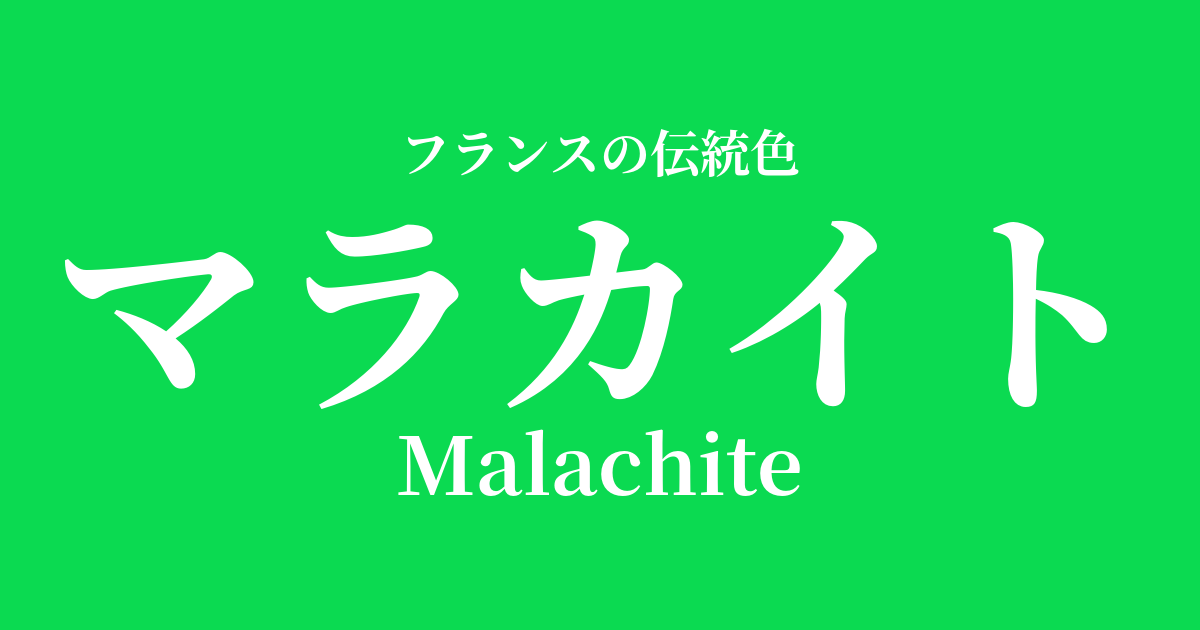
| French | Malachite |
|---|---|
| Katakana | Malachite |
| HEX | #0bda51 |
| RGB | 11, 218, 81 |
What is malachite? Origin and etymology
Malachite is a mineral with a vibrant and powerful green color, derived from its Japanese name, "kujakuishi" (peacock stone). Its name is said to originate from the Greek word "malakhē," meaning "mallow," because the color of malachite resembles the color of mallow leaves.
Malachite is characterized by its beautiful variations in shade, appearing as concentric circles or stripes. Its Japanese name comes from the fact that its pattern resembles a peacock spreading its feathers.
This beautiful mineral has captivated people since ancient times. In ancient Egypt, it was used in powder form as eyeshadow, and processed into amulets and jewelry. It also has a very long history as a pigment, and is known as one of the earliest green pigments used by humankind.
Historical background of malachite
Malachite gained particular prominence in the history of French decorative arts during the 18th and 19th centuries. Especially during the Empire style of the Napoleonic era, this color became extremely popular as a symbol of wealth and power.
When a massive deposit of malachite was discovered in the Ural Mountains of Russia in the 19th century, the Russian emperor presented it as a top-tier gift to the royal families of various European countries. France was no exception, and the Grand Trianon at the Palace of Versailles still houses a magnificent collection of malachite vases, tables, and fireplace decorations gifted by the Russian emperor.
These opulent ornaments, with their vibrant malachite green combined with the gleam of gold and bronze, beautifully capture the grandeur and splendor of the imperial era.
Malachite in the world of art and fashion
In the world of art, malachite, known as "rock verdigris," remained a valuable source of green from medieval manuscript illumination to Renaissance and Baroque paintings. However, pigments made from natural minerals were expensive and chemically unstable, such as turning black when exposed to sulfur compounds, so painters had to handle them with extreme care.
In 19th-century Empire style architecture, malachite itself played a leading role, not in paintings, but in decorative arts such as furniture and architecture. Its unique patterns and vibrant colors created a stunning contrast with mahogany and gold leaf decorations, resulting in opulent and magnificent spaces.
In the 20th century, malachite's geometric beauty was re-evaluated during the Art Deco era. High-end jewelry houses such as Cartier created jewelry combining malachite with platinum and diamonds, bringing out a new, modern, and sophisticated appeal.
Color scheme preview
This is to check the readability of the text when this color is used as the background.
Malachite color scheme proposal
Jaune d'Or (#FFDF00)
The vibrant green of the malachite combined with the shimmering gold creates a luxurious and dignified impression reminiscent of the Empire style.
Noir (#000000)
The vibrant malachite color is toned down by the black, creating a modern and sophisticated contrast. It can also evoke a chic, Art Deco atmosphere.
Rose Pompadour (#ED7A9B)
The vibrant green and elegant pink are almost complementary colors that enhance each other. This color scheme evokes the vitality of spring and the splendor of Rococo.
Practical Scenes
In interior design, malachite is effective as an accent color due to its striking presence. Using this color on just one wall, or incorporating it into small items like cushions, art panels, or vases, brings vitality and a sophisticated atmosphere to a space. In particular, combining it with gold or brass furniture and lighting creates a classic and luxurious style.
In the world of fashion, malachite green dresses and blouses are eye-catching statement pieces for parties and other special occasions. For everyday wear, it's recommended to incorporate it through bags, scarves, and accessories. Simply adding it to outfits in basic colors like black, white, and beige instantly creates a stylish and unique look.
In web and graphic design, its vibrancy makes it effective for buttons and banners that you want to attract attention. However, to maintain readability, it's better to use it sparingly as an accent rather than as a background color, as this can add energy and sophistication to the overall design.