
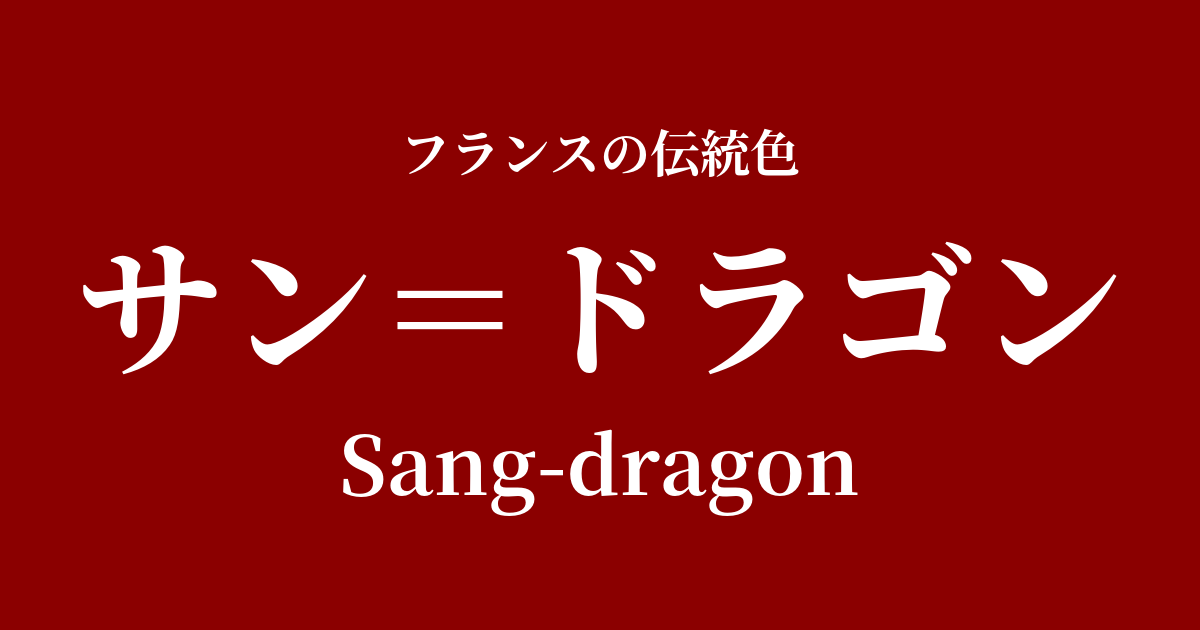
| French | Sang-dragon |
|---|---|
| Katakana | San-Dragon |
| HEX | #8b0000 |
| RGB | 139, 0, 0 |
What is a Sun Dragon? Origin and Etymology
Sang-dragon is a deep, mystical red color, meaning "dragon's blood" in French. As the name suggests, the origin of this color is deeply intertwined with legends and myths.
The origin of this color lies in the red resin extracted from a plant called the "dragon's blood tree" (Dracaena draco / Dracaena cinnabari), which grows naturally on Socotra Island and the Canary Islands. When the trunk of this tree is wounded, a deep crimson sap, resembling blood, oozes out and hardens when exposed to air. Because of this, ancient people believed this resin to be the blood shed by the legendary creature, the dragon, and named it "dragon's blood."
Its existence has been known since ancient times, as evidenced by its mention in the writings of the ancient Roman naturalist Pliny. Due to its rarity and mysterious origins, it has been treated not only as a source of color, but also as a medicine, a panacea, and even an ingredient in alchemy, making it extremely expensive and valuable.
The name originates from the Latin "Sanguis Draconis" (dragon's blood), which was translated into French, and the name itself embodies the dramatic story behind the color. More than just a color name, it is a culturally rich color name where legend, pharmacology, and art history intersect.
Historical background of San-Dragon
Sun-dragon resin, or "dragon's blood," was highly prized in Europe from antiquity to the Middle Ages. Its mystical red color was treated as a symbol of sanctity and power, and was used particularly in medieval manuscript illumination (miniature) to adorn important parts such as the blood of Christ or saints, or the clothing of royalty.
With the Age of Discovery, the expansion of trade routes brought more "dragon's blood" to Europe than ever before. During this period, dragon's blood was highly valued not only as a pigment for paintings but also as an ingredient in varnishes used to beautifully color furniture and wooden products. In particular, the theory that "dragon's blood" was one of the secret ingredients behind the beautiful reddish varnish of Stradivarius violins, famous instruments made in Cremona, Italy, is very well known.
In France, too, it is said that during the monarchy era, it was used to dye luxurious textiles and cosmetics (such as blush). However, in the 19th century, with the development of cheaper and more stable synthetic pigments and dyes, natural sundragoon gradually lost its leading role. Nevertheless, due to its unique depth and historical background, it remains a traditional color and its name is preserved to this day.
Sun Dragon in the World of Art and Fashion
In the world of art, the color of the sun dragon held symbolic meanings beyond mere red. In religious paintings from the Middle Ages to the Renaissance, this color was used to represent the Passion of Christ and the blood of martyrs, evoking a profound spiritual feeling in the viewer. Furthermore, its use in glazing (the application of layers of transparent paint), a technique in oil painting, allowed for the creation of a deep, jewel-like red that could not be achieved with other pigments.
In the fields of fashion and textiles, the dramatic and passionate hues of Sun-Dragon harmonized beautifully with luxurious, lustrous fabrics such as velvet, silk, and brocade. The use of this color in ceremonial attire for royalty and nobility, church vestments, and tapestries adorning castles created an overwhelming presence and a sense of authority.
Although its use as an actual pigment has decreased since modern times, the mystical name "dragon's blood" and the passionate imagery associated with this color are said to have stimulated the imaginations of Symbolist and Romantic artists, and served as a source of inspiration in the world of literature and poetry.
Color scheme preview
This is to check the readability of the text when this color is used as the background.
Sun-Dragon's Color Scheme Proposal
Noir d'Ivoire (#2B2B2B)
The combination with black, created by burning ivory, exudes a very dignified and gothic atmosphere. The colors complement each other, giving a dramatic, luxurious, and dignified impression.
All (#FFD700)
The combination of shimmering gold and other colors is the most classic and luxurious, reminiscent of medieval manuscripts and royal coats of arms. It maximizes the nobility and mystery of the sun dragon, giving it a magnificent and majestic impression.
Vert Veronese (#507B62)
By combining it with a deep green named after the painter Veronese, the colors complement each other beautifully, creating a sophisticated color scheme. It evokes a Christmas-like feeling, while also conveying a sense of calm and vitality reminiscent of medieval tapestries.
Practical Scenes
With its powerful and striking color, Sun Dragon is highly effective as an accent that adds drama and depth to spaces and designs.
In interior design, incorporating this color as an accent wall in a living room or study creates a refined and elegant atmosphere throughout the space. Furthermore, using this color in fabrics such as velvet cushions, heavy curtains, and rugs allows you to enjoy a rich texture and expression. It also pairs exceptionally well with antique wooden furniture and brass or gold lighting fixtures.
In fashion, dresses and coats in this color exude a striking presence, making them the centerpiece of party scenes. For everyday wear, simply incorporating it into accessories such as bags, shoes, scarves, or lip color can add a passionate and sophisticated accent to your entire outfit.
In web and graphic design, it's more effective to use a color selectively—such as on important buttons, headings, or parts of a logo—to draw the user's attention, rather than using it extensively as a main color. It's especially suitable when you want to convey a brand image that evokes a sense of luxury, tradition, or passion.