
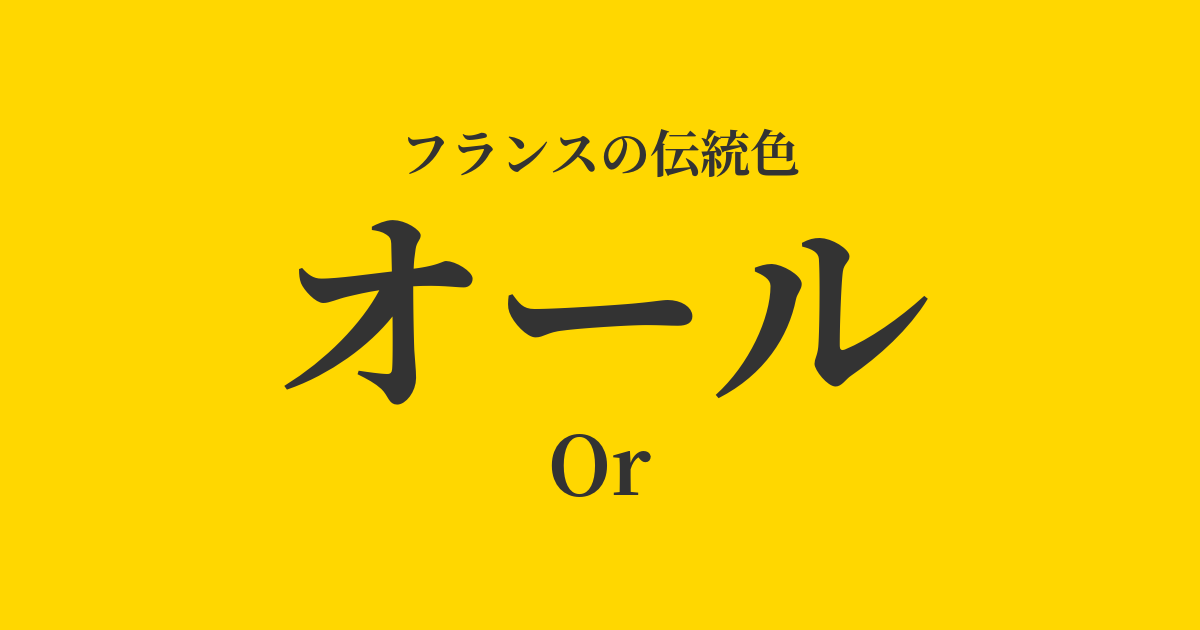
| French | Or |
|---|---|
| Katakana | All |
| HEX | #ffd700 |
| RGB | 255, 215, 0 |
What is "Oll"? Origin and etymology
"Or" is a French word that refers to the metal "gold" itself. Its etymology traces back to the Latin word "aurum," which also means gold.
This color is not merely a type of yellow, but has been recognized as a special color with a shimmering metallic luster. Since ancient times, due to its rarity and timelessness, it has been revered worldwide as a color symbolizing the highest values, such as the brilliance of the sun, divinity, wealth, and royal authority.
In Christian culture in particular, gold leaf was lavishly used in the backgrounds of paintings and around the halos of saints to represent the glory of God and the sacred light. This solidified gold's status as a sacred and inviolable color.
In France, the oar is more than just a symbol of wealth; it is deeply intertwined with national prestige and glory. From royal coats of arms to the dazzling decorations of palaces, its splendor has adorned French history itself.
Historical background of oars
Or is inseparable from French history, especially the history of the monarchy. Its most symbolic example is the "fleur-de-lys," the coat of arms of the French royal family.
This coat of arms is known as "a golden fleur-de-lis on an azure (blue) background," and it is said that the blue symbolizes the heavenly world and the Virgin Mary, while the gold symbolizes the authority and sanctity of the king and the light of Christ. Since the Middle Ages, this color scheme has been used as a symbol of French monarchy in all aspects, including flags, shields, and clothing.
The use of gold reached its peak in the 17th century during the reign of Louis XIV of the Bourbon dynasty. Known as the "Sun King," he used gold lavishly in the construction of the Palace of Versailles to visually demonstrate his authority.
In the particularly famous "Hall of Mirrors," countless mirrors reflect the light from the windows, brilliantly illuminating the golden sculptures and decorations. This symbolizes the king's power, like the sun, shining throughout all of France, and oars became the color that embodied the splendor of absolute monarchy.
Even during the later Napoleonic Empire, the admiration for the ancient Roman Empire led to the extensive use of gold in eagle emblems and furniture decorations (Empire style), playing an important role in demonstrating the emperor's power and prestige.
All in the world of art and fashion
In the world of art, gold leaf was an important coloring material for expressing sanctity and luxury. In medieval religious paintings and illuminated manuscripts, backgrounds painted with gold leaf highlighted the sanctity of the depicted figures. This was a technique used to make the viewer feel a sense of heavenly light.
In 18th-century Rococo art, oars were used as a lighter and more elegant decoration. In rooms predominantly decorated in white and pastel colors, gold accents were incorporated into furniture with many curves and wall trims (rocaille), creating a sophisticated and opulent aristocratic culture.
In fashion and textile culture, oar holds a special place. In Lyon, which has long been the center of the French silk weaving industry, magnificent brocade (brocade fabric) using gold thread (fil d'or) was produced and highly prized in the courts of royalty and nobility throughout Europe for use in clothing and interior decoration.
Even in contemporary haute couture, gold embroidery, sequins, and glittery materials are used to give dresses ultimate elegance and an extraordinary sparkle, and continue to fascinate many people.
Color scheme preview
This is to check the readability of the text when this color is used as the background.
Color scheme suggestions for oars
Blue Roi (#002366)
This is a traditional color scheme used in the French royal coat of arms, the "fleur-de-lis." It gives a classic and dignified impression, full of dignity and nobility.
Rouge Vif (#d90000)
It creates a luxurious and dramatic atmosphere reminiscent of an opera house or theater. The eye-catching color scheme is perfect for expressing a sense of celebration and passion.
Vert Épinard (#174620)
This color scheme evokes deep forests and abundant nature, creating a sense of calm and gravitas. It adds depth and stability to classical interiors and dignified designs.
Practical Scenes
Oar, with its brilliance and symbolism, is a color that imbues spaces and designs with special meaning. Depending on how it's used, it can reveal a variety of expressions.
In interior design, it's more effective to use it as an accent rather than over large areas like wallpaper or curtains. For example, using it on lighting fixtures, mirror frames, doorknobs, and furniture handles brings a sophisticated, luxurious, and elegant feel to the entire space. In particular, combining it with calm colors such as white, black, and navy will make the brilliance of the oak stand out even more.
In the world of fashion, gold is a versatile accent color that elevates any outfit. From gold accessories to subtle touches on bag hardware, shoes, and belt buckles, incorporating gold subtly adds a touch of sophisticated sparkle and class to any look. For special occasions, gold can also shine as the main color in dresses and party wear.
In web and graphic design, using gold in luxury brand logos, headline text, and CTA buttons can convey a sense of trust and quality to users. Setting a dark background makes gold stand out, resulting in a more striking and luxurious design.