
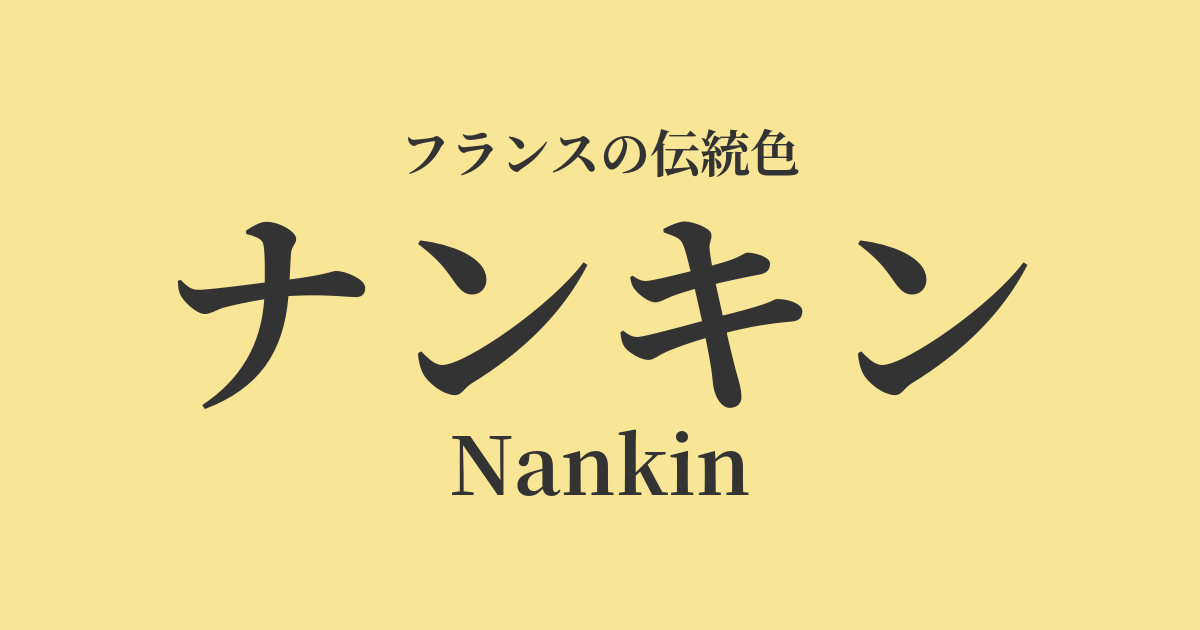
| French | Nankin |
|---|---|
| Katakana | Nankin |
| HEX | #f8e596 |
| RGB | 248, 229, 150 |
What is Nankin? Origin and etymology
The gentle-sounding color name "Nankin" originates from the Chinese city of Nanjing.
In 18th-century France, a fabric called "Nankin cotton" (toile de Nankin), which had been imported from China, became extremely popular. This fabric was originally a durable, undyed cotton that retained the natural brownish color of the cotton fibers. Its simple, warm, and distinctive yellow color eventually became established in France as both the name of the fabric and the color "Nankin."
This beautiful color tells the story of cultural exchange, as place names became the names of traded fabrics, and then the colors of those fabrics became established as color names in people's lives.
Historical background of Nanjing
The popularity of Nanjing in France stems from the "Chinoiserie" trend, a fascination with Chinese aesthetics that flourished during the Rococo period of the 18th century. Royalty and nobility, including Marie Antoinette, harbored a strong admiration for the art and style of distant China, and incorporated it into their interiors and fashion.
Among these, Nanjing cotton was highly valued as a precious imported product with an exotic charm. Initially used for summer clothing, linings, and corsets, its superior durability and simple beauty led to its gradual use in a wider range of applications, including everyday wear and military trousers.
After the French Revolution, the popularity of cotton, with its practical and natural texture, in contrast to the extravagant silk fabrics favored by the aristocracy, is said to have also contributed to the spread of Nanjing.
Nankin in the world of art and fashion
The warm hues of the Nanjing orange are deeply connected to 18th-century Rococo art, particularly works depicting Chinoiserie. Paintings by artists such as François Boucher feature Chinese-style clothing and furnishings, and one can find the gentle, exotic yellow of the Nanjing orange within them.
In the world of fashion, Nanjing cotton was not merely a material; its natural and sophisticated color was highly valued. In particular, it was paired with simple dresses born from a longing for rural life, playing a role in expressing unpretentious elegance.
Furthermore, in textile culture, Nanjing cotton had a significant influence on the European cotton weaving industry. Due to its popularity, imitations began to be produced in France and England, and the color Nanjing established a firm position as an integral part of European color culture.
He wore a black coat, Chinese-colored trousers, and an outdated hat, beneath which his beautiful chestnut hair flowed.
Color scheme preview
This is to check the readability of the text when this color is used as the background.
Nankin color scheme proposal
Blue Roi (#002D62)
When combined with a vibrant royal blue, it evokes the classic and noble impression of Chinoiserie porcelain. A beautiful contrast is created where each color enhances the other.
Vert Veronese (#5A7E64)
By combining it with a calm and elegant green, it evokes the pastoral landscapes and botanical illustrations of the 18th century, creating a natural and tranquil impression. The harmony of earth tones creates a pleasing color scheme.
Gris de Lignan (#DEDBD1)
By pairing it with a grayish white, like linen, the rustic texture of the Chinese kingwood is highlighted, creating a sophisticated French chic impression. It creates a soft and elegant space.
Practical Scenes
In the field of interior design, incorporating Nanking plants into wallpaper, curtains, cushions, and other fabrics brings a warm and gentle atmosphere to a room. It pairs particularly well with French country and natural-style spaces, and when combined with wooden furniture and linen materials, it creates a comfortable and relaxing environment.
In fashion, incorporating it into shirts, skirts, or pants brightens the complexion and gives an intelligent and gentle impression. When paired with classic colors like navy or charcoal gray, it creates a sophisticated accent, and it goes particularly well with indigo blue denim.
In web design, using it as a background or accent color brings a friendly and organic feel to the entire site. It is suitable as a color that adds warmth to handmade goods, natural brands, and content themed around history and culture.