
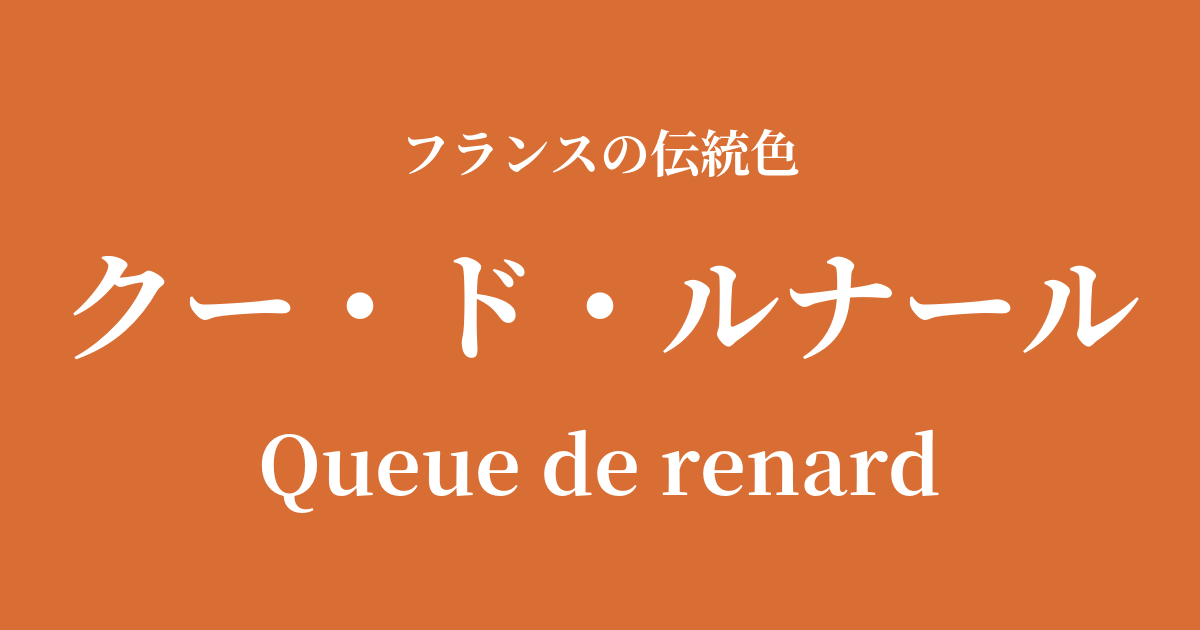
| French | Queue de renard |
|---|---|
| Katakana | Cou de Renard |
| HEX | #d86e34 |
| RGB | 216, 110, 52 |
What is a coup de renard? Origin and etymology
"Queue de renard" is a truly poetic name for a color, meaning "fox's tail" in French. As the name suggests, it is derived from the beautiful, bushy fur of the tails of red foxes that live in the forests and fields of Europe.
This warm yet calming shade, a blend of vibrant orange and earthy tones, was born from the rich natural beauty of France and the appreciation for the animals that inhabit it. In France, where hunting culture is deeply rooted, foxes were a familiar presence, and their fur has long been prized for its use in winter clothing and decorative items. This color name embodies both respect for the vitality of nature and the French sensibility that finds beauty in everyday life.
Historical background of the Cou de Renard
It is not easy to pinpoint the exact date when the color name "coup de renard" became established. However, its origins are deeply intertwined with France's long history of hunting. From the Middle Ages onward, hunting was an important pastime for royalty and nobility, and also a ritual that demonstrated social status. Fox hunting was also popular, and their furs were used for clothing, muffs, and hat decorations.
Particularly from the 17th to the 18th centuries, as court culture flourished, the use of color in fashion and interior decoration became more sophisticated and diverse. During this period, many color names were created that were inspired by plants and animals in nature. It is believed that the color "coup de renard" spread among people within this trend. This warm orange-brown frequently appeared in tapestries and paintings depicting rural landscapes and hunting scenes, adding color to the lives of people at the time.
The coup de renaissance in the world of art and fashion
The coup de Renard color has a strong presence in French art, particularly in realistic paintings depicting nature and rural life. In 19th-century paintings by artists such as Gustave Courbet, this color family is skillfully used to depict forest landscapes and hunting scenes, as well as the trunks of trees, fallen leaves, and the fur of the animals being hunted.
In the world of fashion, this color is one of the classic colors that has been loved across generations. It pairs exceptionally well with autumn and winter materials such as tweed, corduroy, and leather, and when incorporated into coats, jackets, boots, and bags, it gives a warm and sophisticated impression. It has also been used as an important color in traditional French textiles, such as Gobelin tapestries, to adorn scenes of animals and mythology.
Color scheme preview
This is to check the readability of the text when this color is used as the background.
Coup de Renard's color scheme proposal
Vert Bouteille (#09351d)
This combination, reminiscent of the deep green of a forest and the fur color of a fox, is very natural and calming. It creates an intelligent and classical atmosphere, giving viewers a sense of reassurance.
Gris de Lignan (#dcd5c4)
The warm, inviting color of Coup de Renard is complemented by the soft, light gray of flaxen. This color scheme is natural yet sophisticated, creating a modern and elegant impression.
Blue Nuit (#0f2350)
The deep navy blue, reminiscent of the night sky, complements the warm hues of Coup de Renard, enhancing each other's appeal. It's an elegant, contrasting, and striking color combination.
Practical Scenes
In interior design, coup de renard brings warmth and comfort to a space. Incorporating it through fabrics such as cushions, rugs, and curtains creates a calming atmosphere throughout the room. It pairs particularly well with natural materials such as solid wood furniture, leather sofas, and brick walls. It is ideal as an accent color in spaces where you want to relax, such as a study or living room.
In fashion, olive green is a key color that enriches autumn and winter outfits. Incorporating this color into trench coats, knitwear, and leather accessories instantly creates a seasonal look. Pairing it with basic colors like navy, charcoal gray, and olive green completes a sophisticated, mature style.
In the fields of web design and graphic design, it is suitable for brands that want to convey trustworthiness and warmth. When used as an accent on a site based on earth tones, it can express approachability while simultaneously conveying tradition and high quality.