
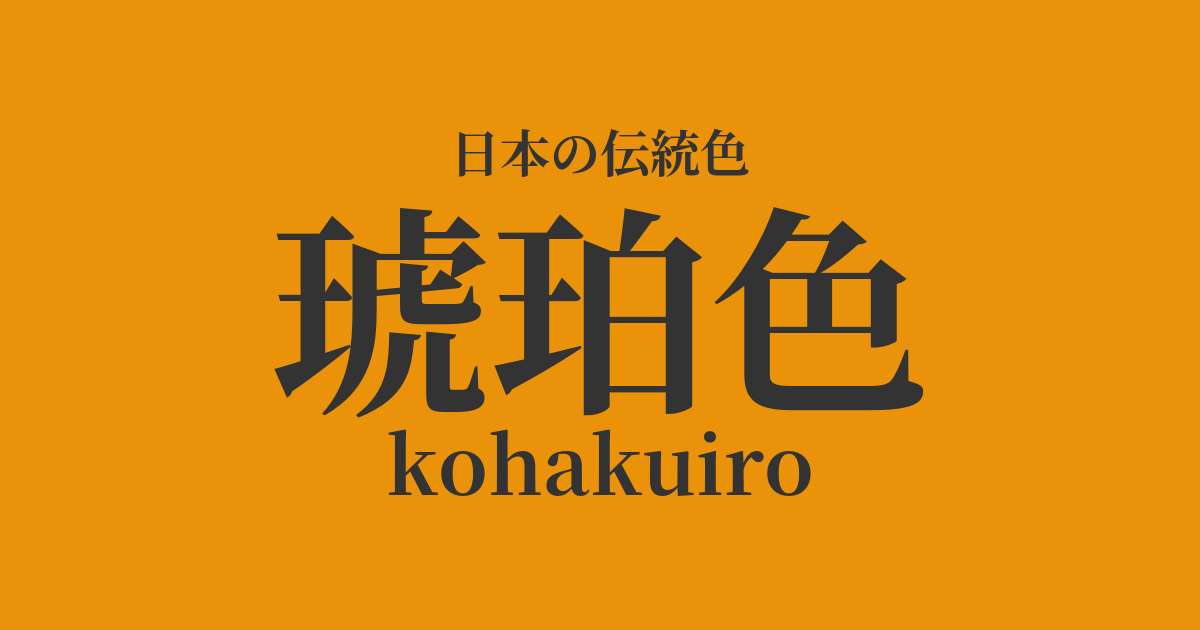
| Japanese color name | amber color |
|---|---|
| reading | kohakuiro |
| HEX | #EA930A |
| RGB | 234, 147, 10 |
What is amber? Origin and etymology
The color amber, as its name suggests, originates from the gemstone "amber." Amber is fossilized tree resin dating back tens of millions to hundreds of millions of years, characterized by its beautiful, translucent yellowish-brown color. In Japan, it has long been called "kuhaku" and highly valued. It is believed that the color name became established by imitating the hue of this gemstone. In the West, it is called "amber," and it is a color loved all over the world. Its warm glow continues to fascinate many people.
Amber-colored historical background
Amber has a long history in Japan, with ornaments made from amber unearthed from Jomon period ruins. The Shōsōin Treasure House also contains crafts made from amber, such as "amber fish-shaped ornaments," indicating that it was already treated as a valuable material during the Nara period. It is unclear when the color name "amber" began to be used, but since the name appears in dye sample books from the Edo period, it is thought to have become a commonly known color by this time.
Related literature, waka poetry, and seasonal words
Amber, due to its brilliance and rarity, sometimes holds special significance in literary works. While the color name "amber" doesn't appear directly and frequently in classical Japanese literature, amber itself is often depicted as a precious treasure. Furthermore, because it evokes images of autumn twilight, ripe fruit, and fertile rice fields, it is sometimes used to describe autumn scenery. Although not directly a seasonal word, it is seen as a color symbolizing the abundant harvest of autumn.
A peony reflected in an amber cup.
Color scheme preview
This is to check the readability of the text when this color is used as the background.
Amber color scheme proposal
Tokiwa color (#007B43)
The deep green of evergreen and the warm yellowish-brown of amber combine tones reminiscent of trees and the earth in nature. The colors complement each other, creating a calm and sophisticated impression. Suitable for Japanese-style designs and interiors.
Suou (#9E3D3F)
The deep red of sappanwood and the shimmering yellowish-brown of amber create a passionate and vibrant impression. Despite being a combination of warm colors, the difference in brightness ensures good visibility. It is suitable for festive atmospheres and eye-catching designs.
Lapis Lazuli (#1F4788)
The vibrant lapis lazuli blue and amber-colored tawny tones are almost complementary colors that enhance each other. This creates a classic yet modern and sophisticated impression. The strong contrast makes it an effective color scheme for adding visual emphasis to a design.
Practical Scenes
Amber, with its warmth and sense of luxury, is used in a variety of settings. In the world of kimono, it is used in obi sashes and accessories to add depth and elegance to an outfit. It is especially valued as a color that suits the autumn season.
In interior design, incorporating it into lighting fixtures, accent walls, cushions, and other small items brings warmth and tranquility to a space. It also pairs very well with wooden furniture. In web design, using it as a background color or button color can attract user attention while conveying a sense of reliability and tradition.