
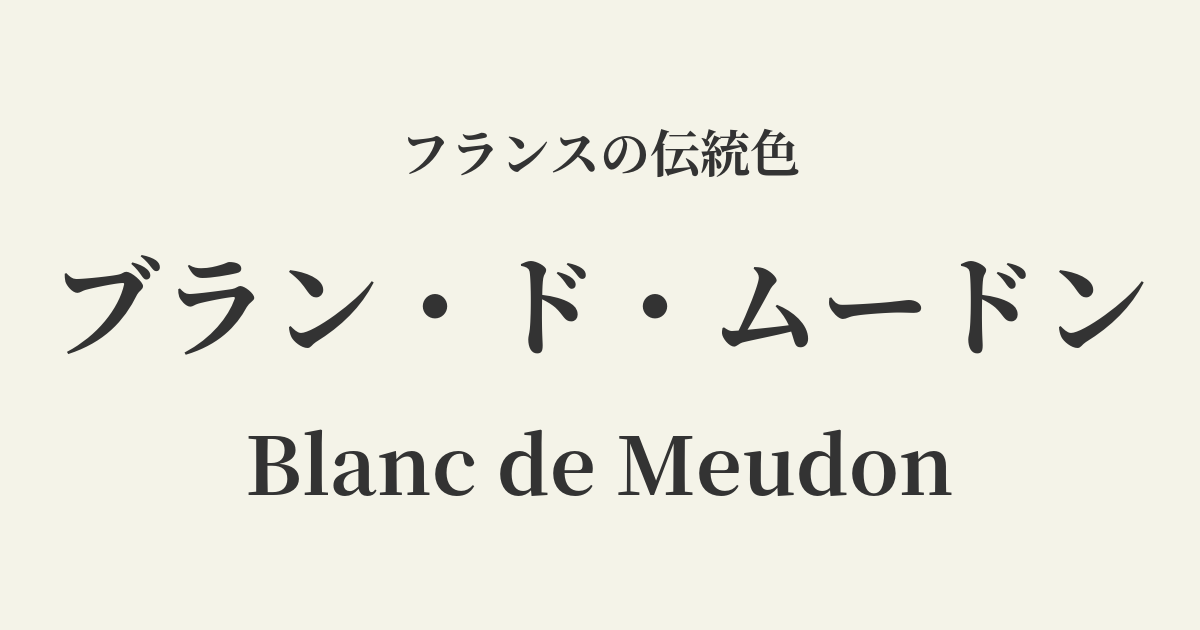
| French | Blanc de Meudon |
|---|---|
| Katakana | Blanc de Meudon |
| HEX | #f4f3e8 |
| RGB | 244, 243, 232 |
What is Blanc de Meudon? Origin and Etymology
"Blanc de Meudon" means "Meudon white" in French. As the name suggests, the color of the pigment comes from chalk (a sedimentary rock mainly composed of calcium carbonate) that was once mined in Meudon, a city near southwest of Paris.
This chalk was known for its extremely fine particles and high purity. Since ancient times, it has been highly valued not only as a pigment, but also for a wide range of uses, including as an abrasive, cleaning agent, and even in the restoration of works of art.
The color is not pure white, but a slightly yellowish, warm off-white. This soft hue has given elegance and tranquility to traditional French architecture and interiors.
The historical background of Blanc de Meudon
The history of the Meudon chalk quarry is long, with its existence known as early as the 18th century. Particularly from the 19th to the early 20th century, along with the urban redevelopment and architectural boom of Paris, Blanc de Meudon became widely used as a paint pigment.
During Baron Haussmann's grand renovation of Paris, many buildings had their interior walls and ceilings painted this color. Its ability to softly reflect light and brighten spaces made it ideal for enhancing the livability of apartments.
Furthermore, its gentle hue was considered a symbol of "cleanliness" and "elegance" in French homes, and this white powder was used for polishing windows and maintaining silverware. It is more than just a color name; it is a cultural presence deeply rooted in the lives of the French people.
Blanc de Meudon in the world of art and fashion
Blanc de Meudon, though not flashy, was used by many artists as an important base material (gesso). When applied to canvas or wood, it enhances the color development of paints and allows for smooth brushstrokes. In particular, this high-quality chalk was said to be indispensable during the Golden Age of oil painting.
In 18th-century Rococo interior decoration, this color was favored in combination with gold leaf and pastel colors to create an elegant and light atmosphere. Blanc de Meudon, when applied to walls and wooden panels (boiserie), beautifully highlights the delicate details of carvings.
In the world of fashion, it is a beloved color for expressing the natural texture of natural materials such as linen and cotton. It blends better with the skin than pure white and gives a natural and sophisticated impression, making it one of the colors that symbolizes chic French style.
Color scheme preview
This is to check the readability of the text when this color is used as the background.
Blanc de Meudon's color scheme proposal
Gris de l'Ain (#d0c8b6)
The combination of Blanc de Meudon's soft white and Gris de Lan, reminiscent of flaxen, is a classic example of French chic. It creates a natural, calm, gentle, and sophisticated atmosphere. This color scheme is timelessly beloved in interior design and fashion.
Blue Lapis Lazuli (#26619c)
Combining warm white with deep, vibrant lapis lazuli creates an elegant and sophisticated contrast. The resulting color scheme is striking, possessing both the refreshing feel of the sea and white walls of southern France and a noble elegance reminiscent of royalty.
Rose Pompadour (#ed82a4)
Against the tranquil backdrop of Blanc de Meudon, the vibrant roses beloved by Madame de Pompadour stand out, creating an elegant and sweet Rococo atmosphere. It's a beautiful combination that is feminine yet refined, sure to make your heart flutter.
Practical Scenes
In interior design, Blanc de Meudon is ideal as a base color for walls and ceilings. It softly diffuses light, making the entire room appear brighter and more spacious. It also pairs well with wooden furniture and antique furnishings, bringing warmth and harmony to French country and shabby chic styles.
In fashion, incorporating this color into items made from high-quality natural materials such as linen shirts and cotton dresses can express effortless elegance. It pairs well with other colors, and coordinating it with earth tones or pastel colors in particular creates a sophisticated, mature look.
In web and graphic design, using white as a background color enhances the content while creating a calm and soothing impression. It is particularly effective when you want to express warmth and depth that pure white lacks, while maintaining a minimalist and clean design.