
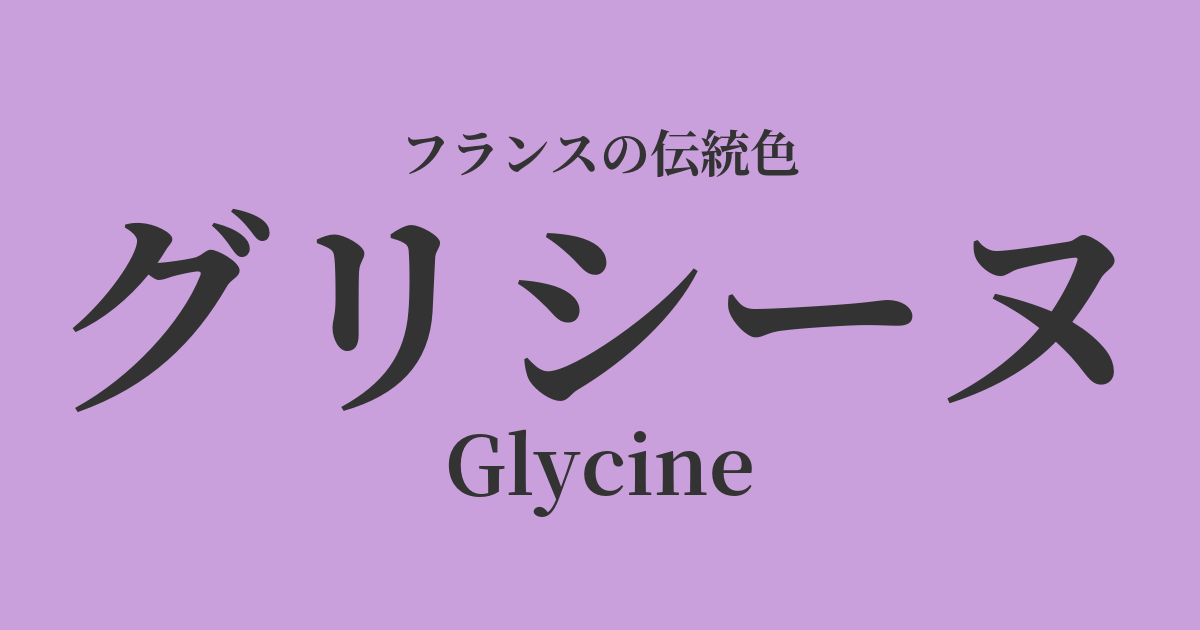
| French | Glycine |
|---|---|
| Katakana | Glycine |
| HEX | #c9a0dc |
| RGB | 201, 160, 220 |
What is Glycine? Origin and Etymology
Glycine is a French word meaning "wisteria." As the name suggests, it derives from the delicate and elegant purple color of wisteria flowers that adorn gardens in spring.
Wisteria, native to Asia, was introduced to Europe around the 18th century and became popular as a garden plant due to its beautiful appearance. Particularly from the late 19th to the early 20th century, with the rise of Japonisme (a fascination with Japanese culture), wisteria came to be frequently used as a motif in art and design. In this context, the delicate color of wisteria blossoms, known as "glycine," also became a widely beloved color among the French people.
Glycine's historical background
Glycine was particularly beloved during the glamorous "Belle Époque" (the beautiful era) from the late 19th to the early 20th century. The Art Nouveau style that flourished during this period was characterized by organic motifs such as plants and graceful curves.
The elegant curves of the wisteria vines and the delicate hues of glycine truly embody the aesthetics of Art Nouveau. Glass artists Émile Gallé and René Lalique favored wisteria as a motif in their works, expressing their graceful worldview.
Furthermore, this era saw significant advancements in chemical dye technology, making it possible to create nuanced intermediate colors that had previously been difficult to achieve. The popularity of sophisticated, pale purples like glycine was also supported by this technological background.
Glycine in the world of art and fashion
The color of glycine has inspired art, especially Impressionist painters. Claude Monet built a large wisteria trellis in the garden of his home in Giverny and repeatedly painted the landscape. In his works depicting wisteria blossoms swaying in the light, he brilliantly captures how the purple of glycine changes its expression in various ways depending on the sunlight and shadows.
In the world of fashion, glycine was a popular color that adorned the dresses of noblewomen during the Belle Époque. When combined with light and delicate materials such as silk and lace, its elegance and femininity were further enhanced.
Furthermore, the wisteria motif and the color of glycine were indispensable elements in Art Nouveau textile designs. They were used in wallpaper, curtains, and upholstery, adding a sophisticated touch to the lives of people at the time.
The wisteria blossoms had made their fragrant, gnarled ladder climb up to the front of the new house, down to the last of their purple clusters.
Color scheme preview
This is to check the readability of the text when this color is used as the background.
Glycine's color scheme proposal
Vert de Grie (#95aab1)
The elegant purple of Glycine and the calming green of Vert de Grie create a color scheme reminiscent of a wisteria trellis in nature. It creates an antique and refined atmosphere, adding depth to interiors and fashion.
Rose Pompadour (#ed82a2)
The delicate glycine combined with the vibrant rose pompadour creates a romantic and feminine impression. It's a cheerful color scheme that evokes the feeling of spring's arrival.
Ivoire (#f1e6d2)
The gentle ivory color of Ivoire softly complements the elegant purple of Glycine. This combination, which combines cleanliness and elegance, is ideal for sophisticated spaces and designs.
Practical Scenes
In the field of interior design, incorporating glycine into fabrics such as wallpaper, curtains, and cushions brings an elegant and calming atmosphere to a space. It is especially ideal for spaces where you want to relax, such as bedrooms and living rooms. Using it as an accent color in a room with white, ivory, or light gray as the base colors will create a sophisticated impression.
In fashion, Glycine dresses, blouses, and scarves enhance the elegance and femininity of the wearer. They are especially great for spring and summer outfits, allowing for light and seasonally appropriate coordination. They also pair exceptionally well with pearl and silver accessories.
In web and graphic design, using it as a background or accent color creates an elegant and trustworthy impression. It's a suitable color for representing the brand image of beauty, wedding, and lifestyle-related industries.