
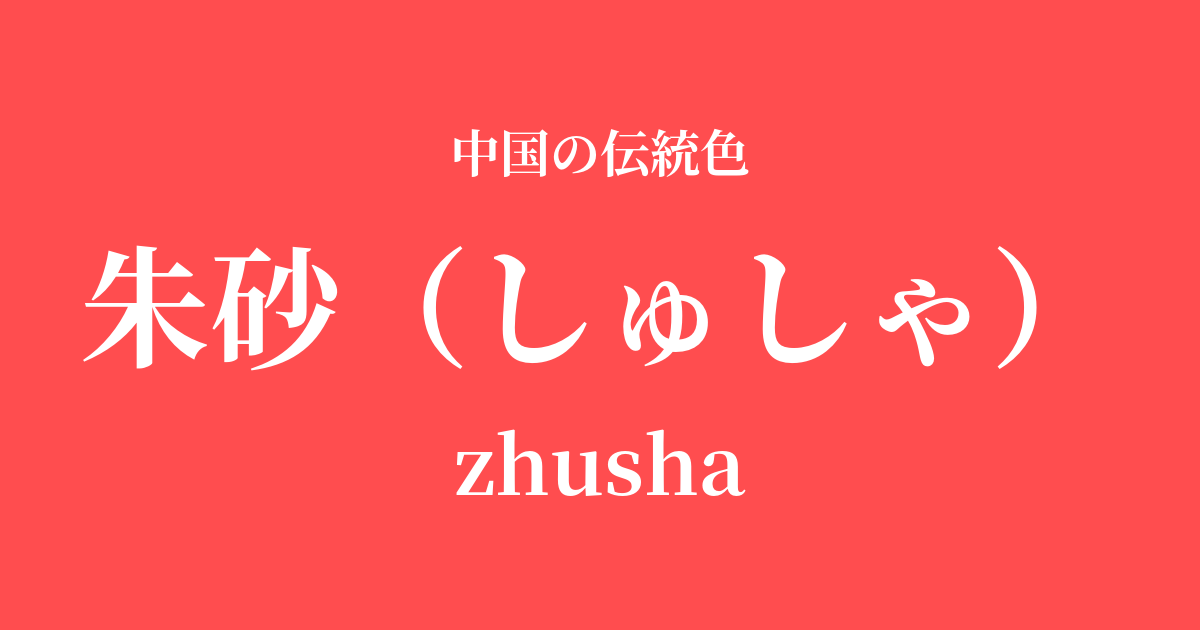
| Color name | Vermilion sand |
|---|---|
| reading | Shusha |
| pinyin | zhusha |
| HEX | #FF4D4F |
| RGB | 255, 77, 79 |
What is cinnabar? Origin and etymology
Cinnabar is a vibrant and powerful red pigment made from a naturally occurring mineral called cinnabar. Its main component is mercury sulfide, and it has been treated as a valuable resource since ancient times.
The name "cinnabar" is said to originate from Chenzhou (present-day Yuanling County area) in Hunan Province, an ancient Chinese region where high-quality cinnabar was produced. The cinnabar mined in this area was particularly vibrant in color and of high purity, and was considered a top-grade product.
Its fiery red color was seen as a symbol of vitality and cheerfulness, and it was believed not only to be a pigment but also an important ingredient in alchemy, the art of creating elixirs of immortality. Cinnabar is a color deeply connected to people's fundamental desires.
Historical background of cinnabar
The use of cinnabar is very ancient; traces of it can be found in painted pottery unearthed from the Yangshao culture site of the Neolithic period in China. This indicates that cinnabar has been a part of people's lives as a pigment since prehistoric times.
The legend that Qin Shi Huang, the first emperor of Qin, had alchemists search for an elixir of immortality, and that cinnabar was one of the candidates, is well-known. From this time onward, cinnabar attracted the attention of those in power as a substance possessing mystical powers.
During the Han Dynasty, cinnabar was widely used in palace murals, pillars, and the coloring of high-quality lacquerware, establishing its status as a color symbolizing wealth and authority. In particular, doors and pillars painted in vermilion were considered a mark of high social status.
During the Tang Dynasty, Taoism flourished and alchemy became popular, further increasing the demand for cinnabar. Then, during the Ming and Qing Dynasties, it became a color inextricably linked to national authority, being used as the ink for the seals of the emperor and for signing official documents (vermilion inscriptions).
Cinnabar in Chinese Art and Crafts
Cinnabar has played an important role in various art forms in China. In the world of calligraphy in particular, it is an indispensable ingredient as the main raw material for "indei," the ink used in seals. The vivid red color of vermilion ink is a unique color created by the scattering of light by the particles of cinnabar.
In painting, it was used when depicting sacred motifs in Taoist and Buddhist paintings. It was used with special meaning as a sacred color to depict the robes and halos of deities and Buddhas, or as protective amulets.
Cinnabar was also widely used in architecture. The red walls and pillars seen in Beijing's Forbidden City served not only as a protective charm but also as a visual representation of the emperor's absolute authority. Architecture adorned with cinnabar possesses an awe-inspiring grandeur that overwhelms the viewer.
In the field of ceramics, attempts have been made to reproduce a red color similar to cinnabar using copper as a coloring agent, resulting in the creation of beautiful red porcelain such as "cinnabar glaze" and "underglaze red." While these did not directly use cinnabar, they reflect the ideal image of that red color.
Situation, White Eye Darkness, Yanyou Tansa
Color scheme preview
This is to check the readability of the text when this color is used as the background.
Succession of cinnabar color scheme
Gen (#191919)
When combined with the powerful black of vermilion, the vibrancy of vermilion stands out, creating a majestic and dramatic impression. This is a dignified color scheme often seen in traditional lacquerware and palace architecture.
Tsukihaku (#EAF4FC)
The pure, bluish-white color of Tsukishiro gently absorbs the warmth of the cinnabar, creating a refined and elegant atmosphere. You can enjoy the beautiful contrast, like the red enamel paintings that stand out against the white background of porcelain.
Yellow (#FFD700)
By combining the vibrant yellow and orpiment, the colors associated with the emperor, a truly luxurious and festive mood is created. This energetic color scheme symbolizes wealth, power, and joy.
Practical Scenes
In interior design, using cinnabar as an accent color brings vitality and a sense of luxury to a space. Even incorporating it in small elements like cushions, art panels, or small pieces of furniture can tighten the overall look of a room and create a striking impression. It pairs particularly well with black, gold, and dark wood-grain furniture.
In fashion, incorporating cinnabar-colored items like dresses, scarves, or lipstick can instantly create a glamorous and passionate impression. Choosing it for celebratory occasions or special days will enhance your confidence and presence.
In web and graphic design, its strong appeal makes it effective when used in call-to-action buttons and important headings. It can capture the user's attention and convey a powerful message. Choosing a neutral or light color for the background will further highlight the beauty of the cinnabar.