
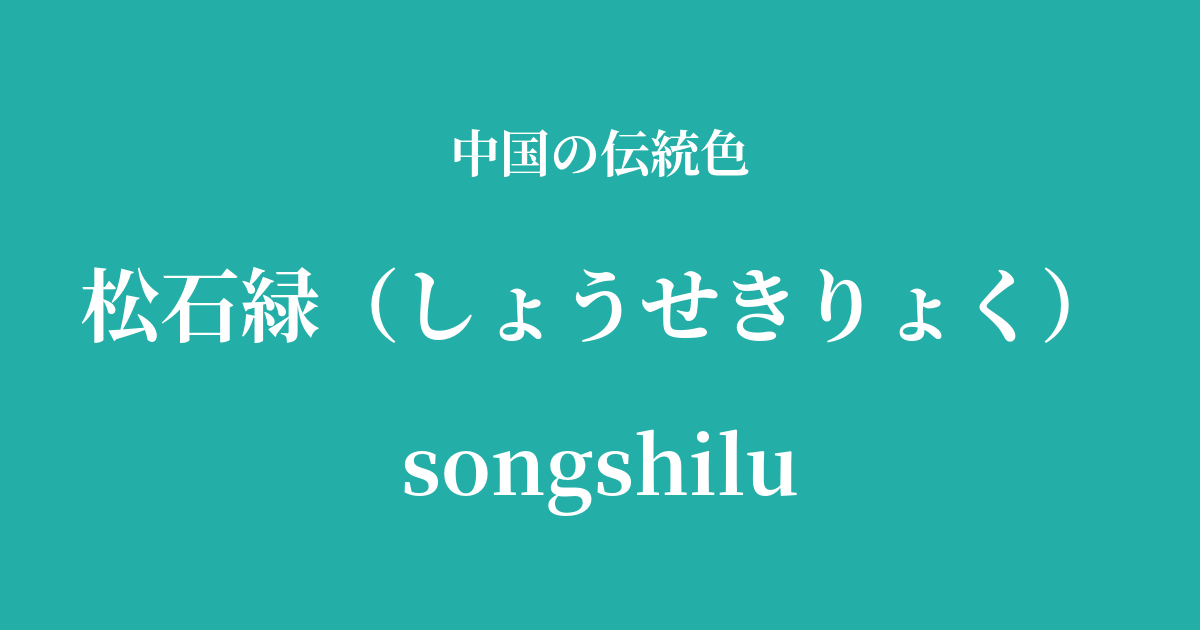
| Color name | Matsuishi Midori |
|---|---|
| reading | Shosekiryoku |
| pinyin | songshilu |
| HEX | #23AFA7 |
| RGB | 35, 175, 167 |
What is Matsuishi Midori? Origin and etymology
Shōsekiryoku, as its name suggests, is a vibrant and deep blue-green color derived from the color of "Matsuseki" (pine stone). "Matsuseki" is the Chinese name for the gemstone known as turquoise in English.
The most likely explanation for why turquoise is called "pine stone" is its appearance. It is said that the pattern on the stone's surface resembles pine needles, and its overall color is greenish, hence the name. The mystical color of this gemstone has captivated people since ancient times and has been recognized as a special color.
The historical background of Matsuishi Midori
Turquoise, the source of the color Matsusekiryuku, is a gemstone with a very long history in China. Its use is believed to date back to the Neolithic period, and especially during the Shang dynasty, it was used as a symbol of authority for royalty and the nobility, in inlaid decorations embedded in bronze artifacts. These excavated items speak to the advanced craftsmanship of the time and how important this color was.
During the Qing Dynasty, turquoise was particularly cherished in court culture. It was used extensively in the luxurious ornaments worn by emperors and empresses, such as hair ornaments, earrings, and sash decorations. Turquoise was also sometimes chosen as one of the finest materials for the Chaozhu (a type of pearl necklace worn around the neck by officials to indicate their rank). This color was not only beautiful, but was also believed to possess the power to ward off evil and bring good fortune, and was treated as a sacred color.
Song Shilu in Chinese Art and Crafts
Songseki Green has been expressed in a variety of forms in Chinese arts and crafts. Sculptures using turquoise itself, as well as inlay work on gold, silver, and bronze objects, most directly convey the beauty of this color.
In the world of ceramics, there is a glaze called "Matsuseki Green Glaze," which imitates the color of turquoise. Porcelain using this glaze flourished particularly during the Yuan, Ming, and Qing dynasties, and its vivid blue-green color gives it a unique presence that sets it apart from other ceramics.
In the realm of fashion culture, this color can be seen in the embroidery and decorations of court attire during the Qing Dynasty. As a color signifying noble status, the delicate embroidery applied to silk fabrics highlighted the splendor and elegance of Songshilu.
Tsuzuri Matsudama
Color scheme preview
This is to check the readability of the text when this color is used as the background.
Matsuishi green color scheme proposal
Pilestone (#9C3828)
The vibrant green of the pine stone is enhanced by the earthy warmth of the ochre stone. The resulting color scheme evokes a sense of weight and history, reminiscent of ancient bronze artifacts and murals.
Yellow (#FFB61E)
The combination with orpiment, which has a golden sheen, is reminiscent of the court decorations of the Qing Dynasty. Their colors enhance each other, creating a luxurious and exotic impression.
Fish Chu Bai (#FCEFE8)
The clean, soft white of Fish Belly White highlights the vivid color of Pine Stone Green. This refreshing color scheme exudes cleanliness and sophistication, making it easy to incorporate into modern designs.
Practical Scenes
In interior design, Midori Matsuishi adds a sophisticated accent to any space. Incorporating her work through small items such as cushions, curtains, and artwork tightens the overall look of a room and creates an exotic atmosphere. It pairs particularly well with white, beige, and dark brown wood.
In the world of fashion, using it in dresses, scarves, and accessories can create a unique yet elegant style. Lustrous materials like silk and velvet will further enhance the depth of the pine stone green color.
In web and graphic design, it's effective as an accent color for buttons, headings, and other elements. It attracts the user's attention while conveying a sense of trust and creativity to the overall design. It particularly stands out in minimalist layouts based on white and gray.