
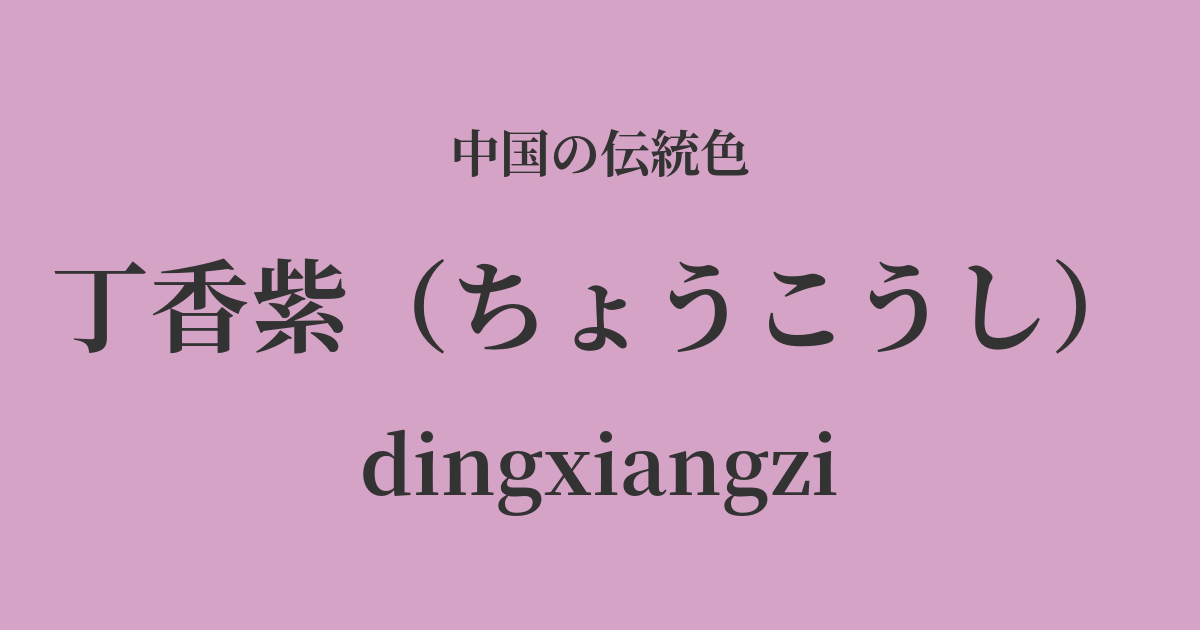
| Color name | clover purple |
|---|---|
| reading | Chokoushi |
| pinyin | dingxiangzi |
| HEX | #D4A3C5 |
| RGB | 212, 163, 197 |
What is Dingxiang Zi? Origin and Etymology
Chokoshi, as its name suggests, is a gentle and elegant pale purple color derived from the color of the clove flower.
"Dingxiang" refers to the lilac (Japanese name: Murasaki-hashidoi), a flower familiar to us. In China, it was named "Dingxiang" because the buds of this flower, which blooms from late spring to early summer and emits a sweet, fragrant scent, resemble the Chinese character for "nail" (丁).
Its delicate hues and fragrance have been cherished by people since ancient times, serving as a source of poetic inspiration. The name "clove purple" itself embodies not only beauty, but also a rich emotional depth, a sense of transience and melancholy.
The unique nuance of this color is deeply connected to the image of a "knot" associated with the clove flower. Clove flowers bloom in clusters of many small blossoms, but their buds appear tightly bound together. This appearance has been likened to a state of unresolved worries or anxieties in the heart, giving rise to the term "clove knot" (丁香結). The color name "clove purple" also carries this poetic background.
Historical background of the color clove purple
In ancient China, purple was considered a very noble color. Purple dye was rare and expensive, so much so that at one time it was considered a forbidden color, and only the emperor and a select few high-ranking officials were allowed to wear it.
The pale, elegant purple, like that of clove purple, is said to have been particularly popular among court ladies from the Tang Dynasty onward. Its sophisticated color, which was vibrant yet not overly flashy, reflected the aesthetic sensibilities of the aristocracy of the time.
Furthermore, during the Song Dynasty, cloves became a popular subject for poetry among many writers and poets. In particular, cloves blooming in the rain were favored as a symbol of loneliness and melancholy. A famous line from a poem by Li Jing, an imperial poet of the Southern Tang Dynasty, is said to have solidified the image of cloves and melancholy.
Thus, cinnamon purple is not merely a color name, but a color with a complex and profound cultural background, encompassing nobility, elegance, and literary melancholy, and it lives on in Chinese history.
Clove purple in Chinese art and crafts
The elegant shade of clove purple has been used to enhance the beauty of Chinese clothing culture, particularly Hanfu. Pale purple reminiscent of this color can be seen in the silk garments worn by aristocratic women during the Tang and Song dynasties. On lustrous silk fabrics, clove purple subtly changes its appearance depending on the light, highlighting the wearer's refinement and grace.
In the world of painting, this color is sometimes used in techniques such as Gongbi painting to depict clove flowers blooming in spring gardens or the elegant attire of women. The delicate nuances of this color have a subtle effect in expressing a sense of the season or the emotions of the characters in the painting.
Furthermore, soft purple pigments similar to clove purple were sometimes used in Qing Dynasty porcelain such as fencai and enamelware. They added elegant color to intricate patterns such as flower and bird motifs, enhancing the overall elegance of the vessel.
Blue bird fuden cloud foreign news, Ding Xiang sky and rainy season.
Color scheme preview
This is to check the readability of the text when this color is used as the background.
Color scheme proposal for clove purple
Tsukihaku (#EAF4FC)
The elegance of clove purple and the pure white of moon white harmonize beautifully, creating a quiet and refined impression. This color scheme evokes the stillness of night and the light of the moon, possessing a poetic atmosphere.
Ehuang (#FFF143)
The youthful and bright energy of goose yellow adds a spring-like splendor to the calm atmosphere of clove purple. It gives a bright and hopeful impression, like a vibrant flower field.
Pine green (#006E54)
The deep pine green enhances the elegance of the clove purple, evoking a sense of tranquility and the profoundness of life in nature. This intelligent, calming, and reassuring color scheme harmonizes well with Japanese-style spaces.
Practical Scenes
In the world of fashion, clove purple creates an elegant and feminine impression when incorporated into items such as dresses, blouses, and scarves. It pairs particularly well with glossy and sheer materials such as silk, satin, and chiffon, further enhancing the elegance of the color. It is the perfect color to add a seasonal touch to your spring outfits.
In interior design, using this color as an accent color in bedrooms or living rooms brings a calm and relaxing atmosphere to the space. It's also lovely to incorporate it partially with cushion covers, curtains, or art panels, or to paint just one wall in this color. Combining it with white, light gray, or natural wood-grain furniture creates a sophisticated space.
In web and graphic design, it is effective as a key color for brands targeting women or services themed around luxury and relaxation. When using it as a main color, using plenty of white space and pairing it with a white or very light gray background will highlight the delicate beauty of clove purple.