
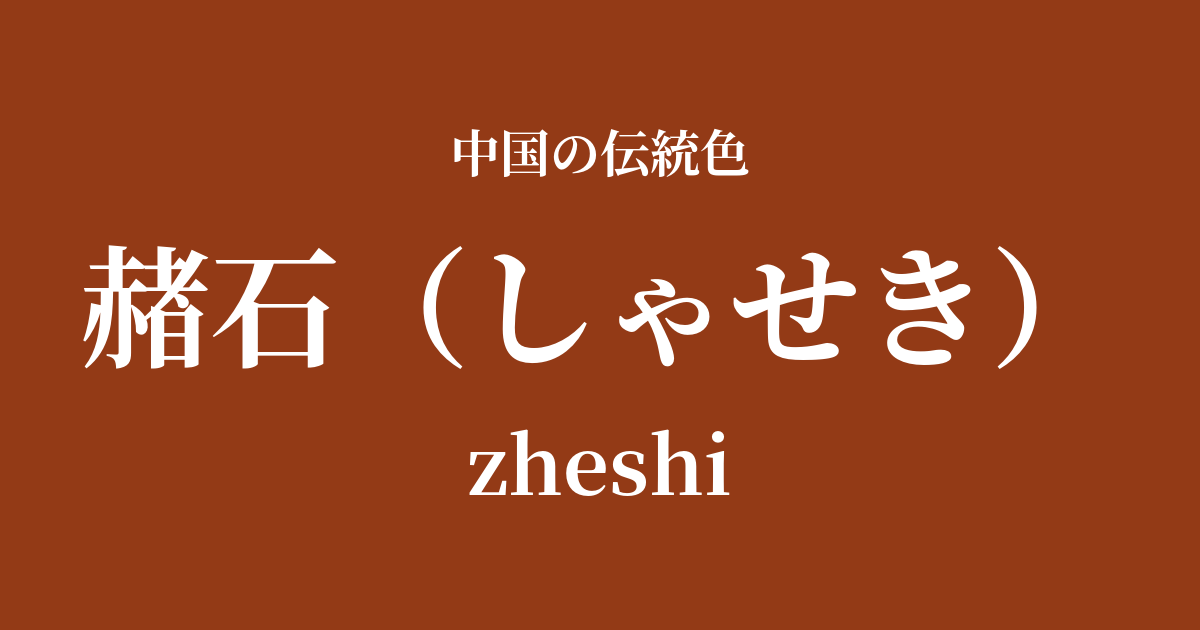
| Color name | stone |
|---|---|
| reading | Shaseki |
| pinyin | zheshi |
| HEX | #933A16 |
| RGB | 147, 58, 22 |
What is ochre? Origin and etymology
Ochre (shaseki), as its name suggests, is a mineral pigment derived from "akatsuchi," or red clay. Its main component is iron oxide, and it is produced by crushing naturally occurring hematite.
It is one of the oldest pigments used by humankind, characterized by its warm yet powerful reddish-brown color reminiscent of the earth itself. As the color of the earth, the source of life, it has been an integral part of the lives of ancient people.
Historical background of ochre
The use of ochre can be traced back to the Neolithic period in China, specifically to painted pottery. From very early times, it was recognized as an important pigment for decorating vessels and walls.
Perhaps the most famous example is the Terracotta Army at the Mausoleum of Qin Shi Huang. This ochre was used extensively to color the soldiers' clothing and armor, preserving the magnificent colors of the past. Furthermore, from the Han dynasty onward, it was widely used in murals of palaces and temples, especially in the Mogao Caves of Dunhuang, becoming an indispensable color for expressing the solemn worldview of Buddhist art.
In Chinese culture, where red is considered an auspicious color, the reddish-brown color of ochre is said to have been used to convey a more rustic, earth-rooted strength, as well as a wish for protection against evil.
Chalkstone in Chinese Art and Crafts
In Chinese art, ochre was widely used as a mineral pigment in murals and paintings. In landscape paintings, it added depth to the depiction of rock faces, withered trees, and autumn mountains, while in figure paintings, it was used for skin tones and clothing.
The color of ochre can also be seen in the world of ceramics. This warm reddish-brown color is utilized in the red pottery of the Han dynasty and in "iron painting," a technique used from the Song dynasty onward to paint patterns on the surface of porcelain with iron-containing pigments.
In the context of clothing culture, it is believed that earth dyes were used as a more common dye, unlike the vermilion "scarlet" used by the nobility. The simple and subdued colors produced by earth dyeing likely adorned people's everyday clothing.
Color scheme preview
This is to check the readability of the text when this color is used as the background.
Ochre color scheme proposal
Moon White (#D9E3E4)
The warm, deep reddish-brown of ochre and the quiet, pure bluish-white of moon white create a beautiful contrast. This color scheme gives an impression of porcelain elegance and refinement.
Matsuka (#BCEE68)
By combining the earthy color of ochre with the vibrant yellowish-green of pine pollen, it evokes the vitality of nature and the budding of spring. It gives a lively impression.
Gen (#3D3B4F)
The combination of the reddish hue of ochre and the deep, quiet, almost blackish black creates a very dignified and refined atmosphere. It is recommended for those who want to achieve both strength and tranquility.
Practical Scenes
In interior design, incorporating ochre stone as an accent wall or using it in a textured, earthen wall style brings warmth and tranquility to a space. It also pairs exceptionally well with terracotta planters, wooden furniture, and linen materials.
In fashion, incorporating this color into coats, jackets, and leather goods creates a classic and sophisticated impression. It can also serve as the centerpiece of an earth-tone color scheme, adding depth to your outfit.
In web design and graphic design, it is effective when you want to convey a sense of trust, history, and the warmth of handcrafted work. It is suitable as an accent color for branding traditional crafts and organic products, or for websites dealing with historical themes.