
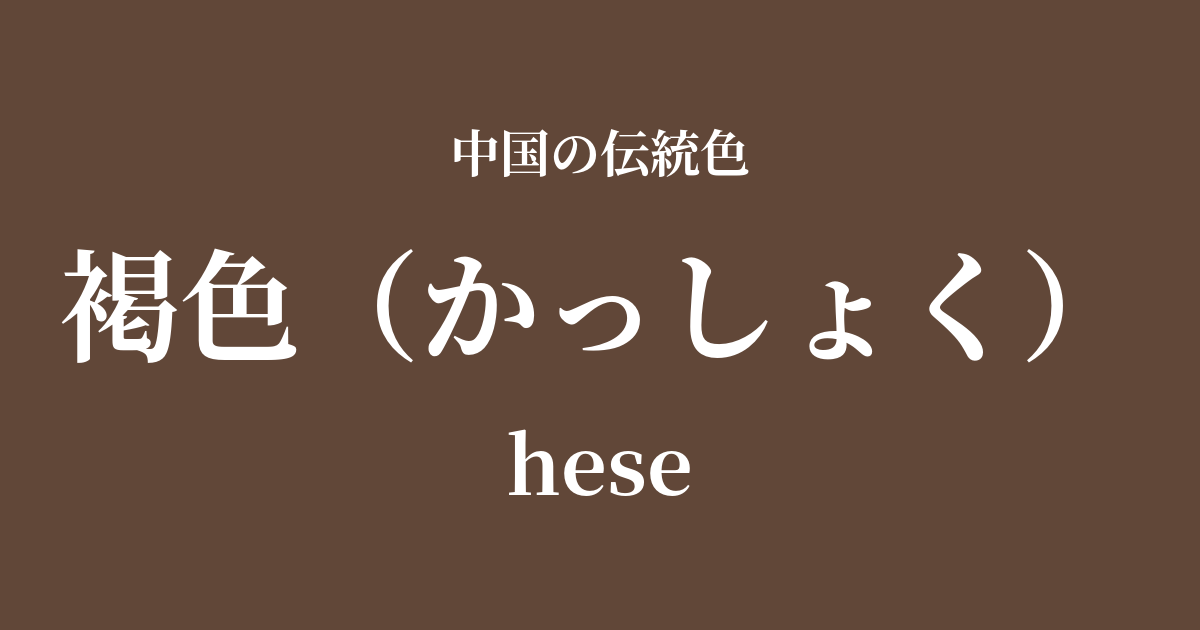
| Color name | brown |
|---|---|
| reading | brown |
| pinyin | hese |
| HEX | #614738 |
| RGB | 97, 71, 56 |
What is brown? Origin and etymology
Brown is a reddish-dark brown color reminiscent of the earth or dead trees.
The word's origin lies in the character "ブラウン" (kaku). "ブラウン" is a combination of the radical for clothing and the character "曷" (kaku), and originally referred to the simple woolen or hemp fabrics worn by common people. These clothes were not dyed with expensive dyes, but rather with the natural color of the material or dyed simply with readily available plants, resulting in a naturally dull brown color. From this color of clothing, the term "kakaku" came to refer to this shade itself.
As a color found in nature, such as the earth and wood, it may not be flashy, but it is deeply ingrained in Chinese culture as a color that symbolizes simplicity, steadfastness, and a sense of stability rooted in the earth.
Brown historical background
In ancient China, colors were deeply intertwined with the Five Elements philosophy, which explained everything in the universe using five elements. However, brown was not included in the five basic colors (blue, red, yellow, white, and black) and was not considered a noble color.
Therefore, brown became established as the color primarily associated with the common people. Especially from the Han dynasty onward, as frugality and thrift were considered virtues, brown clothing, known as "katsui," which required little dyeing effort, was widely used as everyday wear for commoners. The word "katsupu" (ブラウン夫) even came to refer to commoners, highlighting how closely this color was intertwined with people's lives.
Furthermore, the arrival of Buddhism added a new dimension to the meaning of the color brown. In Buddhism, which teaches detachment from worldly splendor and desires, a deliberately avoided color, known as "ejiki" (broken color), was chosen for the robes worn by monks. Brown tones are representative of this, and were worn by many monks as a color symbolizing spiritual poverty and asceticism.
Brown in Chinese Art and Crafts
The simple and calming hues of brown can be seen in various fields of Chinese art.
In the world of ceramics, deep brown hues were particularly used in the glazes of Tenmoku tea bowls made during the Song Dynasty. The complex color tones produced by the chemical reaction of iron resonated with the Zen Buddhist spirit of "wabi-sabi" and were highly valued.
In painting, brown is an essential color for depicting rock faces, withered trees, and old buildings in landscape paintings. Adding brown pigment to the shades of ink creates depth and a sense of time passing in the landscape.
In terms of clothing culture, as mentioned earlier, brown was the most common color for the "brown clothing" worn by ordinary people. It was a symbol of poverty, but also a symbol of an unadorned, honest way of life. This color can be said to have adorned the daily lives of the vast majority of people throughout the history of Chinese clothing.
Short brown perforation, 籞瓢屢空
Color scheme preview
This is to check the readability of the text when this color is used as the background.
Brown color scheme proposal
Tsukihaku (#EAF4FC)
By combining the earthy brown with a clear, moonlit white, this color scheme evokes a quiet and tranquil natural scene. It gives an elegant and sophisticated impression and is well-suited to Japanese-style spaces.
Anzu (#F7A443)
The deep, calming brown tones, combined with the bright apricot-yellow of ripe apricots, create a warm and inviting impression reminiscent of a bountiful autumn harvest. It's perfect for creating a cozy and reassuring space.
Raven blue (#39373B)
Combining brown with a dark, almost black crow-like blue creates a sophisticated and modern impression with a sense of weight and substance. It conveys a sense of strength within its calmness, making it suitable for high-end designs.
Practical Scenes
Brown is a versatile color that can be used in a variety of situations due to its calming and warm feel.
In interior design, using it in wallpaper, sofas, rugs, etc., brings a sense of stability and relaxation to the space. It pairs particularly well with natural materials such as wooden furniture and houseplants, helping to create a natural and comfortable atmosphere.
In fashion, earth tones are a prime example of timeless colors. Incorporating them into coats, jackets, and leather goods creates an intelligent and sincere impression. Because they harmonize easily with other colors, they are a valuable foundation color for various outfits.
In web and graphic design, using this color as a background enhances the content while giving the entire site a sense of trust and calmness. It is a particularly compatible color for themes dealing with history, tradition, and organic products.