
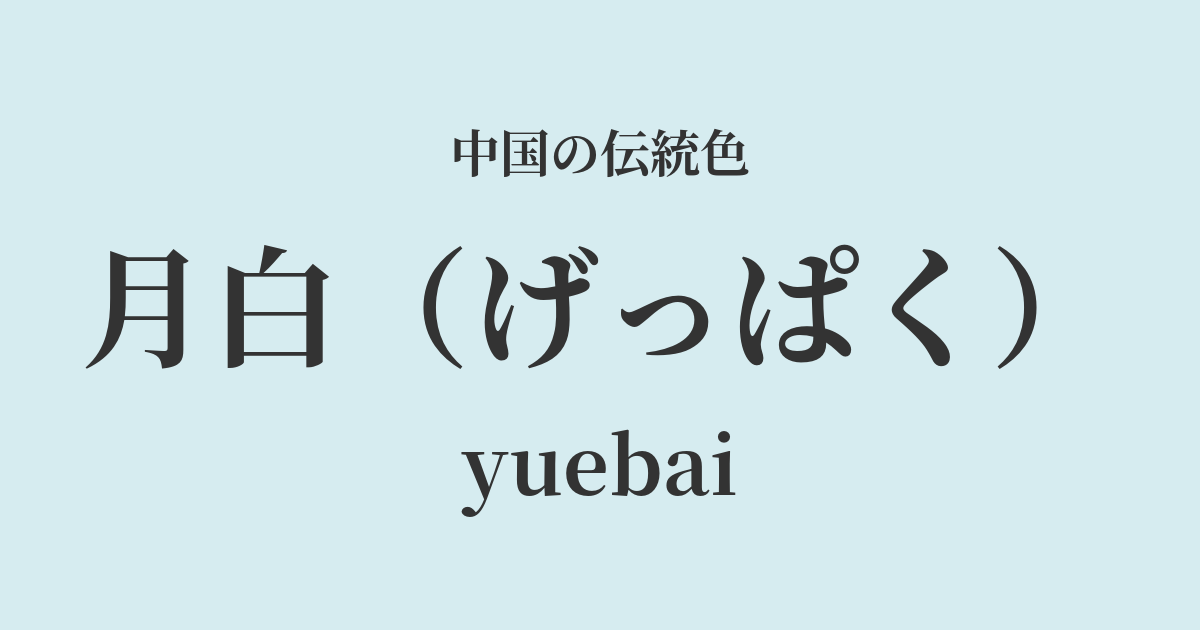
| Color name | moon white |
|---|---|
| reading | Geppaku |
| pinyin | yuebai |
| HEX | #D6ECF0 |
| RGB | 214, 236, 240 |
What is Tsukishiro? Origin and etymology
Geppaku, as its name suggests, means "the white of the moon," and is a pure and tranquil color.
However, this color is not pure white. In reality, it refers to the faintly bluish-white light emitted by the moonlight in a clear night sky. While moonlight itself doesn't physically have a color, the light seen through the still, airy atmosphere appeared bluish to people's eyes. This poetic sensibility gave rise to the name "Tsukishiro" (moon white).
More than just plain white, it has been cherished by the Chinese people since ancient times as a color that embodies tranquility, purity, and a somewhat mystical atmosphere.
Historical background of Tsukishiro
The term "moon white" can be found in poetry and prose from the Tang Dynasty, but its aesthetic appreciation became particularly heightened during the Song Dynasty.
During this period, a culture that pursued simple and refined beauty flourished, and in the world of ceramics, celadon with "moon white glaze" was created. In particular, the celadon of Ru ware, renowned as the finest, includes a pale and beautiful color called "moon white," alongside "sky blue," which reflects the color of the sky after the rain.
During the Ming and Qing dynasties, moon white established itself as a noble color used in the imperial court. In particular, during the Qing dynasty, it was designated as the color of the ceremonial robes worn by the emperor during the "Evening Moon Festival," a ritual to worship the moon in autumn, and was considered a sacred color symbolizing a connection with the heavens.
Moonlight in Chinese Art and Crafts
The beauty of the moon's white color can be seen in various Chinese works of art.
Perhaps the most symbolic example is the ceramics of the Song Dynasty. The "moon white glaze" of Ru ware and Jun ware is characterized by a deep, clear, bluish-white color created by the thickness of the glaze and the firing process. Its serene presence is said to be the epitome of the aesthetic sensibilities of the literati of the time, and it continues to fascinate many people today.
In clothing culture, moon white was also an important color. It was favored in Hanfu and court attire as a color that conveyed a noble and pure impression. Moon white, especially when expressed in lustrous silk fabrics, creates delicate shadows depending on how the light hits it, exhibiting an ethereal beauty as if one were wearing the light of the real moon.
Moonshine Fusei, Suiten Isshiki
Color scheme preview
This is to check the readability of the text when this color is used as the background.
Moonlight color scheme proposal
Fukari (#E4D2D8)
The tranquility of the moon's white and the soft warmth of the lotus flower harmonize to create an elegant and refined impression. The delicate and dignified color scheme is reminiscent of the attire of court ladies.
Mayuzumi (#49586E)
The contrast between the pale moonlight and the deep dark brown evokes the image of a quiet night sky and the moon floating within it. This combination is perfect for creating an intelligent, calm, and sophisticated space.
Willow green (#B2D235)
The clear, moonlit air, combined with the vibrant green of newly sprouted willow leaves, creates a refreshing and lively impression reminiscent of a spring dawn. It results in a fresh and modern atmosphere.
Practical Scenes
With its calming color, Tsukishiro blends naturally into modern lifestyles.
In interior design, this color is ideal for quiet and relaxing spaces such as bedrooms and studies. Incorporating this color into wallpaper or curtains will envelop the entire room in a calm and pure atmosphere. Pairing it with light wood or pale gray furniture, silverware, or glass accessories will further enhance its moonlight-like transparency.
In fashion, it gives an elegant and intellectual impression. When used in blouses and dresses made from natural materials such as silk and linen, it creates a clean and graceful look. Paired with dark blue or black, it creates a chic outfit, while paired with white or beige, it creates a soft and gentle atmosphere.