
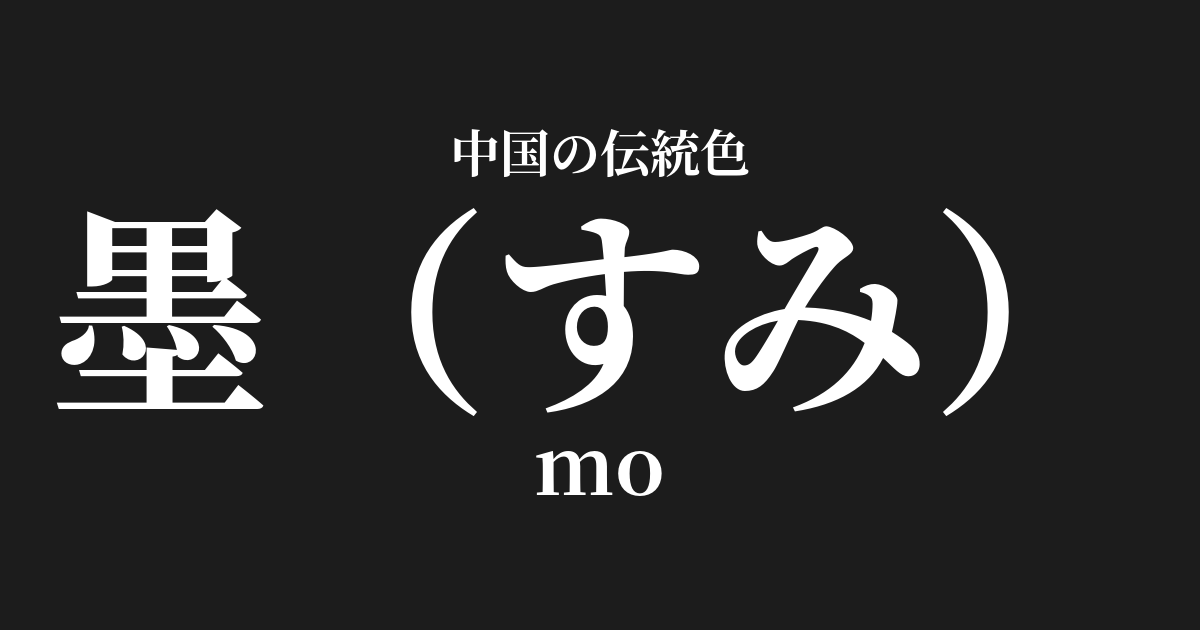
| Color name | 墨 |
|---|---|
| reading | Sumi |
| pinyin | mo |
| HEX | #1C1C1C |
| RGB | 28, 28, 28 |
What is ink? Origin and etymology
Sumi (ink) does not simply refer to the color black, but rather to the solid pigment itself used in calligraphy and ink painting, and the profound colors that are produced from it.
Its origin lies in the process of collecting soot (pine soot) obtained by burning pine trees or soot (oil soot) obtained by burning vegetable oil, and mixing it with animal glue made from animal hides and bones.
The greatest characteristic of ink lies in its ability to produce an infinite range of tones depending on the amount of water used. Darker areas represent pitch-black darkness, while lighter areas express a soft gray like morning mist. The variations in shade, bleeding, and blurring give a work of art a sense of life and depth. As the saying goes, "Ink has five colors," it is believed that the colors and textures of all things can be expressed with just one color of ink, and it has become a fundamental color in the spirit of Chinese art.
Historical background of ink
The history of ink is ancient, with traces of ink inscriptions found on oracle bones dating back to the Yin dynasty. It is believed that sophisticated ink-making techniques were established during the Han dynasty, and since then, along with the development of brushes and paper, ink has become an indispensable tool for literati and officials who were the bearers of culture.
During the Tang Dynasty, exceptional ink makers, such as Li Tinggui, emerged, and ink, while remaining a practical item, gained value as a work of art, often adorned with fragrances and decorations. The finest quality ink was produced, even serving as a tribute to the emperor.
During the Song Dynasty, ink painting became the dominant art form, and the expressive power of ink was explored to its limits. Literati used ink to express their inner world and spirituality, and the color of ink transcended mere color, taking on philosophical significance. It can be said that during this period, ink solidified its special position in Chinese culture.
Ink in Chinese Art and Crafts
The color of ink is inextricably linked to the art of Chinese calligraphy and painting. In calligraphy, ink breathes life into the characters. Through the way the brush is used, the shades of ink, and the degree of wetness and dryness, characters are elevated from mere symbols into art that possesses rhythm and emotion.
In sumi-e (ink painting), ink is the color used to depict everything in the world. Based on the principle that "ink is divided into five colors," the artist uses gradations of shades—scorched, dark, heavy, light, and clear—to express the grandeur of mountains, the flow of water, and even the humidity of mist. Combined with the beauty of negative space, it creates a serene world that stimulates the viewer's imagination.
In fashion culture, ink black was favored by people who valued spirituality, such as monks and literati. As a simple color that avoided ostentation, it also symbolized intellect and an introspective aesthetic sense.
Unbokuji five color tools
Color scheme preview
This is to check the readability of the text when this color is used as the background.
Sumi ink color scheme proposal
Cinnabar (#FF4D4D)
The combination of strong black ink and vibrant vermilion is a traditional color scheme that has been seen in seals and lacquerware since ancient times. The two colors complement each other, creating a dignified and impressive atmosphere.
Tsukihaku (#EAEAE1)
This combination of black and white evokes the world of ink painting. It creates a quiet and refined impression, resulting in a minimalist and intellectual space. It's recommended when you want to emphasize the texture of the materials.
Yellow (#FFD700)
Combining it with orpiment, a yellowish color associated with the emperor, creates a luxurious and authoritative impression. Like gold embellishments on a black background, this color scheme is ideal for conveying a sense of luxury and gravitas.
Practical Scenes
In interior design, ink black adds a sense of sophistication and refinement to the entire space. Incorporating it into a wall or large piece of furniture creates a modern and polished impression. It's a color that pairs exceptionally well not only with traditional Japanese and Zen-style spaces, but also with minimalist contemporary architecture.
In fashion, charcoal black is a classic black that creates a chic and sophisticated style. A monochrome outfit using charcoal black from head to toe can be stylish if you add depth by varying the textures of the materials. Also, because it harmonizes with any color, it works well as a base color that makes vibrant accent colors stand out.
In web and graphic design, using this color as a background makes content stand out and conveys a sense of reliability and expertise. It's particularly effective in minimalist portfolio sites and luxury brand websites.