
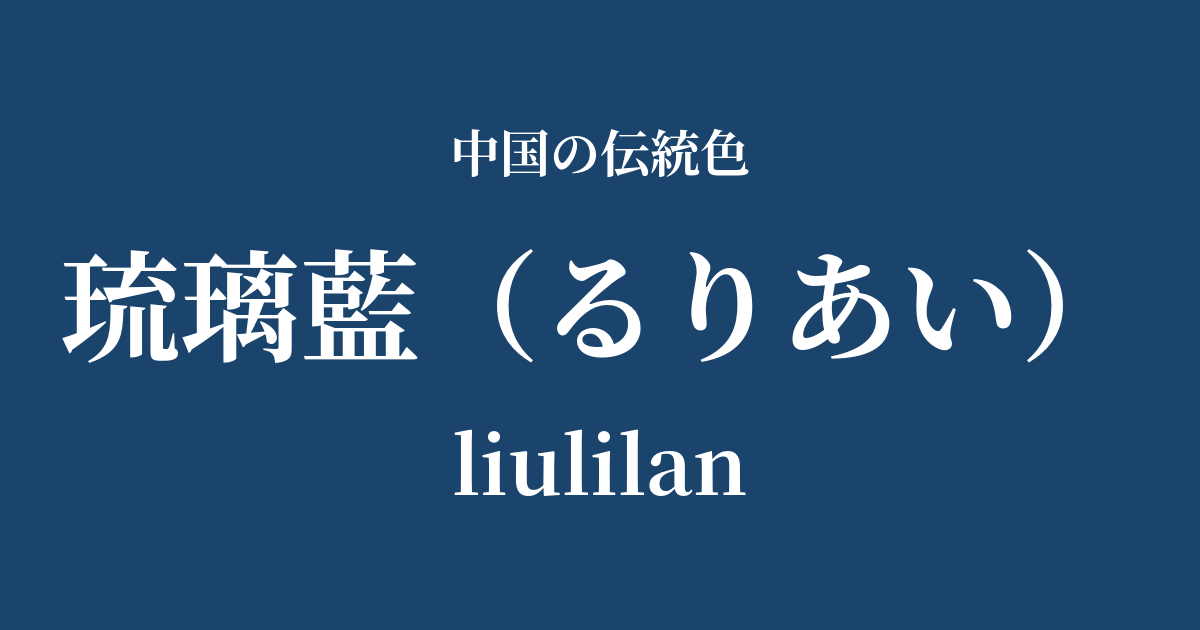
| Color name | Glass blue |
|---|---|
| reading | Ruriai |
| pinyin | liulilan |
| HEX | #1A446B |
| RGB | 26, 68, 107 |
What is "Ruri-ran"? Origin and etymology
Ruri-ai, as its name suggests, is a color derived from "Ruri." "Ruri" refers to lapis lazuli, one of the seven treasures in Buddhism. This deep, captivating blue is the very color of a gemstone that has fascinated people since ancient times.
Tracing its etymology, it is said that the Sanskrit word "vaidulya," meaning lapis lazuli, was introduced to China along with Buddhism and transliterated as "ryuri." While "ai" generally refers to the color blue, here, by using the name of a gemstone, it indicates that it is not just any blue, but a special color.
This color evokes the deepest parts of the night sky or the tranquil depths of the ocean, and has long been considered a symbol of mystery, nobility, and serenity. The hard, cool brilliance of the gemstone, combined with its profound blue nuances, creates a unique and elegant aura.
Historical background of the blue and white
Lapis lazuli, or "ryuri," was a valuable trade item brought to China via the Silk Road since ancient times. Its history dates back to the Han Dynasty, and it is said to have been used as an ornament and a precious pigment.
Particularly during the Tang Dynasty, when a rich and international culture flourished, glass was highly prized by the aristocracy. It adorned their personal ornaments and, in Buddhist art, solidified its value as a sacred pigment used to adorn Buddha statues and murals.
As time progressed, during the Ming and Qing dynasties, lapis lazuli glaze played an important role in the world of ceramics. The deep blue glaze known as "lapis lazuli glaze," produced in places like Jingdezhen, bears the name of this color and was applied to vessels used in rituals and high-quality items used in the imperial court.
Furthermore, this color held special significance in architecture, as seen in the glazed tiles of the Temple of Heaven in Beijing. The deep blue covering the roofs of altars worshipping heaven symbolized the heavens and the universe itself, visually representing the emperor's authority and divinity.
Glazed blue in Chinese art and crafts
The lapis lazuli blue hue can be seen in various fields of Chinese art. Particularly famous are the "lapis lazuli glazed" ceramics produced during the Ming and Qing dynasties. A wide variety of works were created, from those that highlighted the beauty of its deep blue in a single color to those that added gold accents to create a luxurious feel. Its serene hue gives the vessels an air of dignity and serenity.
This color was also indispensable in Buddhist art. In the murals of the cave temples such as the Mogao Caves in Dunhuang, pigments made from lapis lazuli were used to color the coiled hair called "rahotsu" of Buddhas and Bodhisattvas, as well as their robes. This is also called "ultramarine," and its sacred, deep blue is reminiscent of the image of lapis lazuli indigo.
Furthermore, the glazed tiles that adorn the roofs of palace architecture such as the Forbidden City and the Temple of Heaven are also symbolic. The magnificent sight of rows of deep blue tiles creates a solemn atmosphere that symbolizes a connection to the heavens.
Glass bell, Kohaku dark, small tank sake drop pearl red.
Color scheme preview
This is to check the readability of the text when this color is used as the background.
Glass color scheme proposal
Yuhuang (#FFB61E)
By combining a deep lapis lazuli blue with a vibrant, powerful yellow orpiment, the colors complement each other beautifully, creating a dignified and energetic impression. This color scheme is reminiscent of those found in the decorations of palace architecture.
Moon White (#D9E6E4)
When combined with a pure, pale moon-white, the tranquility and nobility of the lapis lazuli blue are further enhanced. It gives a clean, elegant, and refined impression, as if white porcelain were glazed with lapis lazuli blue.
Peacock Green (#008C8C)
By placing Peacock Green, another shade of blue-green, next to it, a gradient of color depth is created. This color scheme is recommended when you want to create a mysterious and exotic atmosphere reminiscent of peacock feathers.
Practical Scenes
In interior design, lapis lazuli brings depth and tranquility to a space. It's recommended to use it as an accent wall in a study or bedroom, or incorporate it into fabrics such as sofas and cushions. Combining it with gold or brass lighting and accessories will create an even more luxurious atmosphere.
In the world of fashion, lapis lazuli symbolizes intelligence and elegance. Dresses and sets made from lustrous materials such as silk and velvet will make a striking impression at party scenes. For everyday wear, adding it as an accent color with accessories such as scarves, bags, and jewelry will tighten up the overall look and give it a sophisticated impression.
In web and graphic design, this color is suitable for conveying trustworthiness and expertise. Using it as a background color and placing white or gold-toned text creates a sophisticated yet highly readable design. It's particularly well-suited for websites of luxury brands and companies dealing with cutting-edge technology.