
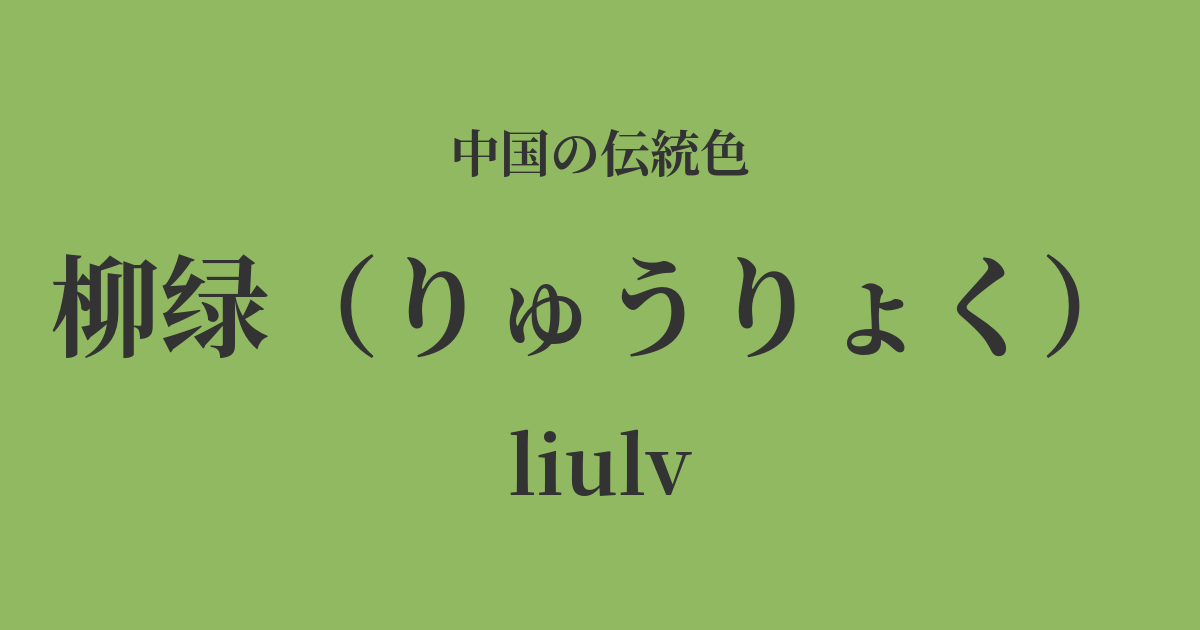
| Color name | willow green |
|---|---|
| reading | Ryuryoku |
| pinyin | liulv |
| HEX | #90B962 |
| RGB | 144, 185, 98 |
What is "willow green"? Origin and etymology
"Ryūryoku" (柳绿), as its name suggests, refers to a fresh, bright yellowish-green color, like the young leaves of a willow tree that sprout in early spring. It has long been cherished by people as a color that heralds the arrival of spring, when life begins to flourish after enduring the harsh winter.
This color embodies positive meanings such as youth, hope, vitality, and rebirth. It's characterized by a light and optimistic atmosphere that makes you feel cheerful just by looking at it. It's a color that captures the joy of that very moment when China's vast landscape begins to turn green.
Historical background of willow green
The color willow green appeared frequently, especially in the poetry and prose of the Tang Dynasty, and became an indispensable color for depicting spring scenes. The sight of willows budding along the banks of the capital and by the waters stimulated the sensibilities of poets and became the source of many masterpieces.
During the Song Dynasty, willow green became a more familiar color in people's lives. This color was incorporated into people's clothing and everyday objects, fostering a culture of enjoying the feeling of spring in daily life. In particular, in the scenic Jiangnan region, the landscape created by the green of willows by the water and the red of peach blossoms was depicted as an ideal paradise, and willow green became one of its symbolic colors.
Willow green in Chinese art and crafts
In Chinese art, willow green is an important color when depicting spring. In landscape and bird-and-flower paintings, newly budding willow trees are represented in this color, bringing a sense of life and the changing seasons to the picture. The sight of the willow's supple branches swaying in the wind was itself a favored and elegant subject.
In fashion culture, willow green was a popular color for spring clothing. In particular, its use in Hanfu (traditional Chinese clothing) worn by women and in light silk fabrics expressed youthfulness and elegance. In the world of ceramics, the soft green glaze seen in celadon ware from the Longquan kiln of the Song dynasty evokes the gentle and natural beauty of willow green.
Guest house Aoyagi Iroshin
Color scheme preview
This is to check the readability of the text when this color is used as the background.
Willow Green Color Scheme Proposal
Ehuang (#FFF143)
The combination of willow green and pale yellow, reminiscent of rapeseed blossoms, evokes a spring meadow. It gives a vibrant, bright, and hopeful impression.
Beni Kaido (#F2A0A1)
The vibrant green of the young leaves and the delicate crimson of the flowers create a beautiful contrast that complements each other perfectly. It gives a feminine impression that is both華やか (gorgeous) and elegant.
Moon white (#D6E9E6)
Combining the green of willow with the white of moon creates a refreshing and sophisticated impression. It evokes a quiet and pure atmosphere, like a willow tree by the water's edge shrouded in morning mist.
Practical Scenes
Incorporating willow green into your interior design brings a refreshing and relaxing atmosphere to your space. It's recommended to use it as an accent color in fabrics such as cushions, curtains, and rugs. It pairs exceptionally well with natural wooden furniture and white-based spaces, creating a comfortable and inviting environment.
In fashion, it's perfect for spring and summer blouses, dresses, and scarves. It brightens the face and gives a youthful, healthy impression. When combined with neutral colors such as beige, off-white, and light gray, it creates an elegant and sophisticated look.
In web and graphic design, this color is effective as a brand color for services themed around organic products, healthcare, and new beginnings. It conveys a sense of security and trust while also communicating a positive and forward-thinking image.