
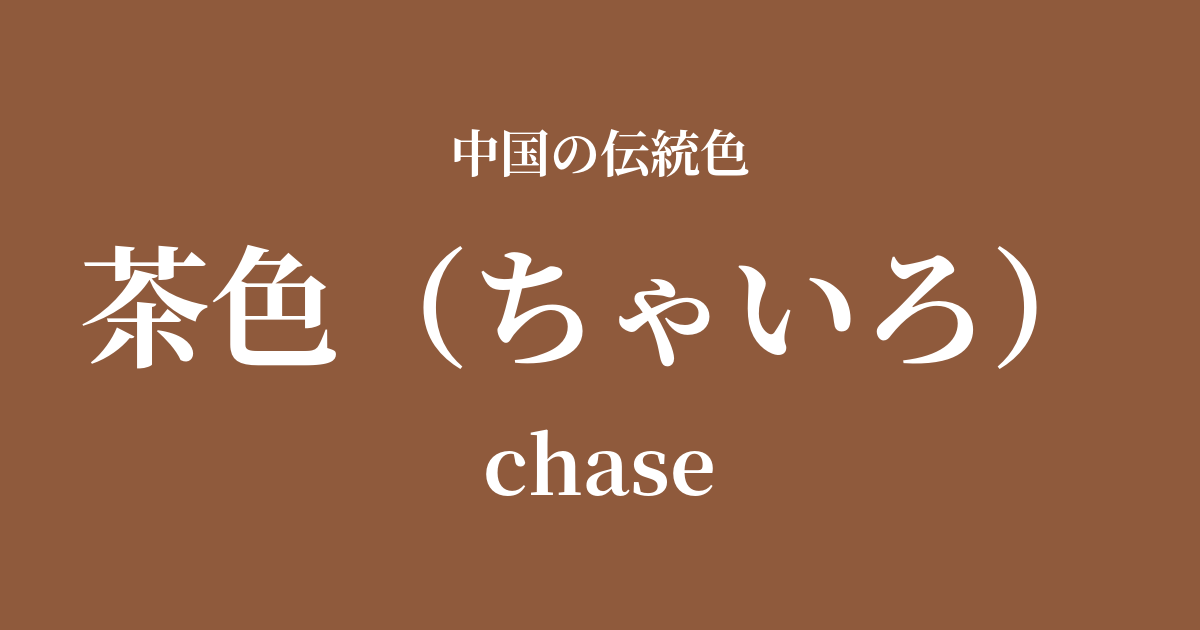
| Color name | brown |
|---|---|
| reading | brown |
| pinyin | Chase |
| HEX | #8F5A3C |
| RGB | 143, 90, 60 |
What is brown? Origin and etymology
"Brown" is, as the name suggests, a color name derived from the beverage "tea." The history of tea is ancient, with legends dating back to the time of Shennong, but it only became widely consumed by the general public after the Han dynasty.
During the Tang Dynasty, Lu Yu wrote "The Classic of Tea," the world's first specialized book on tea, and tea-drinking culture flourished among the nobility and literati. Along with the rise of this tea-drinking culture, the color of the tea leaves themselves and the color of the brewed tea became deeply ingrained in people's lives, and it is believed that this eventually became established as the color name "brown."
Even though we simply say "tea," there are many different types, such as green tea, black tea, and dark tea (like Pu-erh tea), and they come in a variety of colors. In traditional China, "brown" generally refers to fermented tea leaves or the reddish-brown color extracted from them. It is more than just a color name; it is a color with cultural depth that evokes quiet moments and a sense of spiritual fulfillment.
The historical background of brown
The Tang Dynasty was a crucial period in which the concept of "brown" emerged alongside the establishment of tea-drinking culture. In his "Classic of Tea," Lu Yu praised Yuezhou celadon ware as the vessel that best showcased the color of tea, describing it as "like jade and like ice." This demonstrates a strong aesthetic appreciation for the color of tea itself.
During the Song Dynasty, tea culture became even more refined, and "tea-tasting competitions" (Tocha), where participants competed to determine the superiority of their tea, became popular. In this era, Tenmoku tea bowls, made in the Jian kilns of Fujian Province with a black glaze, were highly prized to enhance the color of the finely frothed white matcha. The aesthetic appreciation for the contrast between the color of the tea and the color of the tea bowl reached its peak during this period.
From the Ming to the Qing dynasties, the custom of drinking tea spread widely among the common people, and "brown" became a more everyday color. Simple yet tasteful teaware, such as the Yixing purple clay teapots of Jiangsu Province, became popular, and brown blended into people's lives. This calming color was used in all aspects of life, including dyeing, furniture, and architecture, and it became a color that symbolized a peaceful and steady life.
Brown in Chinese Art and Crafts
In Chinese art, brown is a fundamental color symbolizing the earth and nature. In landscape painting, brown pigments such as ochre and ochre were essential for depicting soil, rocks, and withered trees. The depth and warmth these pigments provide breathe life into the majestic natural landscapes.
In the world of ceramics, brown is inextricably linked to tea utensils. Many masterpieces representing tea culture, such as Tenmoku tea bowls from the Song dynasty and Yixing dynasty Yixing teapots, are adorned with beautiful brown hues. Furthermore, porcelain with a soy sauce-like glaze, known as "soy sauce glaze," was also produced, and its subdued color was beloved by people.
In clothing culture, brown was a practical color primarily used for the clothing of commoners and monks. Tannins extracted from plants such as chestnut husks and acorns were used as dyes to color the fabrics. While not flashy, it was less prone to showing dirt, and its simple hue derived from nature resonated with people's steady lives. This subdued tone is still valued in modern fashion as a color that conveys intelligence and dignity.
Takeshita Bougen vs. Shicha, all victories go to Yukaku Suiryuuka
Color scheme preview
This is to check the readability of the text when this color is used as the background.
Brown color scheme proposal
Moon White (#EAEFEF)
The pure, pale, bluish-white of the moonlight enhances the warmth and richness of the brown. It gives off a calm, refined, and elegant impression, like enjoying tea on a quiet moonlit night.
Matsuka (#E2C027)
Combining it with pine blossoms, a bright and gentle yellow reminiscent of pine pollen, enriches the image of brown soil and wood. It's a friendly color scheme that evokes the bounty of autumn and the warmth of sunshine.
Mayuzumi (#494949)
The deep gray of the Mayuzumi, close to ink, tones down the reddish tones of the brown, giving the whole look a refined finish. While using traditional colors, it creates a modern and stylish impression. It's ideal for creating a sophisticated and calming urban space.
Practical Scenes
In interior design, brown is a color that evokes a sense of security and warmth. Incorporating it into one wall in a living room or study, or into wooden furniture or leather sofas, can create a dignified and calming space. Combining it with lighter colors like off-white or cream creates a sense of spaciousness and enhances the relaxed atmosphere.
In the world of fashion, brown is a timeless classic color that transcends trends. When combined with high-quality materials such as trench coats, wool jackets, leather bags, and shoes, it creates a classic and sophisticated impression. When an outfit feels monotonous, adding a pop of color like a pine-green scarf or a moon-white shirt will add a touch of elegant vibrancy.
In web and graphic design, brown is effective when you want to convey reliability, tradition, and an organic image. Using it as a background or accent color on websites dealing with established brands, natural foods, or traditional crafts can give users a sense of security and sophistication. Choosing white or light beige for text color will improve readability.