
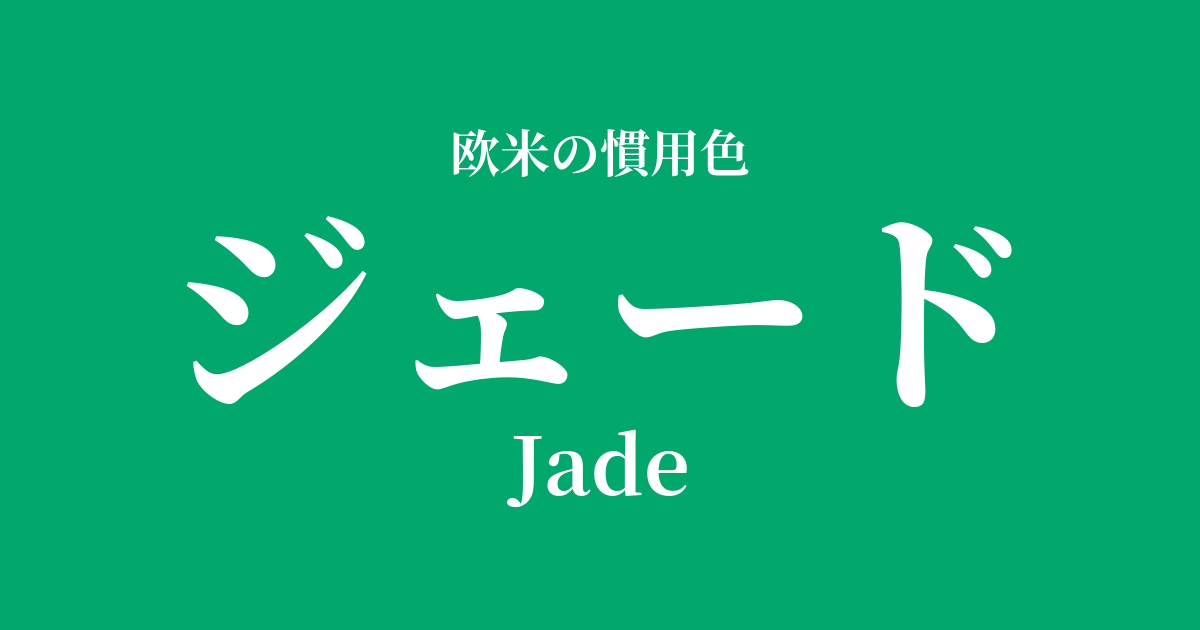
| Original English name | Jade |
|---|---|
| Japanese notation | Jade |
| HEX | #00A86B |
| RGB | 0, 168, 107 |
What is Jade? Origin and Etymology
The name Jade comes from the Spanish words "piedra de ijada," meaning "side stone." When Spanish explorers discovered this beautiful green stone in Central and South America in the 16th century, the local people believed it had the power to heal kidney and side ailments, hence the name.
It is said that this stone was introduced to Europe, and the name evolved from the French "l'éjade" to the English "Jade." Interestingly, it was initially strongly recognized for its medicinal properties as an amulet.
On the other hand, the cultural significance of jade is deeply intertwined with the Chinese culture of "jade." For thousands of years in China, jade has been considered not merely a beautiful gemstone, but a sacred object that brings virtue, purity, wisdom, longevity, and good fortune.
In Europe and America, the color name "jade" has become established as a term referring to the color of this mystical Eastern gemstone, jade, and has come to encompass the rich culture and narratives behind it.
Jade's historical background and culture
Jade began to be seriously incorporated into Western culture from the late 19th to the early 20th century. Amid growing interest in East Asian art, particularly Chinese art, jade crafts and jewelry attracted the attention of European collectors and designers.
Jade became an extremely popular material, especially during the Art Deco style that flourished from the 1920s to the 1930s. Its distinctive green color added an exotic and luxurious accent to linear and geometric designs. High-end jewelry brands such as Cartier also produced many sophisticated pieces of jewelry combining jade with platinum and diamonds.
Thus, jade became deeply rooted in Western color culture not merely as a color, but as a symbol of Eastern mystique and refined aesthetics. It is a color that reflects a longing for distant lands and the timeless appeal of gemstones.
Jade in design and art
In the world of fashion, jade is used as a color to express elegance and individuality. It pairs particularly well with lustrous fabrics such as silk and satin, and incorporating it into evening dresses and blouses creates a refined and striking look. Jade is also frequently used in accessories such as necklaces, earrings, and bracelets, adding a sophisticated accent to any outfit.
In interior design, it serves as an accent color that brings a sense of calm and luxury to a space. Incorporating it into one wall, cushions, curtains, rugs, or other fabrics will tighten the overall look of the room and create a sophisticated atmosphere. When combined with materials such as gold, brass, or dark wood, it can create an Art Deco-inspired classic modern space.
In the art world, its presence can be seen in the exquisite sculptures and crafts of ancient China. Since the modern era, its Oriental charm has inspired many artists.
Furthermore, the jade color is sometimes used in industrial products that prioritize quality and status, such as the bodies of high-end writing instruments, the dials of watches, and the interiors of luxury cars.
As green as jade.
Color scheme preview
This is to check the readability of the text when this color is used as the background.
Jade's color scheme proposal
Cream (#FFFDD0)
It enhances the vibrancy of the jade while creating an overall elegant and calm atmosphere. It gives a sophisticated impression, blending Eastern grace with Western classicism.
Gold (#FFD700)
The gold further enhances the luxurious feel of the jade, creating a opulent and dramatic impression. It is recommended for creating a glamorous and modern space reminiscent of Art Deco style.
Coral (#FF7F50)
The combination of jade green and coral, which are nearly complementary colors, makes each other's colors appear more vibrant, giving a lively and energetic impression. It creates a natural and refreshing atmosphere.
Practical Scenes
In interior design, jade is a color that brings depth and sophistication to a space. Using it as an accent wall in the living room or incorporating it into velvet sofas and cushions instantly creates a luxurious feel. It harmonizes naturally with the green of houseplants, and when combined with gold lighting fixtures and frames, it creates a modern and luxurious space.
In fashion, jade is an effective color for adding a touch of elegance. Simply pairing a jade-colored scarf, bag, or shoes with basic colors like white, beige, or navy instantly elevates the look. Choosing jade as the color for a dress on a special occasion will give you a unique sense of grace and presence.
In web and graphic design, it is suitable for expressing reliability, tradition, and harmony with nature. When used as a key color or accent color on luxury brand websites, wellness-related services, or environmentally themed content, it can give users a calm and intellectual impression.