
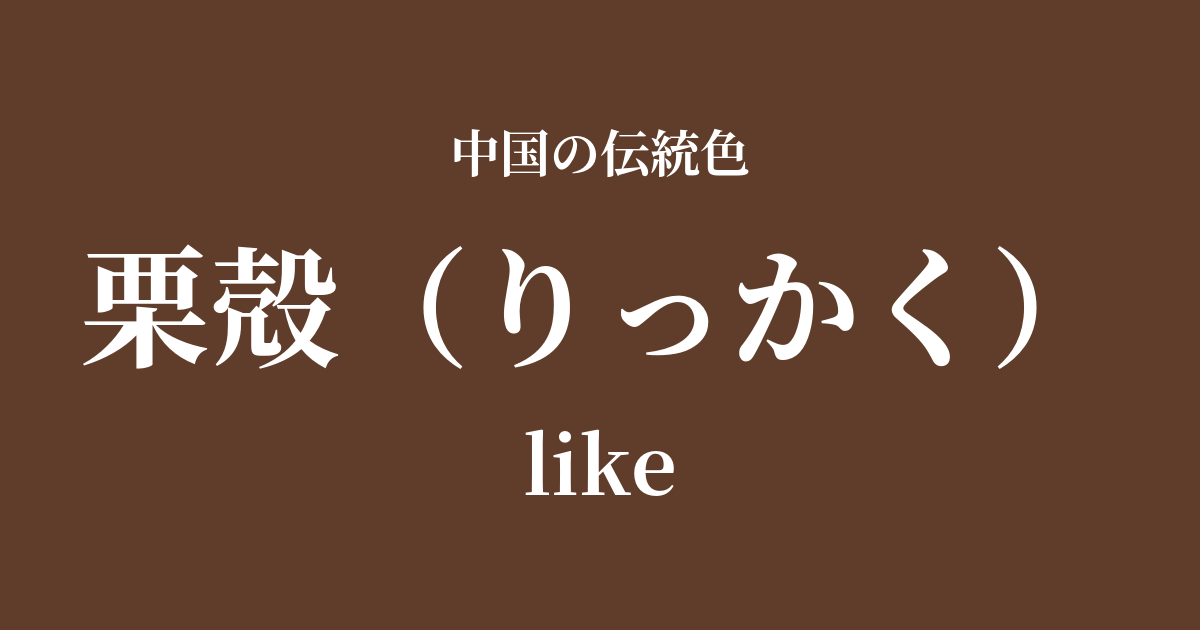
| Color name | chestnut shell |
|---|---|
| reading | Rikkaku |
| pinyin | like |
| HEX | #603D2A |
| RGB | 96, 61, 42 |
What is a chestnut husk? Origin and etymology
As the name suggests, "rikkaku" (栗壳) is a deep, calm brown color derived from the hard outer shell of a ripe chestnut. In Chinese, it is called "lì ké sè" (栗壳色), named after the natural color found in nature.
This color symbolizes the autumn harvest and the abundance of the earth. The glossy surface of the chestnut shell is not merely a dark brown, but conveys a sense of inner vitality and resilience. This simple yet dignified hue represents an honest beauty that accompanies people's lives.
Historical background of chestnut shells
Chestnut husk color is not a vibrant color that symbolizes a particular dynasty, but it has been deeply rooted in the lives of ordinary people since ancient times. Dyes obtained from chestnut husks and other plants were relatively easy to obtain, durable, and stain-resistant, so it is thought that they were widely used for everyday clothing and textiles.
In particular, during the Han dynasty, which valued simplicity and robustness, and the Song dynasty, when Zen Buddhism spread, there was a tendency to favor these natural and subdued colors. In contrast to the dazzling colors of the imperial court, chestnut brown can be said to be a color that speaks to the steady lifestyle of the people and their spirituality of living in harmony with the earth.
Chestnut shells in Chinese art and crafts
Chestnut husk color appears in Chinese art and crafts as a color that enhances the inherent beauty of the material. For example, hardwood furniture made from rosewood and huanghuali wood during the Ming and Qing dynasties develops a depth and beautiful luster similar to chestnut husk color as time passes. This rich hue creates a serene atmosphere in a study and adorns the contemplative spaces of literati.
Furthermore, in the world of ceramics, the brown glazes (such as persimmon glaze) found in Song dynasty Tenmoku tea bowls have a color tone similar to chestnut husk. This reflects the aesthetic sensibilities of the time, which found simple yet profound beauty in the accidental patterns created by earth and fire.
Outer box: Chestnut-colored Tsumugi Daiki.
Color scheme preview
This is to check the readability of the text when this color is used as the background.
Chestnut shell color scheme proposal
Tsukihaku (#EAEAE1)
The deep chestnut color, combined with a pale moonlight-like white, creates a quiet and sophisticated impression. The contrast is beautiful, and the colors complement each other, resulting in an elegant color scheme.
Matsuka (#BCEE68)
The chestnut husk color, reminiscent of the trunk of a large tree, is complemented by the bright pine blossom color, like the vibrant blossoms of a young pine tree, evoking a lively natural landscape. This color scheme combines stability and freshness.
Pilestone (#993400)
By combining it with ochre, which shares the same earthy color, a rich and warm gradation is created. It gives a greater sense of depth and dimension, and creates a calm and dignified atmosphere.
Practical Scenes
In interior design, chestnut brown brings a sense of stability and warmth to a space. When used in flooring, wooden furniture, and fixtures, it creates a dignified and calming atmosphere. It's particularly suitable for spaces where you want to relax, such as studies and living rooms. It's also a good choice for accents in cushions and rugs.
In fashion, it adds depth and sophistication to autumn and winter outfits. When combined with high-quality materials such as coats, jackets, leather bags, and shoes, it creates a classic style that transcends trends. Pairing it with white, beige, or off-white colors creates a soft and elegant impression.
In web design and graphics, it's effective when you want to convey reliability and tradition. When used as a background color, it makes content stand out, creating a calm and easy-to-read impression. It also suits the website image of established brands and companies dealing with natural materials.