
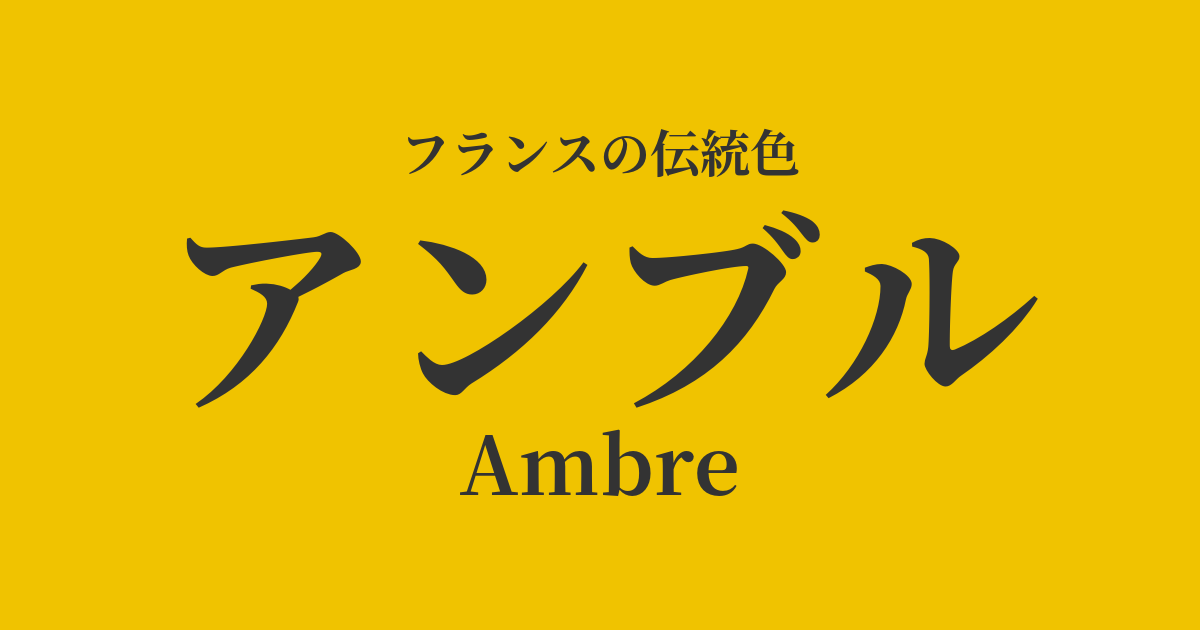
| French | Ambre |
|---|---|
| Katakana | Amble |
| HEX | #f0c300 |
| RGB | 240, 195, 0 |
What is an amble? Origin and etymology
Ambre is a French word meaning "amber." As the name suggests, it refers to the translucent, deep golden color of amber, a gemstone formed from fossilized tree resin over tens of millions of years.
The word's etymology is said to originate from the Arabic word "anbar," which originally referred to ambergris, a gallstone found in sperm whales. Because both ambergris and amber were sometimes washed ashore, they were confused for a long time, and eventually, in Europe, this word came to refer specifically to amber.
This color name not only describes a beautiful hue, but also evokes a romantic resonance, suggesting the mystery of nature nurtured over eons and the noble fragrance that was once highly valued as a perfume ingredient.
Ambre's historical background
In French history, amber, or "ambre," was a special material that captivated royalty and nobility. Especially in the 17th century, the Palace of Versailles, under the reign of the Sun King Louis XIV, is said to have had a magnificent "Amber Room" whose walls were completely covered in amber panels. Its golden gleam was a symbol of the king's absolute power and wealth.
During the Rococo period of the 18th century, amber became extremely popular as a material for small items that reflected the refined tastes of the aristocracy, such as snuffboxes, fans, and jewelry boxes. Its organic and warm luster, different from that of gold, was highly valued within the elegant culture of the time.
Furthermore, the amber has been cherished not only as a symbol of wealth but also as a protective amulet possessing mystical powers. Its beautiful colors were deeply intertwined with people's lives and beliefs.
Ambre in the world of art and fashion
In the world of painting, warm, golden colors like amber were essential for representing light itself and divinity. Baroque master Rembrandt, in particular, masterfully expressed the inner depth and humanity of his subjects by using amber-like hues in the skin and clothing of his figures amidst dramatic contrasts of light and shadow.
In the fields of fashion and textiles, amber was favored as a color for luxurious, lustrous fabrics such as velvet and silk. Its rich hue added splendor and elegance to dresses and interior decorations for festive occasions. Even today, it remains a beloved color, especially in autumn collections, for creating a warm and sophisticated feel.
During the Art Nouveau period from the late 19th to the early 20th century, artists such as René Lalique used materials like amber, glass of similar hue, and horn to fantastically depict natural motifs such as plants and insects. The organic hues of amber had a very high affinity with the artistic style of this era, which celebrated the forms of nature.
Color scheme preview
This is to check the readability of the text when this color is used as the background.
Ambre's color scheme proposal
Blue Nuit (#0f2350)
The shimmering Ambre and the deep, night-sky-like Blue Nuit are almost complementary colors that enhance each other. They create a dramatic and dignified impression, reminiscent of moonlight floating in the night sky.
Maron (#592b26)
Combining colors from the same earth tone family creates a very harmonious effect. This color scheme is perfect for creating a warm, calming, and cozy space reminiscent of the bountiful harvest of autumn.
Gris de Lignan (#dcd7d1)
The bright, soft flaxen gray gently complements the vibrancy of the amber, creating a sophisticated impression. It's natural yet modern, and recommended for those who want to achieve a balance of lightness and elegance.
Practical Scenes
In interior design, amber brings warmth and sophistication to a space. Simply painting one wall in your living room or study this color will transform the entire room into a refined and comfortable space. It's also effective to incorporate it as an accent in cushions, curtains, or artwork. It pairs particularly well with dark wood furniture such as walnut and brass lighting.
In fashion, amber is a color that conveys confidence and elegance. Incorporating it into silk blouses or cashmere knits brightens the face and gives an elegant impression. Using it as an accent color in accessories such as bags, scarves, and belts adds warmth and a sophisticated touch to the overall outfit.
In web and graphic design, amber is an effective color when you want to convey trustworthiness, tradition, and warmth. Using it as a key color on luxury brand websites or on the packaging of historical products helps to visually communicate their value.