
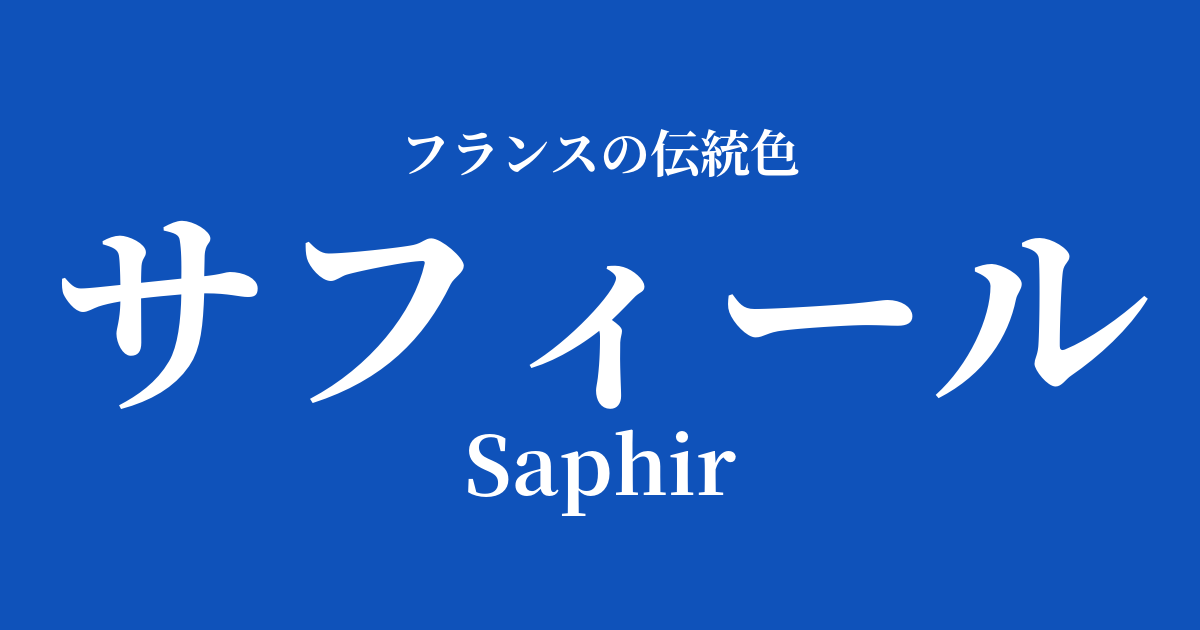
| French | Saphir |
|---|---|
| Katakana | Saphir |
| HEX | #0f52ba |
| RGB | 15, 82, 186 |
What is Saphir? Origin and etymology
Saphir is the French word for the gemstone "sapphire." As the name suggests, its deep, slightly purplish, clear blue color is derived from the sapphire, a gemstone that has captivated people since ancient times.
Since ancient times, sapphires have been revered as "jewels of the heavens" and "sacred stones," symbolizing truth, sincerity, and nobility. The color name "Saphir," which incorporates this sacred beauty, transcends mere color design, encompassing meanings such as grace, intelligence, and unwavering conviction.
Saphir's historical background
Deep blue colors like Saphir are deeply intertwined with French history, particularly with the royal family. In medieval Europe, blue was considered a sacred color, symbolizing the Virgin Mary. Therefore, against the backdrop of the "divine right of kings," which posits that the king's authority is bestowed by God, the French royal family began to use blue as a special color.
In particular, Louis IX (Saint Louis), a devout Christian, is said to have favored wearing blue clothing, and this is considered one of the origins of "Royal Blue (Bleu de Roi)." Sapphires were highly valued as jewels to adorn the crown, and their color became deeply etched into French history as a symbol of royal authority, wealth, and sanctity.
The blue (azure) in the background of the "fleur-de-lis" (lily emblem), the coat of arms of the French royal family, is often depicted in a deep, noble blue like saphir, and is recognized as a color that symbolizes France itself.
Saphir in the world of art and fashion
In the world of art, deep blues like Saphir have been used to express sanctity and infinity. In particular, the stained glass found in medieval church architecture, especially the "Chartres Blue" of Chartres Cathedral, emits a mystical glow that captivates the viewer's heart and shares a similar hue with the color of Saphir.
In portraiture from the Renaissance onward, deep blues like sapphire were frequently depicted as the color of the luxurious clothing worn by royalty and nobility. This often involved the use of ultramarine (derived from lapis lazuli), an expensive pigment, and wearing this color itself was a status symbol indicating high social standing.
Even today, France's world-renowned luxury jewelry brands continue to produce numerous pieces of jewelry using the finest quality sapphires. Their deep, sophisticated blue color remains a timeless symbol of luxury in the world of fashion and design.
Le saphir, c'est le ciel qui s'est fait pierre.
Color scheme preview
This is to check the readability of the text when this color is used as the background.
Saphir's color scheme proposal
All (#FFD700)
The combination of Saphir and gold evokes royal crests and opulent ornaments, creating a very noble and classic impression. The colors complement each other, creating a dignified atmosphere.
Gris de Ran (#D8D0C1)
Combining a deep sapphire with a muted, natural gray reminiscent of flaxen creates a sophisticated, urban impression. It exudes a calm yet modern and intellectual atmosphere.
Rose Pompadour (#ED87A1)
The deep, sophisticated Saphir is complemented by the elegant Rose Pompadour, a symbol of the Rococo era, creating a blend of glamour and refinement. This unexpected combination brings out a unique and feminine charm.
Practical Scenes
In interior design, Saphir brings depth and tranquility to a space. Using it as an accent wall in a study or bedroom can enhance concentration and create a calming effect. Incorporating it with cushions or curtains made of glossy materials like velvet or satin will further enhance the luxurious atmosphere. It also pairs exceptionally well with gold and brass lighting and accessories.
In the world of fashion, Saphir is a color that symbolizes intelligence and elegance, and it particularly shines in formal settings. Incorporating it into evening dresses, suits, and jackets creates a dignified and refined impression. Even adding just one accessory, such as a silk blouse, scarf, or leather bag, can elevate the entire outfit.
In web and graphic design, it is effective when you want to convey trustworthiness, expertise, and a sense of quality. Using it as a key color in a company logo or corporate website can give viewers a sense of security and a sophisticated image.