
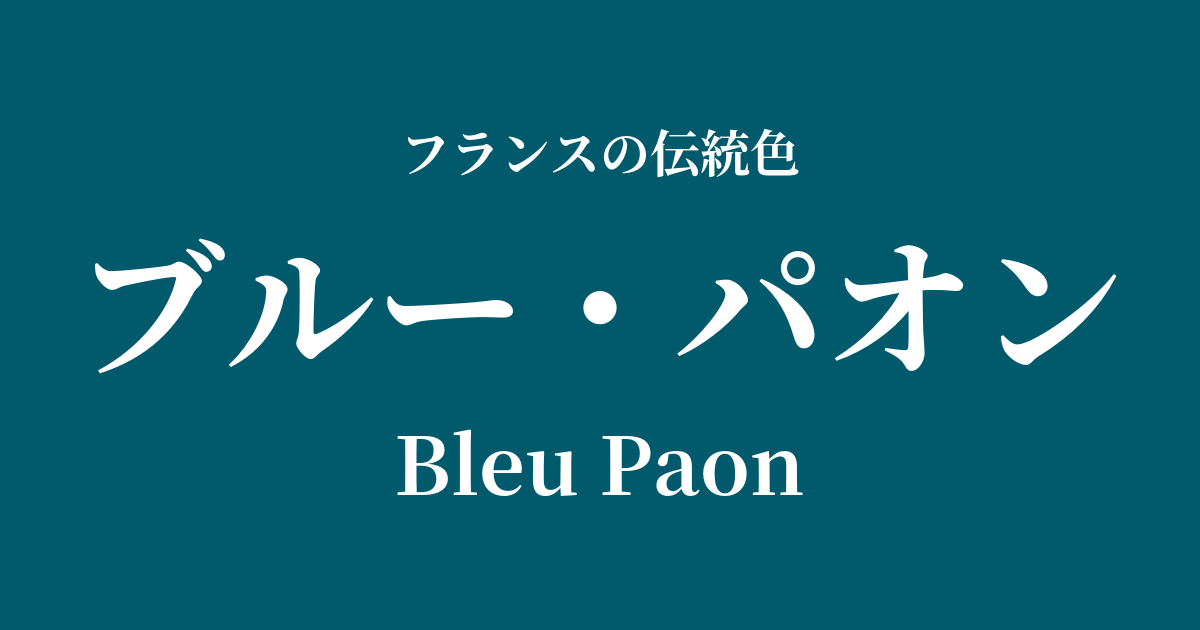
| French | Bleu Paon |
|---|---|
| Katakana | Blue Paon |
| HEX | #005a6c |
| RGB | 0, 90, 108 |
What is Blue Paon? Origin and Etymology
Bleu Paon is a deep, mysterious blue-green color, meaning "peacock blue" in French.
As the name suggests, it derives from the beautiful ornamental feathers of the male peacock. The complex and rich colors, which appear green, navy blue, and indigo depending on the angle of the light, have captivated people since ancient times. This color is not simply blue or green, but is characterized by a unique hue that combines depth and brilliance, with elements of both blended exquisitely.
The color name, Bleu Paon, is a testament to France's unique sense of color, drawing inspiration from beautiful motifs in nature. Bleu Paon is deeply rooted in French color culture, symbolizing nobility, splendor, and a touch of exotic charm.
The Historical Background of Blue Paon
Since ancient times, peacocks have been considered symbols of wealth, power, and beauty in the Western world. Furthermore, because their flesh was believed not to decay, they were depicted in Christian art as symbols of immortality and resurrection. This exotic bird, brought from the East, was a special presence adorning the gardens of royalty and nobility.
The color blue paon gained particular prominence in the world of decorative arts during the Art Nouveau and subsequent Art Deco periods of the late 19th and early 20th centuries. Influenced by Japonisme (a fascination with Japanese culture) which was popular in Europe at the time, peacock motifs depicted in Japanese art and crafts became extremely popular. Following this influence, many artists, including Alphonse Mucha with his posters, René Lalique with his glasswork, and Émile Gallé with his works, incorporated the graceful form and mystical colors of the peacock into their creations.
This color became associated with the yearning for exoticism at the time, and as a symbol of luxurious and decorative style, it came to be loved in a wide range of fields, from art and fashion to interior design.
Blue Paon in the world of art and fashion
Blue Paon is particularly deeply associated with Art Nouveau and Art Deco decorative arts. Alphonse Mucha effectively uses this deep blue-green color in the backgrounds and costumes of his graceful female figures, enhancing the fantastical atmosphere.
In the world of fashion, this color was used in the opulent dresses and hats of the Belle Époque era, highlighting the elegance of sophisticated women. Designer Paul Poiret incorporated Oriental silhouettes and motifs into his designs, and it is said that he also favored exotic colors like blue paon.
In textiles, it pairs exceptionally well with lustrous fabrics such as silk, velvet, and satin, bringing out the depth and brilliance of the colors to their fullest. Therefore, it was frequently used not only for ball gowns but also for interior decorations such as curtains, wallpaper, and upholstery, creating a dignified and luxurious atmosphere.
Color scheme preview
This is to check the readability of the text when this color is used as the background.
Blue Paon color scheme proposal
Jaune de Naples (#f7d98d)
The noble depth of Blue Paon, combined with the radiant yellow, creates a luxurious and classical impression reminiscent of Art Deco. It's a very vibrant color scheme where each color enhances the others.
Beige (#c8ad8f)
The deep blue of Paon is gently balanced by the soft warmth of beige, creating a calm and comfortable space. This combination is natural yet sophisticated, making it ideal for modern interiors.
Rose Pompadour (#ed82a1)
The cool impression of Blue Paon, combined with the sweetness and elegance of Rose Pompadour, creates a highly sophisticated and modern atmosphere. This color scheme brings out a unique and elegant charm in fashion and design.
Practical Scenes
In interior design, Blue Paon brings dramatic depth and tranquility to a space. An accent wall in this color will transform a living room or bedroom into a luxurious space. Incorporating it with velvet sofas, cushions, or glossy curtains highlights the rich texture of the color. It also pairs exceptionally well with gold, brass, and dark wood.
In fashion, simply wearing a dress or coat in this color can instantly create an elegant and mysterious atmosphere. If it's difficult to incorporate it into your entire outfit, adding it as an accent with accessories such as a silk scarf, bag, or shoes will tighten up the overall look and give it a sophisticated impression.
In web and graphic design, using it as a background color can convey credibility and professionalism to content. It's particularly suitable for luxury brands, art, and cultural sites. Using it as an accent color for buttons and headings will attract the user's attention and create a memorable design.