
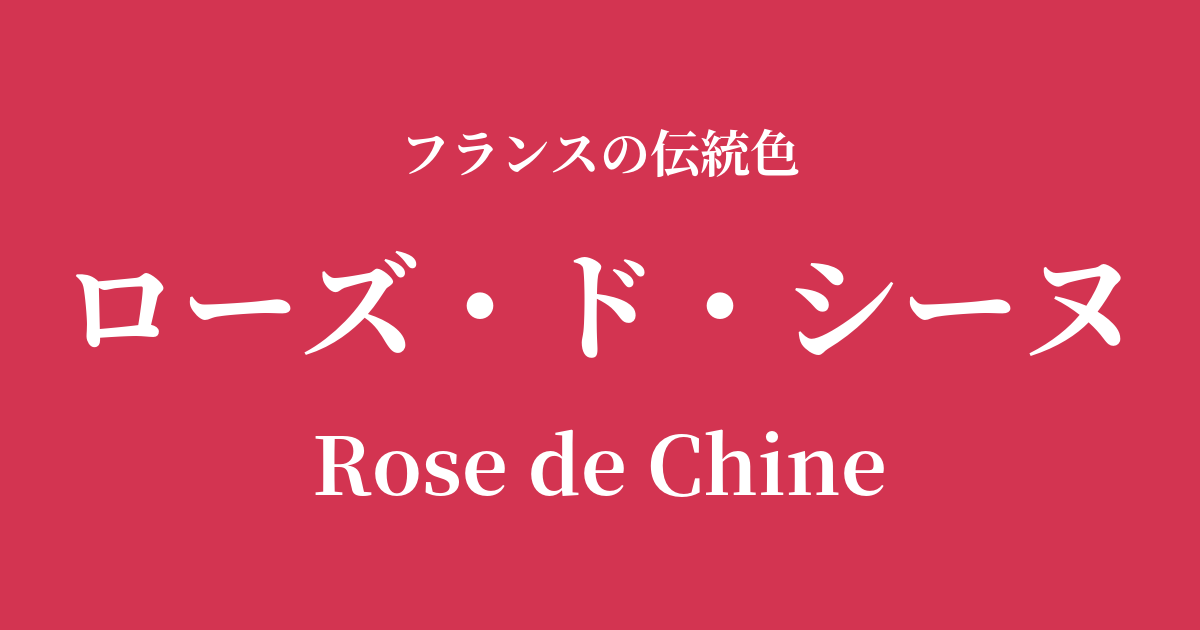
| French | Rose de Chine |
|---|---|
| Katakana | Rose de Chine |
| HEX | #d33451 |
| RGB | 211, 52, 81 |
What is Rose de Chine? Origin and Etymology
Rose de Chine, meaning "Chinese rose" in French, is a vibrant and elegant pink color. As its name suggests, the origin of this color is deeply connected to Chinoiserie, the Chinese-inspired style that was very popular in 18th-century Europe.
At that time, ceramics, silk fabrics, lacquerware, and wallpaper imported from distant China were objects of admiration for the French aristocracy. The vibrant colors of unfamiliar plants, especially peonies and roses, depicted on these items greatly influenced the French aesthetic sense and became a source of inspiration for new colors.
In particular, the presence of the Chinese rose "Rosa chinensis," which was introduced to Europe, was significant, and it is said that its striking flower color led to it being called "Rose de Chine."
Historical background of Rose de Chine
Rose de Chines was particularly beloved during the Rococo era of the 18th century, a time when elegant and refined culture flourished. Madame de Pompadour, the mistress of Louis XV and a leading figure in fashion and art trends of the time, had a deep love for Chinoiserie.
The Palace of Versailles and other castles where she lived were filled with Chinese-style decorations and Oriental colors, and the pink color reminiscent of Rose de Chine adorned the wallpaper, furniture, and even her own dresses. This color perfectly embodied the light, sweet, and exotically refined atmosphere that the court society of the time sought.
Furthermore, this shade of pink was widely used at the Royal Porcelain Manufactory of Sèvres, a source of pride for France. Porcelain with gold accents and intricate painting on an elegant pink background became the finest works of art and craftsmanship sought after by royalty and nobility throughout Europe.
Rose de Chine in the world of art and fashion
The works of leading Rococo painters such as François Boucher and Jean-Honoré Fragonard frequently feature colors reminiscent of Rose de Chine. This elegant pink is used in the silk dresses worn by goddesses and noblewomen in mythology, as well as in interior decorations such as cushions and curtains, giving the entire painting a sweet and sensual atmosphere.
This color was also immensely popular in the world of fashion. The luxurious court dresses worn by 18th-century noblewomen, known as "robe à la française," were made from the finest silk fabrics produced in Lyon, and rose de chines was a particularly popular color among them. This color was also used in ribbons, lace, and feather embellishments, further enhancing the splendor of women's attire.
This vibrant coloring is a testament to the advanced dyeing techniques of France at the time, and can be said to be a color that speaks to the richness of their textile culture.
Color scheme preview
This is to check the readability of the text when this color is used as the background.
Rose de Chine's color scheme proposal
Vert Amande (#a0c391)
This natural and classic color scheme is reminiscent of rose petals and leaves. The vibrant pink is complemented by the soft green, creating an elegant and calm impression.
Blue Roi (#005999)
This exotic and elegant combination evokes the style of Chinoiserie porcelain. The strong contrast between the colors highlights each other, creating a modern and striking space.
Gris Perle (#e0ded7)
The vibrant Rose de Chine is gently enveloped in a light, pearly gray. This color combination creates an elegant, feminine, and modern, sophisticated atmosphere.
Practical Scenes
In interior design, incorporating Rose de Chine into fabrics such as cushions, curtains, and upholstery adds elegance and warmth to the space. An accent wall painted in this color is also recommended. Combining it with gold or brass accessories creates an elegant Rococo atmosphere.
In fashion, using this color in key items like dresses and blouses creates a very striking look. Even using it as an accent color in accessories like bags, scarves, and shoes can brighten the entire outfit and give it a feminine touch.
In website and graphic design, it is particularly effective for brands that want to convey a sense of luxury and exclusivity, especially in the cosmetics, fashion, and lifestyle sectors. Whether used as a main color or an accent color, it possesses an appealing quality that captivates the viewer.